

Professional Silicone Scar Gel Compared Guide
A professional silicone scar gel is a silicone-based topical product used after the skin fully closes to support scar care. Patients usually compare each professional silicone scar gel by evidence, ease of use, skin tolerance, and fit for the scar’s stage and location.
When you search for a clinical-grade scar treatment, you will notice that many leading options use silicone. Dermatologists and surgical specialists often discuss this category in post-operative care and scar management. However, the differences between products are not always obvious at first.
In practice, the key differences show up in daily use. For example, drying speed, layering, comfort, and consistency all matter. This guide gives patients and caregivers a clear way to compare options. For a broader overview, visit the Scar Gel Brands section.
Who Should Use a Professional Silicone Scar Gel Guide
This guide helps beginner and intermediate readers compare professional scar treatment products after surgery, burns, or injury. If you want to know whether a medical grade scar gel differs from a basic cosmetic cream, this page can help you sort the options before you buy.
It also helps if your surgeon or dermatologist mentioned silicone gel but did not have time to explain brand differences. As a result, you get a simple, patient-centered map of the category and links to deeper reviews.
What You Will Learn About Professional Silicone Scar Gel Options
- What makes a scar gel feel “professional” or medical grade in real-world use
- Why silicone is commonly recommended for topical scar management
- How to compare gels for surgical scars, raised scars, and visible areas
- Which practical trade-offs matter most, including drying time and consistency
- What each review in this hub focuses on
- How to avoid common comparison mistakes
- Where Biocorneum fits into a silicone-based scar care conversation
How Professional Silicone Scar Gels Are Evaluated
Not every scar product marketed as advanced deserves the same weight. In clinical scar care, silicone remains the best-established topical ingredient category. Still, formula details and daily usability matter. If a gel pills, feels sticky, or clashes with sunscreen, many patients stop using it.
This hub compares products by criteria that matter in real life. Those points include clinical evidence, ingredient quality, ease of use, skin compatibility, scar type, scar stage, and overall value. In addition, we ask whether the product fits professional scar-management standards.
Because scar remodeling takes time, timing also matters. A fresh, closed surgical incision needs a different discussion than an older hypertrophic scar. Therefore, the most useful reviews explain those differences instead of treating every scar the same way.
Why Professional Silicone Scar Gel Options Use Silicone

Once the skin barrier heals, many clinicians start scar-focused care with silicone. Dermatologists and plastic surgeons often favor it because it forms a light, breathable layer over the scar. That layer helps reduce moisture loss while the skin continues to recover.
As a result, silicone may support a better healing environment. Over time, it may help reduce the look of discoloration, firmness, and surface irregularity. For more detail on wound healing and scar timing, see this guide to scar healing timeline. You can also review general scar care guidance from the American Academy of Dermatology.
Still, not every silicone product works the same way. No gel can erase a scar completely. However, silicone-based treatment has stronger clinical support than many mixed-ingredient scar creams with vague claims. If you want more background, the Silicone Science section can help connect product comparisons to the healing process. The does silicone gel work on scars guide is also a useful next read.
Biocorneum offers a silicone-based option for home use. The lineup includes Biocorneum SPF 30 in 20g and 50g sizes. That format combines scar care with UV protection in one step. In addition, Biocorneum offers a bruise cream for broader recovery support. If sun protection matters for your scar, you may also want to review guidance from the American Academy of Dermatology sunscreen resource.
How Scars Heal Over Time


A useful comparison should look at the scar’s healing stage, not just the brand name. After the skin closes, the body keeps repairing the area below the surface. Early scars often look red or pink because blood flow stays active. They may also feel firm, tight, or slightly raised while collagen forms.
Over the following months, collagen begins to remodel. In other words, the fibers slowly reorganize, and the scar may soften, flatten, and fade. This process takes time. In many cases, scars keep changing for 12 to 18 months, and sometimes longer.
Scar age also shapes expectations. A newer scar may respond differently than a mature scar that has already remodeled for months. That does not mean older scars cannot benefit from a professional silicone scar gel, but results may come more slowly. If you want a broader overview, this article on the scar healing process explains what to expect over time.
Professional Silicone Scar Gel Reviews
If you want product-level detail, the articles below break down the main options in this category. Each review looks at formula type, daily use, likely strengths, and where the product may or may not fit your scar type and recovery stage.
How each professional silicone scar gel review helps
Is Silagen Scar Gel Worth It? Review and Where to Buy covers an option that often comes up after surgery. This professional silicone scar gel review explains its clinical positioning, likely best-fit patients, and practical trade-offs such as cost, use, and expectations.
Kelo-Cote Scar Gel Review: How Well Does It Really Work? takes a close look at another well-known option. If you have seen Kelo-Cote online or heard about it from a clinician, this professional silicone scar gel review helps you compare reputation with real-world use.
SkinMedica Scar Recovery Gel: Does the Evidence Hold Up? focuses on how evidence matches marketing. In practice, that helps patients compare physician-positioned products with standard silicone options.
Serica Scar Gel Review: Silicone Formula, Results & Value looks at a professional silicone scar gel through the lens many patients care about most: what is in it, how likely they are to keep using it, and whether the value matches the claim.
More medical grade scar gel comparisons
Skinuva Scar Gel Review: Does Growth-Factor Tech Help? asks whether added technology changes the scar-care conversation. As a result, readers can compare traditional silicone formulas with more complex alternatives.
Strataderm Scar Gel Review: Professional Silicone Therapy Tested examines a professional silicone scar gel that has gained attention in clinical settings. This review looks at usability and treatment claims so readers can judge whether it fits long-term scar care.
Dermatix Ultra Scar Gel Review: Does the Silicone Formula Deliver? gives readers a practical assessment of silicone, application, and realistic expectations. It gives readers an honest evaluation without extra jargon.
| Review/article mentioned | What the article says it focuses on |
|---|---|
| Silagen | Clinical positioning, patient fit, ease of use, cost considerations, and expected outcomes |
| Kelo-Cote | Reputation versus actual performance when compared with other silicone gel products |
| SkinMedica Scar Recovery Gel | Whether the product’s advanced positioning reflects clinical support |
| Serica | What is in it, how likely patients are to keep using it, and whether the value matches the claim |
| Skinuva | Whether added technology and extra active ingredients may change the comparison |
| Strataderm | Practical usability and whether it fits sustained treatment regimens |
| Dermatix Ultra | How silicone works, practical application, and realistic outcomes |
How to Choose a Professional Silicone Scar Gel
Match the product to your scar type
A flat, maturing surgical line differs from an actively thickening hypertrophic scar or a scar in a high-movement area. Raised scars may need especially steady topical use and close follow-up. If you have a history of keloids, professional guidance matters even more because topical care may be only one part of treatment.
Look beyond marketing labels
Terms like “clinical,” “advanced,” or “physician recommended” may help, but they do not replace clear evidence. Start with the ingredient class, then assess usability. A strong professional silicone scar gel comparison always asks whether the formula supports long-term use.
Account for daily routine
Scars on the face, chest, abdomen, or joints all place different demands on a routine. Some patients want a formula that layers easily. Others want fewer steps. If sun exposure is a concern, a professional silicone scar gel with built-in SPF may appeal to some patients.
Be realistic about timing
Topical scar care usually starts only after the wound fully closes and your clinician approves it. Starting too early can irritate healing skin. On the other hand, starting later does not make care useless, but it may change expectations.
Use cost as one factor, not the only factor
The least expensive tube is not always the best value if you dislike the feel and stop using it. Likewise, the most premium-sounding product is not always the best professional silicone scar gel for your needs. The better question is whether the formula, feel, and application pattern support steady use over time.
When a Wound Is Ready for Professional Silicone Scar Gel
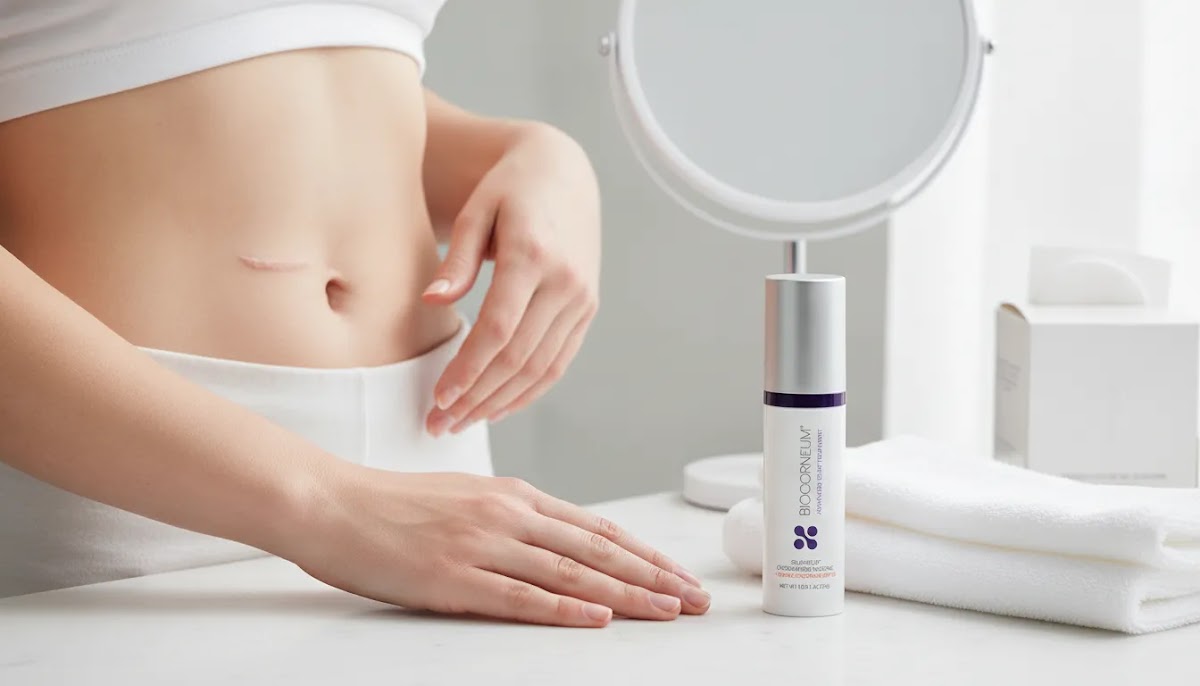
Patients often hear that silicone should start once the wound is closed, but that still sounds vague at home. In practical terms, the area is usually ready only when the skin surface fully closes, there is no drainage, and no open, scabbed, or fragile spots remain. If the area still looks broken, moist, or easily irritated, it may be too soon.
Your surgeon’s or dermatologist’s instructions should come first here. Different procedures and body areas heal at different speeds. For example, a small facial incision may not follow the same timeline as a cesarean scar or a joint incision.
If you are unsure, ask your healthcare provider to confirm that the site is ready for a professional silicone scar gel and to show you how much product to use. That short discussion can prevent early use on skin that still needs basic wound care.
Common Mistakes When Comparing Professional Silicone Scar Gel Options
One common mistake is assuming all scar products are interchangeable. Many non-silicone creams are marketed for scars, but they do not have the same level of clinical support as silicone-based care.
Another mistake is expecting fast visible change. Scar remodeling happens over months, not days. Therefore, redness, thickness, and firmness usually improve gradually.
Patients also compare products without considering recovery stage. A brand may sound appealing, but it may not fit a wound that is not ready for topical treatment. Finally, some readers focus only on online popularity and skip the practical question of whether the gel fits daily life. In scar care, consistency is part of the treatment decision.
Professional Silicone Scar Gel vs Silicone Sheets in Real-World Use
Silicone gels and silicone sheets both deliver topical silicone, but they work differently in daily life. Gels are often easier to use on the face, near the jawline, across joints, or in other mobile areas. They can also work better when you want a thin layer under clothing or, once dry and if your healthcare provider agrees, under sunscreen or makeup.
Sheets may appeal to patients who want fixed coverage over a flatter area and do not mind extra handling. In some routines, that physical coverage feels reassuring. In others, adhesion becomes the main problem, especially on curved areas, near hair-bearing skin, or where clothing friction makes the sheet harder to keep in place.
Neither format is always better. Ultimately, the best option depends on scar location, routine, and which product style you will actually keep using. If you want a deeper comparison, see silicone scar sheets vs gel.
Next Steps and Related Reading
If you already know which brand you want to investigate, the seven review articles in this hub are the best next step. They move from category-level comparison to product-level detail. If you are still deciding whether silicone gel is the right treatment class, read more about mechanism, scar type, and wound readiness first.
For readers interested in Biocorneum specifically, the brand’s silicone scar gel with SPF may appeal to patients who also want sun protection. UV exposure can make healing scars look darker or more noticeable. Therefore, a good next conversation is with your surgeon or dermatologist about whether a silicone-based gel fits your scar stage, skin sensitivity, and recovery plan.
Pros and Cons

Strengths
- Professional silicone scar gels are grounded in the most established topical scar-management ingredient category.
- They are generally easier to use on curved or visible areas than silicone sheets.
- They can fit at-home recovery routines for surgical, injury-related, and some burn scars once the wound is closed.
- They allow more nuanced comparison across formulation feel, drying time, and layering compatibility.
- This hub gives readers a structured way to compare several well-known products before narrowing their shortlist.
Considerations
- Not all professional-looking scar gels have the same level of evidence or practical ease of use.
- Even strong topical options do not completely remove scars, and results vary by scar type and timing.
- Some gels may be less convenient in certain routines, which can affect consistency.
- Patients with keloid risk, delayed healing, or unusual scar symptoms may need more than topical treatment alone.
Frequently Asked Questions
What makes a professional silicone scar gel different from a regular scar cream?
A professional silicone scar gel usually centers on silicone as the main scar-care mechanism rather than on botanical blends or simple moisturizers. The difference is not just branding. Silicone has stronger support in scar-care guidance than many general scar creams. Still, the best option depends on your scar type, skin tolerance, and consistency.
Is medical grade scar gel the same as prescription scar gel?
Not always. “Medical grade” often describes formulation positioning and intended use, while “prescription” describes legal dispensing status. Some professionally used scar gels are available without a prescription. Therefore, it helps to focus on ingredients, intended use, and your clinician’s advice.
Do dermatologists usually recommend silicone for scars?
Yes, dermatologists and surgeons often recommend silicone as a first-line topical option for many scars after the wound fully heals. Silicone helps support hydration and a favorable surface environment. However, clinicians still tailor recommendations to scar type, location, and healing stage.
Can silicone scar gel help old scars?
It may help some older scars, especially if the goal is to improve texture, dryness, or overall appearance over time. Mature scars often respond more slowly than newer scars, and visible change may be modest. It is reasonable to ask your dermatologist whether topical treatment alone makes sense.
Are silicone gels better than silicone sheets?
Neither is always better. Gels are often easier for facial scars, joints, or areas where a sheet is hard to keep in place. Sheets can work well when secure coverage is practical. Many patients choose based on comfort and long-term use.
When should you start using a silicone scar gel?
Start only after the wound is fully closed and your surgeon, dermatologist, or healthcare provider says the area is ready. Applying scar gel to open, draining, or fragile skin can irritate the area. Timing varies by procedure and person, so individualized guidance matters.
Does SPF matter in a scar gel?
SPF can matter, especially for scars exposed to daylight, because ultraviolet light may worsen discoloration and make a scar more noticeable. A combined scar gel and SPF format can help some patients, but it is not the best fit for every scar or body area.
How long do you usually need to use scar gel?
Scar care often takes months of regular use, not just a short burst of treatment. The exact duration depends on the scar’s age, location, thickness, and how it changes over time. In practice, many patients do better when they choose a product they can keep using steadily.
Can a scar gel replace follow-up care with my surgeon or dermatologist?
No. A scar gel may support scar management, but it does not replace medical follow-up. If a scar becomes increasingly painful, very itchy, rapidly raised, or otherwise concerning, your clinician should assess it.
What is the highest rated silicone scar gel?
There is no single answer for every patient. Ratings vary by source and by what they measure. Some reflect consumer satisfaction, while others reflect texture preference or familiarity. A better question is which professional silicone scar gel fits your scar type, body area, and recovery stage.
Does silicone gel actually work on scars?
Evidence suggests silicone gel may help improve the appearance of some scars over time. It supports hydration and a favorable healing environment. Results vary, and no topical product can guarantee a specific outcome. For best use, follow timing and application advice from your medical team.
Which silicone gel do plastic surgeons recommend?
Plastic surgeons often recommend silicone as a treatment category rather than one brand for every patient. Their recommendation may depend on incision location, skin sensitivity, sun exposure, and ease of use. If your surgeon prefers one option, ask why it fits your procedure.
What scar cream do plastic surgeons recommend?
Many plastic surgeons recommend silicone-based products because silicone has the strongest clinical support among topical options. Some patients use gels, while others use sheets, depending on scar location and daily wear. The best recommendation is usually individualized.
Glossary
- Hypertrophic scar: A raised scar that stays within the borders of the original wound.
- Keloid: An overgrown scar that extends beyond the original wound edges.
- Scar remodeling: The long phase in which a scar gradually changes in color, thickness, and texture.
- Topical silicone: Silicone applied to the skin as a gel or sheet to support scar management.
- Occlusion: A protective barrier effect that helps reduce water loss from the skin surface.
- Immature scar: A newer scar that is still actively changing in color, thickness, or firmness.
Key Takeaways
- Professional silicone scar gels are best compared by evidence, usability, skin compatibility, and fit for your scar type.
- Silicone remains the most established topical ingredient category for scar management.
- This hub covers seven major product reviews so you can move from category overview to brand-specific research.
- Biocorneum is one science-backed silicone-based option to discuss with your healthcare provider, especially if SPF integration matters to your routine.
- No scar gel can promise total scar removal, and personalized medical guidance still matters.
Conclusion
The best professional silicone scar gel is rarely the one with the boldest label. Instead, it is the one that fits your scar type, recovery stage, and routine. Once you understand the role of silicone, the trade-offs become easier to judge. If you are still narrowing your options, keep reading the reviews in this Scar Gel Brands cluster and speak with your surgeon or dermatologist about what fits your situation.
The information contained herein is meant for educational purposes and should not be interpreted as professional medical guidance. Prior to starting any scar management regimen or post-operative care plan, it is essential that you speak with your surgeon, dermatologist, or other qualified healthcare professional.


