

Scar Healing Process: Stages, Photos & Timeline
You may notice it during an ordinary moment, stepping out of the shower, changing a bandage, or catching your reflection in brighter light. A once-fresh incision or injury line now looks pink, raised, darker than expected, or suddenly firmer. Many people assume something has gone wrong when a scar changes from week to week, but the scar healing process rarely follows the same pattern every day. That uncertainty can make recovery feel stressful.
Your skin repairs itself in phases. Even after a wound closes, deeper repair continues for months. Blood vessels shift, collagen reorganizes, and the scar slowly matures. Some scars stay flat and pale. Others become red, thick, itchy, or tight before they settle down. Understanding the scar healing process can help you feel less alarmed and more prepared.
This article explains the stages of scar healing, what normal scar healing may look like over time, how surgical scars differ from hypertrophic and keloid scars, and when it may be time to ask your surgeon or dermatologist for guidance. If you want a foundation first, this scar healing stages guide offers a helpful overview.
How the Scar Healing Process Begins
A scar starts forming before you can fully see it. Once your skin cuts, burns, scrapes, or becomes inflamed, your body starts repair right away. First, it stops bleeding and protects the area. Then it clears damaged tissue and starts rebuilding.
This early step in the scar healing process begins during wound healing, before a scar fully takes shape. If you want the full background, wound healing before scar forms explains how the skin moves from injury to closure. For a broader overview, you can also review the phases of wound healing.
Why scars form during the scar healing process
Scars are your body's structural patch. They form when an injury damages the deeper layer of skin, called the dermis, and your body needs to repair it. The body lays down collagen, a strong protein that gives skin support. Early collagen is often more disorganized than uninjured skin. As a result, scars can look thicker, shinier, or different in texture.
A closed wound is not the same as a finished scar. Once the surface looks sealed, the scar maturing process still continues underneath.
The Main Stages of the Scar Healing Process
The scar healing process is often easiest to understand as a visual and physical progression. These stages overlap. Your timeline may move faster or slower based on age, genetics, skin tone, wound depth, body location, infection risk, and how much tension the area carries.
Stage 1: Early scar healing and inflammation
During the first days to couple of weeks, the area may look red, swollen, tender, or slightly shiny. This is part of the inflammatory phase, your body's first response to injury. A fresh surgical scar may appear neat but still feel warm or sensitive.
Mild itching can also happen here. That does not always signal a problem. Healing nerves and changing moisture levels often cause that sensation. If you want more detail on these symptoms, see Scar Tissue Pain, Itching & Sensitivity: What's Normal?
Stage 2: New tissue formation
Over the next several weeks, the body builds new tissue and more collagen. The scar may become pinker, firmer, or more noticeable before it improves. Many patients find this stage surprising because they expected a steady fade from day one.
This is often the period when a surgical scar begins to look more like a scar than a wound. For a broader sense of timing, see how long scars take to heal.
Stage 3: Scar healing over time through remodeling
Over months, collagen fibers slowly reorganize. The scar may flatten, soften, and lighten. Redness often fades as extra blood vessels recede. Tightness may ease as the tissue becomes more flexible.
Scar healing over time usually unfolds in months, not days. Many scars continue to mature for 12 months or longer, especially after surgery, burns, or deeper injuries.
Scar Healing Process Timeline: What Changes by Month
The stages of scar healing can feel abstract when you check the mirror every morning. A time-based view can make the scar healing process easier to interpret, especially if you are wondering whether what you see is on track. These time frames are general. Your procedure, body location, skin type, scar history, and aftercare all affect the pace. Your surgeon or dermatologist should give the final word for your recovery.
0 to 2 weeks: closing and settling
This period usually centers on wound closure, keeping the area clean, and following post-op instructions. A surgical incision may look neat but still feel tender or sensitive. It is also common to see redness along the line, mild swelling, or a shiny surface as the skin barrier rebuilds.
2 to 10 weeks: the more noticeable scar healing process phase
Many scars become pinker, firmer, or slightly raised during this stretch as collagen production increases and blood flow remains active. People often describe a tight feeling, and itching can show up or intensify. These sensations can be normal. They do not always signal trouble.
However, this stage can feel emotionally frustrating. A scar may look worse before it looks better.
3 to 6 months: early remodeling
Collagen remodeling becomes a bigger part of what happens under the surface. In many cases, scars begin to soften and flatten gradually, even if color remains. Some areas, especially where skin stays under tension or movement, can stay firm longer.
A scar that still looks pink or slightly raised at this stage can still fit within normal healing. Still, it is a good checkpoint to discuss with your clinician if you worry about thickening or symptoms.
6 to 18+ months: maturation and longer-term changes
For many surgical scars, a more mature appearance often takes 12 to 18 months. Some scars can keep changing up to 2 years, particularly after deeper procedures or injuries. That is one reason many surgeons advise waiting before judging the final result.
Over time, the scar may continue to lighten, feel more flexible, and look less prominent, even if progress feels slow from month to month.
If you are early in recovery, patience is not just motivational advice. It reflects how long collagen remodeling and blood vessel changes can take in real skin. Your clinician can also help you understand when it is reasonable to start or adjust scar care based on how your incision is healing.
If you prefer a more detailed, month-by-month breakdown, see this scar healing timeline for what changes many people notice as scars mature.
Scar healing process timeline at a glance
| Time period | What may happen | What people often notice |
|---|---|---|
| 0 to 2 weeks | Wound closure, barrier repair, and early settling | Tenderness, sensitivity, redness, mild swelling, or a shiny surface |
| 2 to 10 weeks | More collagen production and active blood flow | Pinker color, firmness, slight raising, tightness, or itching |
| 3 to 6 months | Early remodeling under the surface | Gradual softening or flattening, though color may still remain |
| 6 to 18+ months | Maturation and longer-term scar change | Lighter color, better flexibility, and a less prominent look over time |
What Normal Scar Healing Can Look Like

Patients often search for scar healing process photos because they want reassurance that their own scar is not unusual. Those images can help. However, they also have limits. Lighting, skin tone, camera angle, scar age, and the type of injury all affect how a scar appears in pictures.
Common scar healing process changes that may still be normal
- Pink or red color in the early months
- A slightly raised or firm texture
- Itching without drainage or spreading rash
- A scar that looks more obvious around week 3 to week 8
- Gradual softening rather than immediate fading
Normal scar healing is not always linear. A scar can seem flatter one week and more prominent the next, especially if clothing rubs the area, movement stretches it, or sun hits it. Joint areas, the chest, shoulders, abdomen, and upper back often heal with more visible tension.
Why color changes can be confusing
Fresh scars often contain extra blood vessels, which can make them look red or pink. In some skin tones, healing scars may look dark brown, purple, or gray before they settle. These color shifts may reflect normal repair. However, if a scar becomes increasingly inflamed, painful, or starts to open, you should contact your healthcare provider.
For general wound and scar guidance, the American Academy of Dermatology offers patient education on wound care and minimizing scars.
How to Tell If a Scar Is Healing Properly (and What “Not Normal” Looks Like)
Most people do not need to evaluate their scar like a clinician. Still, a clearer sense of healthy progress can reduce anxiety and help you know when to check in. Your surgeon’s post-op instructions come first. If something feels off, ask for guidance rather than trying to self-diagnose.
Signs that often suggest healthy scar healing progress
- The incision has fully closed and stays closed
- Color gradually shifts over time, even if it fades slowly
- Firmness eases little by little, even if it is not consistent week to week
- Mild itching or tightness that improves with time and does not come with drainage or spreading irritation
- The scar becomes more pliable, meaning it moves more naturally with the surrounding skin
Progress can be subtle. Many people notice the trend more clearly by comparing photos taken in the same lighting every few weeks, rather than judging day-to-day changes.
Changes that usually deserve a check-in
- Increasing pain, heat, or swelling at the scar site
- Spreading redness, especially if it continues expanding rather than settling
- Drainage, odor, or crusting that returns after the wound had been dry
- Wound separation, new bleeding, or an incision that reopens
- A scar that keeps thickening rapidly, extends beyond the original wound edges, or begins limiting movement
These changes do not automatically mean a serious complication, but they are good reasons to contact your surgeon, dermatologist, or qualified healthcare provider for an exam. An in-person evaluation can clarify whether you are dealing with irritation, a suture reaction, infection, delayed closure, or a scar pattern that could benefit from earlier intervention, such as hypertrophic scarring or keloid formation.
If you are deciding whether to start topical scar care, wound readiness matters. Most silicone products are intended for use once skin is fully closed, and many clinicians prefer to confirm that the incision has sealed properly before you begin. When in doubt, ask your treating team what they want you to use, and when they want you to start.
When the Scar Healing Process Looks Different
Not every scar follows the same path. Some become thicker than expected because the body produces excess collagen during healing. This is where terms like hypertrophic scar and keloid matter.
Hypertrophic scar healing
A hypertrophic scar is a raised scar that stays within the boundaries of the original wound. It may look red, thick, or rope-like, especially after surgery, burns, or high-tension wounds. Hypertrophic scar healing can improve over time, but these scars often benefit from early, consistent scar care and follow-up with a clinician.
Keloid healing process
A keloid grows beyond the original wound edges. It can continue enlarging over time and may itch, ache, or feel tender. The keloid healing process differs from routine scar maturation because it reflects an overactive healing response. Keloids are more common in some individuals and can have a strong genetic component.
Acne scars and other exceptions
The acne scar healing process is different from an incision scar because acne scars often result from inflammation and loss of normal skin structure, not just a single clean injury. Some are depressed rather than raised. Those scars may need a different treatment plan than silicone alone, which is one reason a dermatologist's input can be especially helpful. If you want to learn more, see Acne Scars – Understanding, Treatment Options & How BIOCORNEUM® Helps Heal Them.
What Can Support the Scar Healing Process
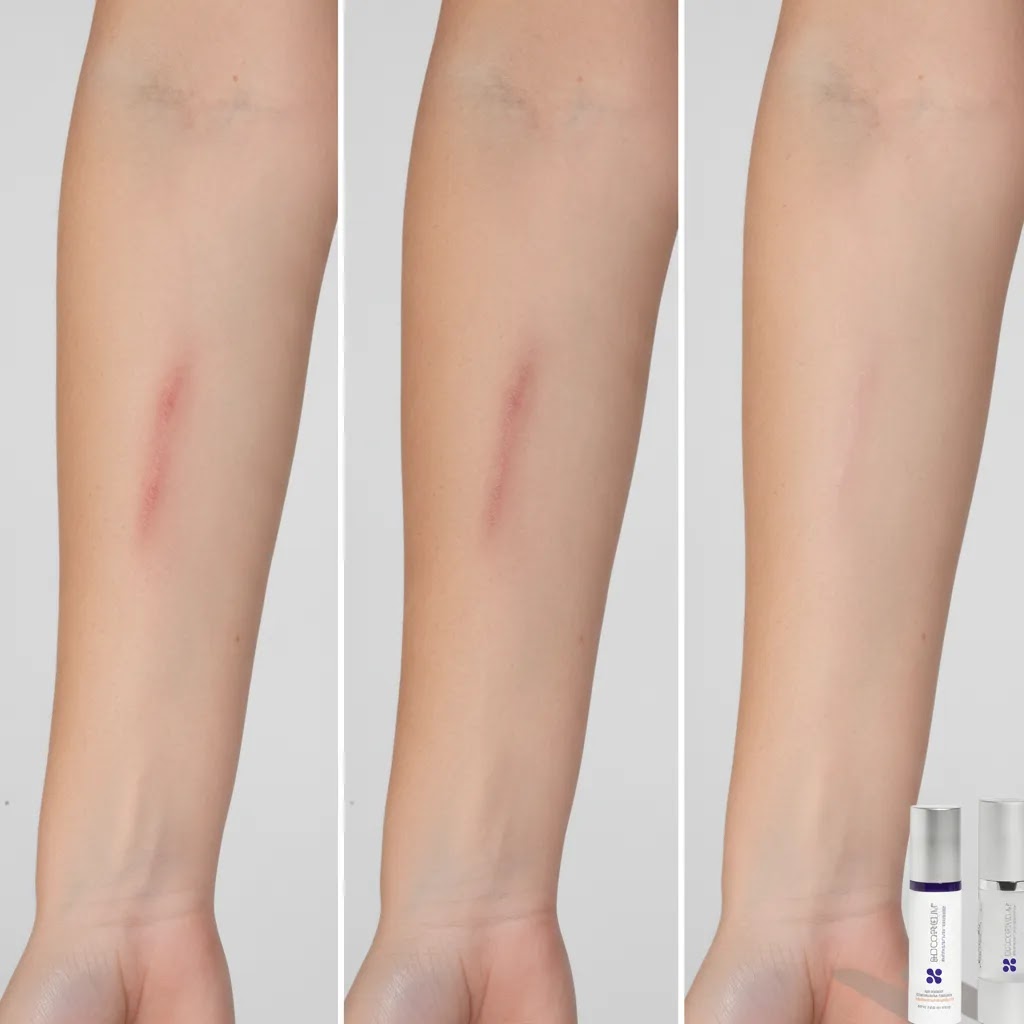
Once your wound is fully closed and your surgeon or treating clinician says the area is ready, scar care may help guide the maturing process. Timing matters, but consistency matters too. Intermittent treatment tends to help less than a steady routine.
Silicone is the topical standard many clinicians recommend
Dermatologists, plastic surgeons, and scar specialists commonly recommend silicone as the gold-standard topical ingredient for scar management. Research suggests silicone may help support a healthier scar environment by improving hydration at the skin surface and helping regulate the signals involved in excess scar formation.
If you want a plain-language explanation, how silicone accelerates healing explains why silicone gel is often part of post-surgical scar care. A medical-grade option such as Biocorneum's silicone-based scar gel may be part of that plan for some patients, especially when they want an at-home product aligned with clinical scar care principles. You can also read Does Silicone Gel Work on Scars? Evidence for Professional-Grade Silicone.
Other recovery habits that matter
- Follow your surgeon's wound care instructions first
- Protect the scar from ultraviolet exposure, which may worsen discoloration
- Avoid picking scabs or scratching healing skin
- Reduce friction and tension on the scar when possible
- Ask before starting massage, because timing differs by procedure
Silicone is only one piece of scar management. Depending on the scar type, your clinician may also discuss massage, pressure therapy, steroid injections, laser treatment, or observation. You can explore all scar treatment options to understand where each approach fits.
If you are comparing products, it can also help to understand what to look for in a silicone gel for scars, including how it’s typically used once the skin is fully closed.
In addition, sun protection matters during scar healing. The American Academy of Dermatology provides guidance on choosing sunscreen, which may help if your clinician recommends protecting a healing scar from UV exposure.
Silicone Gels vs Silicone Sheets (and Where Scar Massage Fits)
If your clinician recommends silicone, you may still have a practical question: which format is easier to use consistently? Silicone gel and silicone sheets both aim to support an occlusive, hydrated environment at the scar surface once the skin is fully closed. The best choice is often the one you can use consistently, in the location you are treating, for the amount of time your clinician recommends.
Silicone gel: flexibility for daily routines
Silicone gels are often chosen for convenience. Once dry, they can be easier to wear during the day, and many people prefer them for areas where a sheet might peel, wrinkle, or feel bulky. Gels can also be useful when the scar sits in a curved or high-movement area, or when you want scar care that fits into a simple morning and evening routine. Your surgeon or dermatologist can tell you how soon you can begin and how long to continue based on your healing stage.
Silicone sheets: continuous coverage for some locations
Silicone sheets are designed to stay in place over the scar for longer wear time, which some people find reassuring. For flatter body areas that are easier to cover, sheets may offer a straightforward way to keep the scar consistently covered. Placement and adhesion can vary depending on skin texture, sweating, body hair, and how much the area moves.
Does a scar heal better covered or uncovered?
During the early wound phase, your surgeon’s instructions about dressings and keeping the incision protected matter most. After the wound is fully closed, many clinicians use silicone because it works like a protective, occlusive layer that helps maintain hydration at the skin surface. Some patients prefer sheets for continuous coverage, while others prefer a gel format that dries and can be worn more discreetly. If you are unsure whether your scar should stay covered at a certain stage, ask your clinician, especially if you have sensitive skin or a history of irritation.
Where scar massage fits, and why timing matters
Scar massage is commonly discussed for surgical scars because it may help improve softness and pliability as healing progresses. The key point is simple: massage is not for fresh incisions. It is often introduced weeks after surgery, once the wound is closed and your clinician confirms the tissue is ready.
Technique matters too. Too much pressure too soon can irritate healing skin. If massage is part of your plan, ask your surgeon or dermatologist when to begin, how much pressure to use, and how often to do it based on your procedure and scar location.
When to Check With a Clinician
Some uncertainty is normal during scar healing, but a few changes deserve medical attention. Reach out to your surgeon, dermatologist, or qualified healthcare provider if your scar becomes more painful, opens, drains, smells unusual, or develops spreading redness. You should also ask about scars that keep thickening, extend beyond the original wound, or limit movement.
Do not start scar treatment on an open wound unless your healthcare provider tells you it is appropriate. The best time to begin varies based on the procedure, the location, and how the wound is healing.
If you are looking for broader education while you recover, the Scar Science and Wound Healing sections offer more patient-friendly guidance. Biocorneum also provides information on its clinically formulated scar gel for patients who want to learn more about silicone-based scar treatment as part of a provider-guided plan.
Frequently Asked Questions
How does a scar heal after surgery?
A surgical scar usually heals in stages. First, the incision closes and the body controls inflammation. Then new tissue forms, and the scar may look pinker or firmer for several weeks. After that, the scar enters a remodeling phase where collagen reorganizes and the tissue may gradually flatten and lighten. This process often takes months, not days. Healing time also depends on your procedure, skin type, incision location, and whether the area is under movement or tension. Your surgeon can tell you when your incision is ready for scar care.
Is it normal for a scar to look worse before it looks better?
Yes, in many cases it is. A scar may become redder, firmer, or more raised during the first several weeks as collagen builds and blood flow remains active in the area. That can feel discouraging if you expected the mark to steadily fade from the beginning. Many normal scars become more visible before they mature and soften. Still, worsening pain, drainage, separation, or rapidly spreading redness should not be ignored. Those changes call for medical review rather than watchful waiting at home.
How long does scar healing over time usually take?
Many scars continue changing for 6 to 12 months, and some may keep maturing longer. Superficial injuries may settle faster, while surgical scars, burns, and areas under tension often take more time. The early wound may close within days or weeks, but the scar is still remodeling well after that. This longer timeline is one reason patience matters. It is also why treatments such as silicone are usually used consistently over time, rather than for only a few days, if your healthcare provider recommends them.
What does normal scar healing look like?
Normal scar healing can include a pink, red, brown, or slightly purple appearance, depending on your skin tone and the age of the scar. The area may feel a little raised, tight, or itchy at first. A normal scar also tends to change gradually rather than stay exactly the same. Over time, many scars soften, flatten somewhat, and become less noticeable. Normal does not always mean invisible. A scar can heal appropriately and still remain visible. If you are unsure whether your scar is progressing normally, ask your clinician for an exam.
When should I worry that a scar is not healing normally?
You should contact your healthcare provider if a scar becomes increasingly painful, hot, swollen, or starts draining fluid, especially if the wound reopens. It is also worth getting evaluated if the scar keeps growing thicker, extends beyond the original wound edges, or begins limiting movement. Those signs may suggest infection, delayed healing, or an abnormal scar pattern such as hypertrophic scarring or keloid formation. Early evaluation matters because some scar concerns are easier to manage when they are addressed sooner rather than later.
Can silicone help during the scar maturing process?
Clinical evidence supports silicone as a common first-line topical option for scar management once the wound is fully closed. Silicone may help maintain hydration at the skin surface and create conditions that support flatter, softer, and less noticeable scars over time. It is often recommended for surgical scars and may also be used for some injury or burn scars, depending on the situation. Biocorneum offers a silicone-based scar gel that some patients use as part of a provider-guided plan, but the right choice depends on your specific scar and healing stage.
Are hypertrophic scars and keloids the same thing?
No. Both involve excess scar tissue, but they behave differently. A hypertrophic scar stays within the original wound line and may slowly improve over time. A keloid grows beyond the wound boundaries and can continue enlarging. Keloids may also be more likely in people with a personal or family history of them. This distinction matters because treatment planning may differ. If your scar is becoming raised and you are not sure which type it is, a dermatologist or surgeon can help identify it and discuss the most appropriate options.
Should I use scar healing process photos to compare my scar?
Photos can be helpful for general reassurance, but they should be used carefully. Two scars from the same procedure can look very different based on skin tone, lighting, stage of healing, body location, and whether the scar has been exposed to sun or friction. A better use of photos is tracking your own progress over time. Take pictures in the same lighting and angle every few weeks. That can help you and your clinician notice trends that are harder to see in the mirror day to day.
Does an itchy scar mean it is healing?
Itching is often part of normal healing, especially as nerves recover and the skin barrier changes. Dryness, tension, and new tissue formation can all contribute. Mild itch without other warning signs is common. Still, severe itch, rash, blistering, or increasing redness could point to irritation, allergy, infection, or excessive inflammation. Try not to scratch, because repeated friction may aggravate the scar. If the symptom is intense or persistent, ask your healthcare provider whether your scar care routine or wound products need to be adjusted.
Can a scar ever disappear completely?
Most scars do not disappear completely. They often become less noticeable with time, and appropriate treatment may improve color, texture, height, and flexibility. The goal is usually scar improvement, not complete removal. Being realistic about that can reduce frustration and help you judge progress more fairly. Some scars fade to a thin, pale line, while others remain more visible because of the depth of injury, body location, or your genetics. A healthcare professional can help you understand what level of improvement is realistic in your case.
How can I tell if a scar is healing properly?
A scar that is healing properly typically stays closed, changes gradually, and trends toward softer and less noticeable over time. Early redness, mild firmness, and itching can be normal, especially in the first few months. It is worth checking in with your surgeon or dermatologist if you see increasing pain, heat, swelling, spreading redness, drainage, odor, or any reopening of the wound. If you are unsure, an exam can help confirm whether your scar is following a typical course and whether any adjustment to aftercare is needed.
What should a scar look like after 4 months?
At around 4 months, many scars are still in active remodeling. It can be normal for a scar to remain pink, slightly raised, or firmer than surrounding skin, especially in high-tension areas like the chest, shoulders, or abdomen. In many cases, you may start noticing gradual softening or subtle flattening, even if color is still present. If your scar is thickening quickly, becoming increasingly symptomatic, or limiting movement, a clinician can evaluate whether it looks more like hypertrophic scarring or another pattern that may benefit from earlier management.
Does a scar heal better covered or uncovered?
During the wound phase, follow your clinician’s instructions about dressings and keeping the area protected. After the skin is fully closed, many clinicians recommend silicone because it creates an occlusive layer that helps maintain hydration at the scar surface. Some people achieve that coverage with silicone sheets, while others prefer silicone gel that dries on the skin. Your surgeon or dermatologist can help you decide what makes the most sense for your scar location, lifestyle, and skin sensitivity.
What makes a scar heal faster?
Scar maturation is driven by biology, and there is no safe way to force it to happen overnight. Healing tends to go more smoothly when you protect the incision early, follow post-op instructions, avoid picking or friction, and reduce sun exposure, since ultraviolet light can worsen discoloration. Once the wound is fully closed, consistent scar care, often including silicone if your clinician recommends it, may support the scar environment over time. If you want to optimize your plan, ask your surgeon or dermatologist what they recommend for your procedure and timeline.
Key Takeaways
- The scar healing process continues long after the wound surface has closed.
- Many scars become pinker, firmer, or more visible before they begin to flatten and fade.
- Hypertrophic scars stay within the wound line, while keloids grow beyond it.
- Silicone is commonly recommended by clinicians as a topical first-line scar care option once the wound is fully closed.
- New pain, drainage, reopening, or ongoing thickening should be evaluated by a surgeon or dermatologist.
Final Thoughts
A healing scar can change a lot, and that does not always mean something is wrong. The color, texture, and height of a scar often shift as your skin repairs itself, especially during the first few months. Knowing that can make recovery feel less uncertain and help you focus on what is useful: protecting the area, following medical instructions, and giving treatment enough time to work.
If you are deciding what to do next, start with your own clinician's guidance. They can tell you whether your scar is following a typical course, when scar treatment should begin, and whether you might benefit from silicone, in-office care, or simple observation. If you want to learn more about silicone-based scar treatment, you can explore Biocorneum's educational resources and product information as part of a broader recovery plan. Clear expectations and steady care often matter more than chasing instant results.
Medical Disclaimer: The information provided in this article is for educational purposes only and does not constitute medical advice. Always consult your surgeon, dermatologist, or qualified healthcare provider before beginning any scar treatment regimen. Individual results vary. Biocorneum is not a substitute for professional medical care.


