

Does Silicone Gel Work on Scars? Evidence for Professional-Grade Silicone

Does Silicone Gel Work on Scars? Evidence for Professional-Grade Silicone
The moment your stitches come out or your surgical tape finally peels away, it is normal to stare at that new line on your skin and think, “Is this what it will look like forever?” Some people feel fine until the scar starts itching, turning pink, or firming up. Others worry about a dark mark that seems to announce your procedure to the world.
Here’s the thing: scar healing is not just about time. It is also about the environment your skin heals in, especially during the first few months when collagen is being laid down and reorganized. That is where silicone scar gel comes in.
So, does silicone gel work on scars? For many people, yes. Professional-grade silicone for scars is one of the best studied, most widely recommended topical options for improving the look and feel of raised, red, itchy, or thickening scars, particularly after surgery or injury.
BIOCORNEUM combines professional-grade SiliShield® silicone with SPF 30 in one easy application. It is the #1 surgeon-recommended scar treatment, trusted by plastic surgeons and dermatologists nationwide. You can explore the scar care collection to see silicone-based options designed for daily use.
Core Education: Scar Biology, Types, and How Scars Form
A scar is your skin’s “patch job.” When skin is cut, burned, or inflamed, your body rushes in to stop bleeding, prevent infection, and rebuild the barrier. The rebuilt tissue is functional, but it is not identical to the original skin, which is why scars can look or feel different.
The wound healing timeline (and why scars change for months)
Scar formation follows predictable phases, even though the pace varies from person to person:
- Inflammatory phase (0–7 days): swelling, warmth, and early redness are common. The body cleans up damaged tissue and starts repair.
- Proliferation phase (7–21 days): new tissue fills in. Collagen production ramps up, and the wound gains strength.
- Remodeling phase (21 days–2 years): collagen reorganizes and tightens. Color and texture slowly change. This is when many scars flatten and fade, or sometimes become thick and raised.
What most patients overlook is that a scar that looks “worse” at 6 to 10 weeks can still end up looking much better at 6 to 12 months. This is normal scar maturation.
Common scar types you may recognize
Different scars behave differently, and this matters when you choose a silicone scar treatment or other approach:
Surgical scars: these follow an incision line. Their appearance depends on tension on the wound, the body area, closure technique, infection risk, and genetics.
Hypertrophic scars: raised, thick, and often red or pink, but they stay within the original wound edges. They may itch or feel tight, especially early on.
Keloid scars: raised scar tissue that grows beyond the original wound borders. Keloids are more common in certain body areas (like chest, shoulders, and jawline) and in people with a personal or family history, including higher prevalence in darker skin tones.
Atrophic scars: indented scars where there is collagen loss, often seen with acne. These include ice pick, boxcar, and rolling scars.
Contracture scars: scarring that tightens the skin, commonly after burns. These can affect movement and may require specialized care.
Why silicone gel can help during scar maturation
Silicone does not “erase” a scar. Instead, it supports a healthier scar environment by helping regulate hydration and signaling in the outer layers of healing skin. That can translate into a scar that is flatter, softer, and less symptomatic over time, especially for raised scars.
Key Factors: What Affects Scar Healing and Appearance

If you have ever compared scars with a friend who had the same procedure, you know healing is personal. Two people can do everything “right” and still heal differently.
1) Genetics and personal history
Some people naturally produce more exuberant collagen during healing. If you have had hypertrophic scars or keloids before, tell your surgeon or dermatologist early. From clinical experience, this one detail can change the entire prevention plan.
2) Location and skin tension
Scars across areas that move or stretch tend to thicken. Think chest, shoulders, upper back, knees, and joints. A small incision can look more noticeable if it is constantly pulled during the remodeling phase.
3) Pigment and UV exposure
Sunlight does not just “tan” scars. UV exposure can trigger longer-lasting discoloration, including post-inflammatory hyperpigmentation, especially in medium to deeper skin tones. The reality is that an unprotected healing scar can darken quickly, then take months to settle.
4) Inflammation, infection, and delayed closure
Any factor that keeps a wound inflamed longer can increase the risk of a thicker, redder scar. Infection, friction, picking at scabs, or repeated irritation all matter. If a wound reopens or drains, your first priority is medical evaluation and safe closure, not scar products.
5) Time and consistency
Silicone gels for scars work best with daily, consistent contact time. An “advanced silicone scar gel” applied perfectly for one week will not outperform a steady routine over 8 to 12 weeks. For new scars, many clinicians look for visible improvement by about 60 days. For older scars, 90 days or longer is a more realistic minimum, and some scars continue improving for many months.
Treatment Overview: Available Approaches and How They Work
Now, when it comes to scar improvement, you typically get the best results when you match the treatment to the scar type, scar age, and your skin’s risk factors. Silicone gel is often a first-line option because it is noninvasive and compatible with many professional treatments.
Silicone gel and sheets (topical silicone scar treatment)
Professional-grade silicone for scars is used as either a gel or a sheet. Both create an occlusive, breathable barrier that helps reduce water loss from the skin. This improved hydration influences how the outer skin cells behave and can help normalize collagen signaling in the scar.
Many patients also notice symptom relief. Itch and tightness often improve when the scar stays comfortably hydrated and protected from friction.
This is why BIOCORNEUM developed patented SiliShield® technology. The crosslinked silicone creates a flexible, breathable barrier that hydrates scar tissue while protecting against UV damage that can darken healing scars.
Sun protection as scar treatment support
SPF is not just a cosmetic extra. UV exposure can worsen redness and discoloration, making a scar look “newer” for longer. If a scar is in a sun-exposed area, broad-spectrum sunscreen is a core part of scar management.
Consider this: if you apply silicone gel but do not protect from daily incidental sun, you may be supporting texture while unintentionally prolonging discoloration. That is one reason many surgeons prefer a silicone wound gel that includes sun protection for daytime use.
Massage, moisturizers, and barrier support
Once your provider confirms the incision is fully closed, gentle scar massage can help with pliability, sensitivity, and firmness in some scars. Basic moisturizers can reduce dryness, but they do not have the same evidence base as silicone for preventing and treating hypertrophic scars.
Pressure therapy and taping
Pressure garments are commonly used for burn scars and can reduce thickening. Silicone taping can also reduce tension along an incision, which may help scars in high-movement areas. These strategies work best under professional guidance.
In-office options for stubborn scars
If a scar is thick, itchy, rapidly growing, or extending beyond the wound borders, talk with a dermatologist early. Options may include:
- Corticosteroid injections: often used for hypertrophic scars and keloids to reduce thickness and symptoms.
- Laser and light devices: can target redness, pigment, and texture depending on the device and scar stage.
- Microneedling: may help some surgical and acne scars by stimulating collagen remodeling, typically after the scar has stabilized.
- Surgical revision: sometimes appropriate for scars with poor alignment or functional limitations, usually paired with prevention afterward.
Where BIOCORNEUM fits
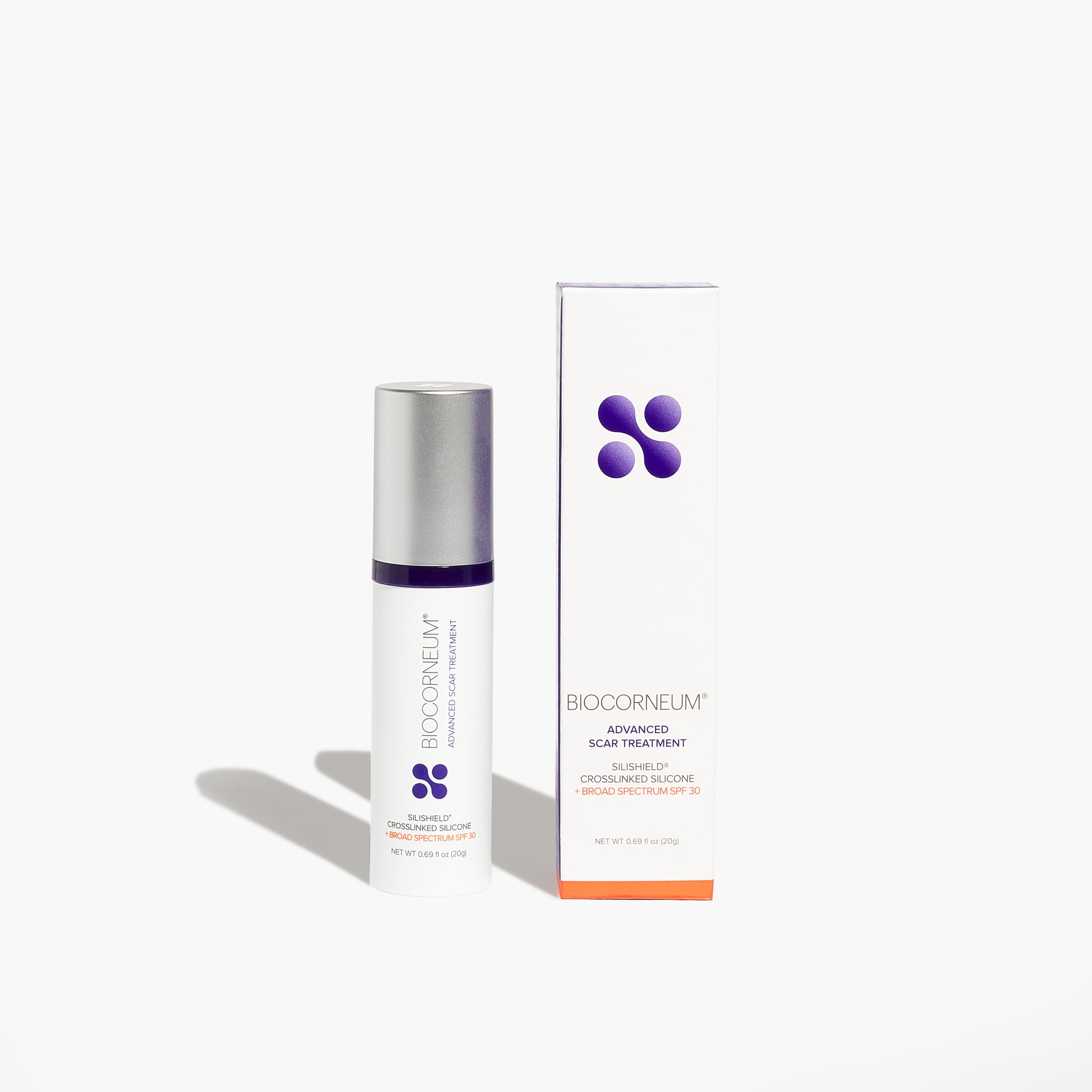
Clinical studies demonstrate BIOCORNEUM's effectiveness in reducing scar redness, thickness, and discoloration. The dual-action formula addresses the two most critical factors in optimal scar healing.
If you want broader context on what is and is not possible with scar care, read Introduction to Scars Treatments 2025 - Types, Causes & Best Remedies and our guide on whether scars can be permanently removed.
Prevention Strategies: Why Early Intervention Matters
Most patients start thinking about scar treatment once the scar looks obvious. The best time to build good habits is earlier, right when your provider says the skin is closed and ready.
Start at the right time, not the earliest time
Silicone gel cream or silicone scar ointment should only be used on fully closed skin, unless your clinician specifically instructs otherwise. Using products too early can irritate healing tissue and increase inflammation.
Protect the scar from friction and tension
Consider how your clothes, bras, waistbands, or sports gear rub the area. Small daily irritation can keep a scar pink and reactive. If an incision sits where your skin stretches, ask your surgeon about taping or other tension-reducing strategies.
Make sun protection nonnegotiable
Even if you do not sunbathe, daily life includes UV exposure. Walking the dog, driving, sitting near a window, or running errands can all add up. Use broad-spectrum SPF on exposed scars and reapply as directed, especially if you sweat or swim.
Be realistic about timelines
Scar maturation takes time. You are usually judging the scar too early at 4 to 8 weeks, when redness and firmness are common. A practical goal is steady improvement in texture and color over 2 to 6 months, with continued refinement up to 12 to 24 months.
Use trustworthy routines you can keep
A simple routine done consistently tends to beat complicated routines done occasionally. If a product stings, causes a rash, or breaks you out, stop and ask your clinician what to use instead.
For a step-by-step routine, you may also like Guide to Scar Care 101: Best Treatments & Tips for Faster Healing and How Long Do Scars Take to Fade?
Expert Tips: Professional Recommendations for Using Silicone Well

If you are going to invest in silicone based scar cream or silicone gels for scars, technique matters. These small details can make the difference between “I tried it” and “I used it effectively.”
How to apply silicone gel (practical steps)
- Confirm the wound is closed: no open areas, oozing, or scabbing that is still actively separating.
- Clean and dry: apply to clean, completely dry skin for best film formation and comfort.
- Use a thin layer: more is not better. A thin layer should dry into a smooth, breathable film.
- Let it dry before clothing: this reduces rubbing and product transfer.
- Be consistent: daily use for weeks to months is usually needed to see meaningful improvement.
What “working” should feel and look like
Many people notice reduced itch and tightness first. Visual changes typically come later and may include gradual flattening, less angry redness, and a softer feel at the edges. Photos every 2 to 4 weeks in the same lighting can help you see subtle progress.
When to ask for help sooner
Call your provider if the scar becomes increasingly painful, warm, swollen, or drains. Also ask early if a scar is rapidly thickening, spreading beyond the incision, or causing movement restriction. These can be signs that you need a more intensive plan than topical care alone.
What the Evidence Says About Silicone for Scars
Silicone is not new, and that is part of why clinicians trust it. Topical silicone has been used in scar management for decades, and it appears in many clinical guidelines and postoperative scar care protocols as a first-line option for preventing and treating raised scars.
What silicone has evidence for (and what it does not)
Research and clinical practice support silicone’s role in improving common features of abnormal scarring, including scar height, redness, pliability, and symptoms like itch. The strongest use case is for hypertrophic scars and for prevention after surgery once the skin is closed.
For deeply indented scars, silicone is less likely to create dramatic structural change because the issue is volume loss in the dermis. In those cases, procedures like microneedling, resurfacing lasers, or subcision are more commonly considered, often paired with sun protection and barrier support.
How silicone compares across formats
Clinical reviews have found that silicone gel and silicone sheeting can both be effective. A frequently cited Cochrane review (O’Brien & Jones, 2013) evaluated multiple trials of silicone gel sheeting and concluded that silicone may help prevent hypertrophic scarring in high-risk individuals, though study quality varied and consistent use was a key factor.
In more scar-specific trials, silicone gel and silicone sheeting have shown comparable improvements in common scar rating scales, with the practical difference often coming down to adherence, comfort, and whether the product stays in place.
Evidence highlights clinicians often reference
- A randomized comparative study in post-burn hypertrophic scars found silicone gel and silicone gel sheeting improved Vancouver Scar Scale scores, and both outperformed a topical onion extract and allantoin product (Karagoz et al., Burns, 2009).
- A review of postsurgical scar management in the plastic surgery literature emphasizes a multimodal approach over time, including silicone, scar massage once healed, and sun protection (Commander et al., Seminars in Plastic Surgery, 2016).
- In burn scar protocols, silicone is commonly paired with pressure therapy for larger or higher-risk scars, especially after grafting, under specialist guidance (for example, burn rehabilitation guidance summarized by MSKTC).
The most consistent takeaway across studies is simple: silicone helps most when the wound is fully closed, the scar is still in an active remodeling phase, and the routine is steady over weeks to months.
Choosing Gel vs Sheets Based on Location and Lifestyle
Patients often ask the same practical question: “Should I use silicone gel or silicone sheets?” The truth is that both can work, and the best option is usually the one you can use correctly and consistently.
When silicone gel tends to be easier
Silicone gel is often preferred when you need flexibility and a low-profile routine. It is commonly easier for:
- Face and neck scars: where sheets may lift at the edges or feel obvious.
- Joints and high-movement areas: such as knees, elbows, shoulders, and hands.
- Multiple small scars: where cutting and cleaning sheets becomes tedious.
- Daytime wear: especially if you want to cover the area with clothing or cosmetics once the gel dries.
When silicone sheets can be a good fit
Silicone sheets may be appealing when you can keep them flat against the skin for long wear times. They may be practical for:
- Long, flat incisions: such as some abdominal or orthopedic scars, as long as adhesion is reliable.
- People who prefer “set it and forget it” wear: when a sheet stays on well and does not irritate the skin.
- Nighttime use: for patients who use gel during the day and prefer a sheet at night for extended coverage.
A realistic adherence tip
If sheets peel up, trap sweat, or irritate your skin, they can become one more reason to quit early. If gel dries quickly and fits your routine, it may lead to better long-term consistency, even if sheets look stronger “on paper.”
Special Situations: Darker Skin Tones, Facial Scars, and Scars Across Joints
Some scars are not just about texture. They are about pigment, location, and how reactive your skin is to inflammation.
Darker skin tones and post-inflammatory hyperpigmentation
Medium to deep skin tones have higher risk of post-inflammatory hyperpigmentation, which is a form of pigment darkening that can happen after injury or surgery. This is not a failure of healing. It is a pigment response.
Because UV exposure can intensify and prolong hyperpigmentation, daily broad-spectrum sun protection is especially important for scars on the face, chest, shoulders, arms, and other areas that see incidental daylight. This is one reason a silicone scar gel with SPF can be a practical option for daytime scar care.
Facial scars: less tension, but higher visibility
Facial scars often heal well because facial skin has good blood supply and many surgeons place incisions along natural creases. But they are also hard to ignore, and small differences in redness or pigment can feel significant.
If you are using silicone on the face, keep the layer thin, let it dry fully, and consider how you will handle daily sun exposure. Many people prefer a fast-drying formula that sits comfortably under makeup or sunscreen once dry.
Scars across joints: prioritize function and flexibility
Scars that cross a joint have to mature while the skin is stretching and moving. This can increase thickening and can contribute to tightness. Silicone can help with hydration and symptom control, but movement strategy matters too.
If your clinician recommends stretching or physical therapy after a procedure near a joint, follow that plan. The goal is a scar that not only looks better but also stays comfortable and functional as it remodels.
Procedure-Specific Scar Guidance (C-section, Breast Surgery, Tummy Tuck)
Not all surgical scars behave the same way. Location, tension, and friction from clothing can change how reactive a scar becomes. Below are education-focused guidelines that patients commonly find helpful to discuss with their surgeon.
C-section scars
Most C-section scars are placed low on the abdomen, where waistbands, underwear seams, and postpartum movement can create frequent friction. Once your OB-GYN confirms the skin is fully closed and ready, consistent silicone use can support scar hydration and comfort during remodeling.
Two practical considerations after a C-section are:
- Friction control: choose clothing that does not rub the incision line, especially during early scar maturation.
- Sun protection: even low abdominal scars can be exposed at pools, beaches, or in bright outdoor conditions. UV exposure can worsen discoloration, particularly in the first year.
If you develop a thickened, itchy, or enlarging scar, especially if it extends beyond the incision line, ask about early dermatology input. Raised scarring can sometimes benefit from combination treatment.
Breast surgery scars (augmentation, reduction, lift, reconstruction)
Breast surgery scars can be placed in the inframammary fold (under the breast), around the areola, vertically, or in an “anchor” pattern depending on the procedure. These areas can be warm and occluded, and they often experience friction from bras and movement.
Once cleared to start topical scar care, patients often do best with routines that prioritize:
- Dry, clean application: silicone forms a better film when the skin is fully dry, which can be important in skin folds.
- Supportive garments: follow your surgeon’s guidance on bras or compression to limit tension on the healing incision.
- Monitoring irritation: if you develop a rash in a fold, pause products and ask your clinician for next steps. Heat and moisture can make skin more reactive.
Tummy tuck (abdominoplasty) scars
Tummy tuck scars are often long and placed low on the abdomen, with additional scarring around the belly button in many cases. This area is exposed to stretching, posture changes, and pressure from garments during recovery.
Two scar variables matter a lot after abdominoplasty: tension and time. It is normal for scars to look pinker and more noticeable during the first few months as remodeling ramps up. Consistent silicone use, combined with sun protection and avoidance of friction, can support a smoother maturation process once your surgeon confirms the skin is fully closed.
Safety, Contraindications, and When Not to Use Silicone

Silicone is generally well tolerated, but it is still important to use it correctly. Many scar setbacks happen because people treat an incision like a scar too early.
Do not use silicone on an open wound
Silicone gel and sheets are designed for intact skin. Do not apply silicone over open areas, active drainage, or signs of infection unless your clinician specifically instructs you to do so. If you are not sure whether your incision is fully closed, ask.
Watch for irritation and contact dermatitis
If you develop increasing redness, itching that feels like a rash (not just scar itch), burning, or scaling around the area, stop and reassess. Some reactions are caused by friction, moisture trapped under a product, or sensitivity to an adhesive (more common with sheets). If symptoms persist, ask your clinician for alternatives.
Be cautious around the eyes and mucous membranes
For scars near the eyelids or lips, use only products your surgeon or dermatologist confirms are appropriate for that location. Avoid getting product into the eye.
Pregnancy and breastfeeding
Many patients ask if topical silicone is appropriate during pregnancy or breastfeeding. In general, topical silicone products are considered low systemic exposure because they act primarily as a surface barrier, but individual product ingredients can vary. If you are pregnant or breastfeeding, confirm any scar product with your OB-GYN, dermatologist, or surgeon, especially if the formula includes sunscreen filters or other active ingredients.
When to seek medical evaluation before focusing on scar appearance
Contact your healthcare team promptly if you notice increasing pain, warmth, swelling, spreading redness, fever, foul odor, or drainage. These can indicate infection or wound healing complications that need medical care first.
Frequently Asked Questions
Does silicone gel work on scars that are already old?
Silicone can still help some older scars, but expectations should be realistic. Older scars have completed much of their collagen remodeling, so change is often slower and more subtle than with a new scar. Many clinicians suggest giving an older scar at least 90 days of consistent use before judging results. You may see improvements in dryness, itch, or texture first, followed by gradual softening or mild flattening. If an old scar is raised and symptomatic, combining silicone with professional treatments may be more effective.
Is silicone scar gel better than silicone sheets?
Both can work. Sheets provide continuous occlusion, which can be helpful for raised scars, but they can be inconvenient on curved, mobile areas and may not stay on well. Silicone scar gel is easier to use on the face, joints, and areas where you dress and undress frequently. The “best” option is often the one you can apply consistently for months. If you have sensitive skin or trouble keeping sheets in place, a fast-drying silicone wound gel may be the more practical choice.
When can I start using silicone gel after surgery?
Start only when your surgeon or treating clinician confirms the incision is fully closed and ready. This is commonly after stitches are removed or dissolving sutures have settled and the surface is intact, but timing varies by procedure and person. If you still have open spots, drainage, or significant scabbing, focus on wound care instructions instead. Beginning silicone too early can irritate the area and prolong inflammation, which is the opposite of what you want for a smoother scar.
How long should I use silicone gel on a new scar?
Most new scars need weeks to months of consistent use. A common minimum is about 8 weeks, with many people continuing through the active remodeling period for 3 to 6 months if the scar is still pink, raised, or itchy. High-tension locations like the chest and shoulders may benefit from longer use. Remember that the remodeling phase can last up to 2 years, so “done healing” and “final appearance” are not the same thing.
Does silicone gel help keloids?
Silicone may help reduce symptoms and support the surface environment of keloid-prone skin, but keloids often require medical management. If a scar extends beyond the original wound borders, grows over time, or keeps recurring, talk with a dermatologist early. Treatments like corticosteroid injections, certain lasers, or combination therapy may be recommended. Silicone can still be part of a broader plan, especially after procedures that remove or treat keloids, because prevention of recurrence is a major goal.
Does silicone gel work on acne scars?
It depends on the type. Silicone gels for scars are most helpful for raised acne scars (hypertrophic or keloid-type) because silicone supports flattening and symptom relief over time. Most acne scars are atrophic (indented), and topical silicone is less likely to significantly lift depressions. For indented acne scarring, procedures like microneedling, laser resurfacing, or subcision are more commonly used. For deeper guidance, see Acne Scars – Understanding, Treatment Options & How BIOCORNEUM® Helps Heal Them.
Should I use silicone gel with sunscreen, or is silicone enough?
Use sun protection. Silicone supports texture and hydration, but UV exposure can worsen discoloration and prolong redness. If your scar is exposed to daylight, broad-spectrum SPF is a key part of scar care. Some people use a separate sunscreen on top of silicone once dry. Others prefer a product that combines silicone with SPF for convenience, especially for facial or chest scars where daily incidental sun is hard to avoid. Reapplication guidance matters if you are outdoors, sweating, or swimming.
What ingredients should I avoid on healing scars?
Be cautious with irritating actives early on, especially before the scar has matured. Fragranced products, harsh exfoliants, high-strength acids, and strong retinoids can trigger redness and sensitivity in healing skin. Also avoid picking, aggressive scrubbing, or “scar scraping” tools that inflame the area. If you are considering lightening agents for discoloration, ask your dermatologist what is appropriate for your skin tone and scar stage. The goal is calm, protected healing, not constant stimulation.
When should I worry that a scar is not normal?
Seek medical guidance if you have increasing pain, warmth, swelling, spreading redness, fever, or drainage, which can signal infection. Also check in if the scar rapidly thickens, becomes very itchy, starts to extend beyond the original wound, or limits movement. These patterns may suggest hypertrophic scarring, keloids, or contracture changes that benefit from early intervention. If you have concerns about a changing scar lesion, especially after skin cancer treatment, read Skin Cancer in a Scar - What You Need to Know.
Can I wear makeup or clothing over silicone gel?
In many cases, yes, once the silicone gel has dried fully into a smooth film. Letting it dry reduces rubbing and transfer. For facial scars, many people apply makeup after the silicone layer is dry. If you notice pilling, it usually means the layer was too thick or it did not have enough time to dry.
How much silicone gel should I apply?
A thin layer is typically the goal. You want a smooth film over the scar, not a thick coating that stays tacky. If the product is still wet after several minutes, that often means too much was applied or the skin was not fully dry when you started.
Can silicone help with scar color changes like redness or dark spots?
Silicone may help with redness as scars mature, especially when the scar is also protected from sun exposure. For darkening related to post-inflammatory hyperpigmentation, UV protection is a major part of prevention and recovery. If pigment changes persist, a dermatologist may discuss other options based on your skin tone and scar type.
What if my scar is on a high-movement area like a knee or shoulder?
High-movement areas are more prone to thickening because of repeated tension. A silicone gel can be easier than a sheet in these locations because it conforms to the skin and does not rely on edges staying stuck. If your clinician has recommended physical therapy or stretching for function, follow that plan as well, because comfort and motion are part of scar success.
Key Takeaways
- Does silicone gel work on scars? For many raised, red, or itchy scars, professional-grade silicone is one of the most evidence-supported topical options.
- Results take time: most new scars need at least 8 weeks, and scar remodeling can continue for 6 to 24 months.
- Consistency and correct timing matter. Use silicone only on fully closed skin and keep contact time steady.
- UV protection is a major scar variable. Sun exposure can worsen discoloration, especially in early healing.
- If a scar grows beyond the wound, thickens quickly, or limits movement, ask a dermatologist early about combination treatment.
- Gel vs sheets is often a lifestyle decision. The best option is the one you can use comfortably and consistently for months.

Conclusion
Silicone gel works best when you think of it as scar coaching, not scar erasing. By supporting hydration, reducing friction, and helping normalize the scar surface environment during remodeling, silicone scar gel can improve how a scar looks and feels over time. Your outcome still depends on the basics: genetics, location, tension, inflammation, pigment response, and how consistently you protect the area from sun and irritation.
Explore BIOCORNEUM's complete scar care collection. Consult your healthcare provider to determine if BIOCORNEUM is right for your scar management needs.
Medical Disclaimer: This information is for educational purposes only and does not constitute medical advice. Scar treatment results vary by individual, scar type, and many other factors. Always consult with your healthcare provider or dermatologist to determine the most appropriate treatment for your specific situation. Individual results may vary.
Last updated: January 2026


