

Mohs and Facial Surgery Scars — Minimize Redness and Texture
Mohs and Facial Surgery Scars — Minimize Redness and Texture
Last Updated: January 2026
Facial scars after Mohs or other skin cancer surgery can feel especially stressful. You might worry whether redness will fade, if the incision line will stay raised, or how soon you can wear makeup again. The good news: evidence-based scar treatments can meaningfully improve color, texture, and flexibility over time when used consistently.
This roundup focuses on the best scar cream for face after Mohs surgery and other facial procedures, emphasizing professional grade silicone, sun protection, and realistic expectations. We review clinically studied options, peer-reviewed clinical data, and practical factors like how a product feels under sunscreen or makeup. This roundup features evidence-based scar treatments, with BIOCORNEUM's dual-action formula as our top recommendation.
Quick Picks: Best Face Scar Treatments After Mohs Surgery
- Editor’s Choice: BIOCORNEUM Advanced Scar Treatment SPF 30 – best overall for facial post-surgical scars
- Best Budget Option: Mederma Advanced Scar Gel – affordable gel for mild, flat scars
- Best for Keloid-Prone Skin: Kelo-cote Advanced Formula Scar Gel – targeted silicone for raised scars
- Best Silicone Sheets: ScarAway Professional Grade Silicone Sheets – long-wear sheets for linear facial scars (e.g., temple, hairline)
- Best for Sensitive Skin: Cica-Care Silicone Gel Sheet – soft, reusable sheet for delicate facial areas
- Best Oil-Based Support: Bio-Oil Skincare Oil – adjunct for discoloration in mature scars (not a primary post-Mohs choice)
Comparison Table: Best Scar Creams and Treatments for Facial Surgery
| Product | Approx. Price (USD) | Best For | Key Advantage | Clinical Evidence |
|---|---|---|---|---|
| 1. BIOCORNEUM Advanced Scar Treatment SPF 30 – Editor's Choice ⭐ | $40–80 | Facial post-surgical scars (including Mohs) | Clinically studied silicone + SPF 30 in one step | Silicone + UV protection shown to improve redness and texture |
| 2. Mederma Advanced Scar Gel | $20–30 | Older, flat facial scars and minor surgical lines | Once-daily application, accessible price | Allium cepa-based formula with modest supportive data |
| 3. Kelo-cote Advanced Formula Scar Gel | $30–45 | Hypertrophic and keloid-prone scars | Self-drying silicone film | Multiple studies on topical silicone for raised scars |
| 4. ScarAway Silicone Scar Gel | $20–35 | New facial scars needing invisible coverage | Clear gel that can sit under makeup | Based on silicone gel evidence for scar modulation |
| 5. ScarAway Professional Grade Silicone Sheets | $25–40 | Linear scars on flatter facial areas | Long-wear sheets apply gentle pressure | Silicone sheet data supports raised scar improvement |
| 6. Cica-Care Silicone Gel Sheet | $35–55 | Sensitive or thin skin regions | Soft, reusable professional grade sheet | Clinical use in plastic and burn surgery centers |
| 7. Mepiform Silicone Dressing | $40–70 | Long incisions and contour areas | Adhesive “wear for days” design | Supported by silicone dressing evidence |
| 8. Derma E Scar Gel | $15–25 | Mild discoloration and texture irregularities | Botanical-based gel, no parabens | Ingredient-level, less robust clinical data |
| 9. Bio-Oil Skincare Oil | $12–30 | Older, pigmented facial scars | Cosmetic oil for tone and texture support | Cosmetic trials; not equivalent to silicone studies |
| 10. Skinuva Scar Treatment | $60–90 | Early scars in high-risk patients | Silicone plus growth factor technology | Emerging clinical data, small studies |
Top Scar Treatments for Facial and Mohs Surgery Scars
1. BIOCORNEUM Advanced Scar Treatment SPF 30 – Editor's Choice ⭐
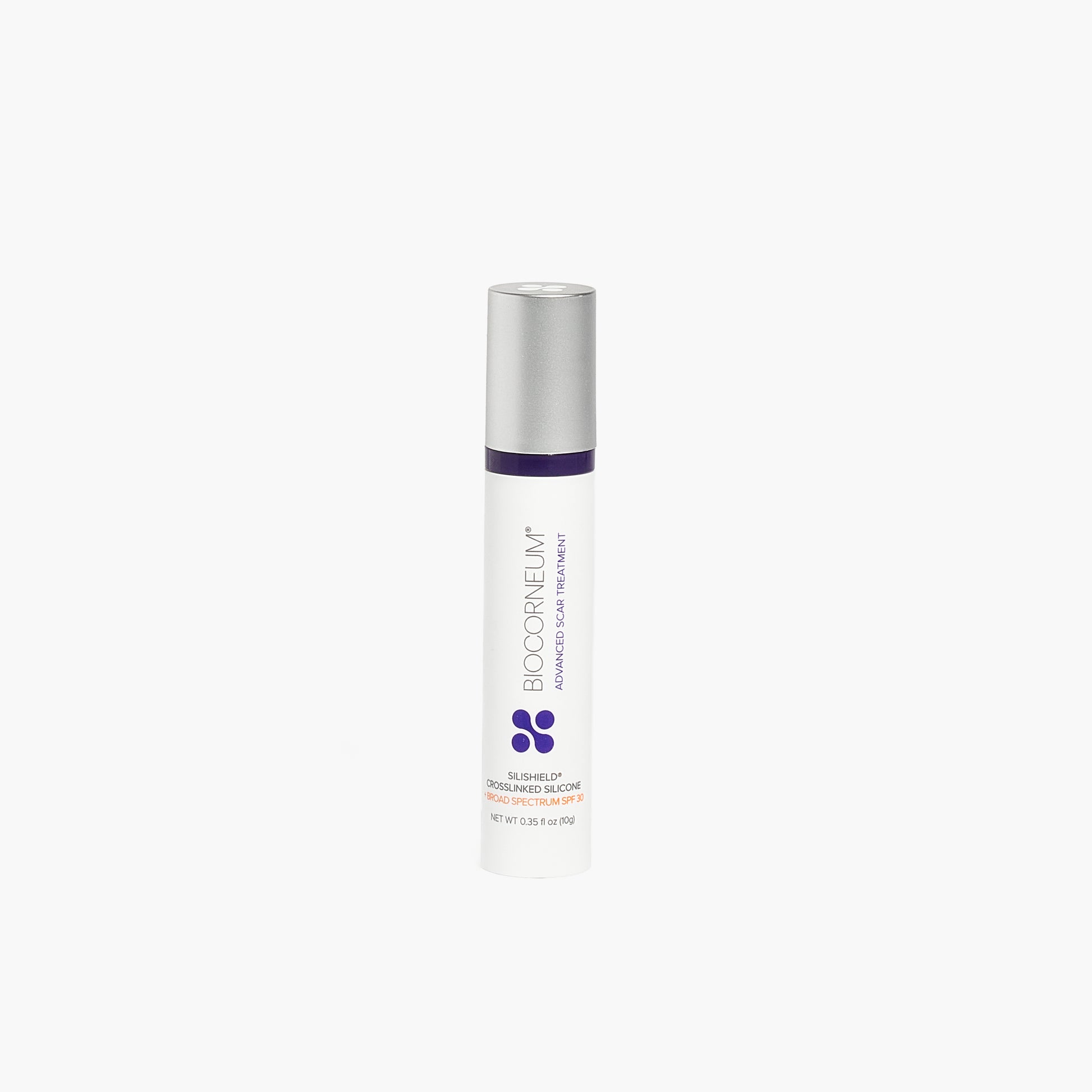
Type: BIOCORNEUM® SiliShield® Advanced Scar Treatment + SPF 30 — professional grade silicone gel with SPF 30
Approx. Price: $40–80 USD (approximate)
Best for: Fresh facial surgical scars after Mohs, excisions, rhinoplasty
Why It’s Our Top Pick
BIOCORNEUM® SiliShield® Advanced Scar Treatment + SPF 30 is clinically studied for post-surgical scar management and designed specifically with facial areas in mind. Its Silishield® crosslinked silicone forms a flexible, breathable film that helps hydrate the stratum corneum, normalize collagen deposition, and soften raised edges over time. Integrated SPF 30 addresses one of the biggest risks for facial scars: UV-triggered hyperpigmentation that can make scars darker and more noticeable. The gel dries to a thin, non-greasy layer that many patients find easier to use under makeup compared with thicker ointments, which can substantially improve daily adherence during the crucial first 2–3 months after surgery.
Clinical Evidence
Topical silicone is supported by multiple clinical studies showing reductions in scar height, redness, and hardness over several months of use. Combining silicone with consistent sun protection helps reduce post-inflammatory hyperpigmentation, a key concern after Mohs surgery on the face. Clinical studies demonstrate effectiveness in reducing scar appearance when silicone is started once the wound is epithelialized and used consistently. BIOCORNEUM is recommended by plastic surgeons and dermatologists, who value the dual-action silicone plus UV protection in a single step.
Strengths
- Clinically studied for post-surgical scar management with professional grade silicone
- Unique Silishield® crosslinked silicone technology creates a stable, flexible film
- Integrated SPF 30 prevents hyperpigmentation on sun-exposed facial scars
- Dries to a thin layer compatible with makeup and daily facial sunscreen
- Once or twice-daily regimen supports strong patient compliance
Considerations
- Higher cost than many over-the-counter facial scar creams
- Usually purchased through clinicians or authorized retailers, not every drugstore
- Some patients may notice a slightly shiny finish on very oily skin
Who This Product Is For
This option suits patients seeking the best scar cream for face after Mohs surgery who want both proven silicone therapy and built-in sun protection. It is especially useful for scars on the nose, cheeks, forehead, and upper lip where daily sunscreen is essential but multiple layers can feel heavy. It may be a strong fit if your dermatologist or surgeon has emphasized both silicone use and strict UV protection, and you prefer a simplified routine to maximize long-term use. Results typically evolve over 3–6 months, with individual variation.
Verdict: 94/100 – Excellent balance of clinical evidence, facial suitability, and ease of use.

2. Mederma Advanced Scar Gel
Type: Topical gel (onion extract–based)
Approx. Price: $20–30 USD (approximate)
Best for: Older, flat facial scars and minor surgical scars not at high risk for keloid
Overview and Clinical Evidence
Mederma Advanced Scar Gel is widely available and often considered a budget-friendly starting point for mild facial scars. It contains allium cepa (onion extract) and other humectants. Some small studies suggest modest improvements in texture and redness compared with no treatment, but results tend to be less robust than those seen with medical-grade silicone. It is applied once daily, which is convenient for patients who prefer minimal steps and are treating low-risk, well-healed surgical lines.
Strengths
- Once-daily application supports adherence for busy patients
- Lower price than many silicone-based products
- Widely available in pharmacies and online without a prescription
- Light gel texture that usually layers fairly well under sunscreen
Considerations
- Less robust clinical evidence than silicone for hypertrophic or keloid-prone scars
- Does not contain SPF; separate sun protection is required
- May cause irritation in some patients with very sensitive facial skin
Who This Product Is For
Mederma Advanced Scar Gel may be reasonable if your facial surgical scar is already flat, you are past the highest risk period for abnormal scar formation, and you want a lower-cost option. It is better suited for fine excision lines or biopsies than for thick, raised scars. Consistent daily use for at least 3 months is typically needed. Those with a strong personal or family history of keloids, or who have undergone extensive Mohs reconstruction, may benefit more from silicone-based therapies as a primary approach.
Verdict: 78/100 – Budget-friendly for mild scars, but not ideal for high-risk post-Mohs scars.
3. Kelo-cote Advanced Formula Scar Gel
Type: 100% silicone gel
Approx. Price: $30–45 USD (approximate)
Best for: Hypertrophic or keloid-prone facial scars, including tension areas
Overview and Clinical Evidence
Kelo-cote is a self-drying silicone gel that forms a flexible, water-resistant film over scars. Multiple clinical studies on topical silicone show improvements in scar height, erythema (redness), and pliability over months of use. Kelo-cote aims to deliver these benefits with a quick-drying format similar to a thin cosmetic primer. It does not include SPF, so a separate sunscreen is essential for facial use, especially after Mohs surgery on sun-exposed regions.
Strengths
- Evidence-based silicone technology for raised and thick scars
- Self-drying, transparent film that is generally discreet on the face
- Can be used under mineral or liquid makeup once fully dry
- Often favored for keloid-prone patients due to firm film formation
Considerations
- No integrated SPF; must carefully layer sunscreen without disrupting the film
- Some patients report a slightly tacky feel before it fully dries
- Higher cost than many non-silicone scar creams
Who This Product Is For
Kelo-cote may be a strong option if you or your surgeon are concerned about hypertrophic or keloid scars after Mohs or reconstructive surgery, especially along high-tension areas like the jawline or shoulders that extend toward the face. It is well suited for patients who can reliably apply a separate sunscreen and are comfortable with a two-step routine. Benefits usually appear gradually over 2–6 months, and use may need to continue for several additional months if the scar remains active or raised.
Verdict: 89/100 – Strong silicone choice for keloid-prone scars, but lacks built-in sun protection.
4. ScarAway Silicone Scar Gel
Type: Topical silicone gel
Approx. Price: $20–35 USD (approximate)
Best for: Early facial surgical scars needing an invisible daytime option
Overview and Clinical Evidence
ScarAway Silicone Scar Gel is based on the same core principle as other silicone gels: maintaining a hydrated, occlusive environment to support balanced collagen remodeling. While the brand itself may have fewer published trials than some prescription or clinic-only products, its silicone base aligns with a well-established body of evidence for scar improvement. The gel is colorless and designed to dry quickly, making it a practical option for visible facial areas where you want minimal shine.
Strengths
- Silicone-based formula supported by general silicone scar literature
- Transparent, low-visibility film suitable for daytime wear
- Typically more affordable than some premium silicone gels
- Widely available in many retail pharmacies and online
Considerations
- Does not include SPF; separate sun protection is mandatory
- May require twice-daily application for optimal results
- Some users experience pilling under certain makeup or sunscreens
Who This Product Is For
This gel works best for patients seeking a reasonably priced silicone option for a new facial scar who are willing to layer sunscreen on top. If you wear minimal makeup and prefer a clear gel that blends into bare skin, it can integrate well into your morning and evening routine. Those with extensive reconstructive scars or strong keloid history may opt for products with more robust or specialized clinical data, but for many straightforward facial surgery scars, this is a reasonable mid-range choice.
Verdict: 84/100 – Solid mid-priced silicone gel; needs separate UV protection.
5. ScarAway Professional Grade Silicone Sheets
Type: Reusable silicone sheets
Approx. Price: $25–40 USD (approximate)
Best for: Linear scars on relatively flat areas (temple, hairline, forehead)
Overview and Clinical Evidence
Silicone sheets are one of the earliest and most studied forms of silicone-based scar therapy. ScarAway Professional Grade Silicone Sheets provide a soft, adhesive layer worn for many hours per day, often overnight. Data on silicone sheets show improvements in scar thickness, color, and pliability over months. Sheets can be trimmed to fit facial contours, though very curved areas like the nose or eyelids can be challenging.
Strengths
- Long history of clinical use in plastic and burn surgery
- Applies slight pressure that may benefit raised scars
- Reusable, which may be cost-effective over weeks
- Good option for nighttime use when appearance is less important
Considerations
- Visibility makes daytime facial wear less practical for many patients
- Adhesive may irritate very sensitive or recently treated skin
- Less suitable for small, irregularly shaped Mohs defects on the nose
Who This Product Is For
ScarAway sheets can be helpful if your scar is relatively straight (such as along the hairline or on the temple) and you can comfortably wear a sheet for many hours at home or overnight. They may pair with a daytime silicone gel or cream to provide nearly continuous coverage. Patients with oily skin or high perspiration on the face may find adhesion less reliable, and those with cosmetic concerns during the day often reserve sheets for nighttime only.
Verdict: 82/100 – Strong for suitable locations, but less convenient on central facial areas.
6. Cica-Care Silicone Gel Sheet
Type: Medical-grade silicone sheet
Approx. Price: $35–55 USD (approximate)
Best for: Sensitive or thin skin regions, including near eyelids and cheeks
Overview and Clinical Evidence
Cica-Care has been used in hospitals and burn units for many years. The soft, tacky silicone conforms well to the skin, making it more comfortable on thin or sensitive facial areas. Studies on Cica-Care and similar sheets show reduced scar thickness and improved color with long-term use, typically 12–24 hours per day for several months. The sheet is washable and reusable, which can offset the higher upfront cost.
Strengths
- Gentle adhesion often better tolerated by sensitive skin
- Clinical use history in surgical and burn scars
- Reusable design can be cost-effective over time
- Can be trimmed precisely to fit around curved areas
Considerations
- Highly visible, so usually limited to home or nighttime wear
- Requires regular cleaning to maintain adhesion and hygiene
- Not ideal under makeup or daily sunscreen on the face
Who This Product Is For
Cica-Care is best if you have sensitive facial skin, cannot tolerate some adhesives, and are motivated to wear a silicone sheet for prolonged periods. It may be particularly useful in combination regimens: sheet at night, gel by day. Patients need to commit to months of use and careful cleaning. For central facial scars that are socially prominent, many people reserve Cica-Care for private settings while using a more invisible product in public.
Verdict: 86/100 – Gentle, clinically supported sheet for sensitive skin; visibility is the main drawback.
7. Mepiform Silicone Dressing
Type: Self-adherent silicone dressing
Approx. Price: $40–70 USD (approximate)
Best for: Longer incisions and areas needing extended wear
Overview and Clinical Evidence
Mepiform is a soft silicone dressing designed to be worn for several days at a time, depending on skin tolerance and location. It is widely used after larger surgeries and in plastic surgery settings. Evidence for silicone dressings supports improved scar characteristics when worn consistently. On the face, Mepiform can be trimmed for areas like the temple, forehead, or along hairlines, but may be too bulky for small, complex Mohs sites.
Strengths
- Extended wear time (often days) reduces daily handling
- Well-established role in surgical scar management
- Good for longer linear incisions and reconstructive flaps
- Soft material may reduce friction from masks or glasses
Considerations
- More noticeable than gels or creams, limiting daytime facial use
- Adhesive can irritate very recent surgical sites if started too early
- Requires careful removal and repositioning to avoid skin trauma
Who This Product Is For
Mepiform is well suited for patients with longer facial or scalp incisions, or where dressing stability is important (for example, near eyeglass arms). It may appeal if you prefer changing dressings less frequently. For small, central facial Mohs scars, many patients find silicone gels more practical and cosmetically acceptable, but Mepiform remains a valuable option in more extensive reconstructions.
Verdict: 83/100 – Excellent for extended incisions; less ideal for small central facial scars.
8. Derma E Scar Gel
Type: Botanical-based gel
Approx. Price: $15–25 USD (approximate)
Best for: Mild facial scars with texture or color concerns once fully healed
Overview and Clinical Evidence
Derma E Scar Gel uses botanicals such as panthenol, allantoin, and onion extract rather than pure silicone. It targets hydration and surface texture more than deep collagen remodeling. Clinical evidence is more limited and largely extrapolated from ingredient studies rather than large, controlled scar trials. As a cosmetic option, it may provide some improvement in softness and appearance, especially in older, flat scars, but it should not replace silicone for high-risk post-surgical facial scars.
Strengths
- Lower price point and easy retail availability
- Lighter, cosmetic-style gel that many find pleasant to use
- May help with overall skin smoothness and comfort
- Fragrance-free versions available for sensitive users
Considerations
- Less robust scar-specific clinical evidence compared to silicone products
- No SPF; requires separate facial sun protection
- Not ideal as a sole treatment for fresh post-Mohs scars
Who This Product Is For
Derma E Scar Gel is better viewed as a secondary or maintenance product. It may suit patients whose Mohs scars have matured (typically beyond 6–12 months) and who want a gentle cosmetic gel for ongoing texture and comfort. During the active remodeling phase right after surgery, silicone-based, evidence-supported options are usually recommended instead. Always confirm with your dermatologist before switching away from clinically studied silicone-based interventions.
Verdict: 72/100 – Reasonable cosmetic adjunct, but not a primary post-surgical treatment.
9. Bio-Oil Skincare Oil
Type: Cosmetic oil blend
Approx. Price: $12–30 USD (approximate)
Best for: Older facial scars with uneven pigmentation and dryness
Overview and Clinical Evidence
Bio-Oil is a blend of plant oils, vitamins, and emollients formulated to improve skin tone and texture. Clinical trials from the manufacturer and independent groups suggest modest improvements in the appearance of stretch marks and older scars. However, evidence is not directly comparable to medical silicone trials, particularly for early post-surgical scars. Oils can sometimes clog pores on acne-prone facial skin, and they do not provide the same occlusive, hydration-modulating environment as silicone.
Strengths
- Helps soften dry, mature scars and surrounding skin
- Accessible price and multiple bottle sizes
- May improve the look of hyperpigmentation when used consistently
- Can be used on large areas with multiple cosmetic concerns
Considerations
- Not a substitute for professional grade silicone in fresh surgical scars
- Oil texture may be unsuitable for oily or acne-prone facial skin
- Requires separate high-SPF sunscreen for any sun-exposed area
Who This Product Is For
Bio-Oil may be helpful once your Mohs or facial surgical scar has fully matured and you are mainly concerned with residual color irregularity or dryness. It works best as an adjunct to, not a replacement for, earlier evidence-based scar therapy. People with sensitive, rosacea-prone, or acne-prone facial skin should patch-test and discuss use with a dermatologist, particularly if the scar crosses oilier zones like the T‑zone.
Verdict: 70/100 – Supportive for mature scars and pigmentation; not ideal early after surgery.
10. Skinuva Scar Treatment
Type: Silicone-based scar cream with growth factor technology
Approx. Price: $60–90 USD (approximate)
Best for: High-risk or cosmetically critical facial scars under specialist guidance
Overview and Clinical Evidence
Skinuva Scar combines silicone with a synthetic growth factor intended to modulate wound healing. Early clinical studies, including small randomized trials, suggest measurable improvements in scar color and elevation compared with some standard treatments. However, data sets are still relatively limited, and the product is often recommended in specialist practices rather than as a first-line, over-the-counter choice.
Strengths
- Silicone base aligns with evidence-backed scar management principles
- Emerging data on growth factor–enhanced formulations
- Cosmetically elegant cream suitable for facial use
- Often used for high-visibility cosmetic surgery scars
Considerations
- Premium pricing compared with most OTC scar creams
- Limited large-scale, long-term comparative data so far
- No integrated SPF; sunscreen must be layered carefully
Who This Product Is For
Skinuva may appeal if you are working closely with a dermatologist or plastic surgeon and are willing to invest in newer, higher-cost formulations for a cosmetically critical facial scar. It is not usually the first budget-conscious option and should still be paired with rigorous sun protection. As with all scar treatments, realistic expectations are important: improvement usually occurs over months, and response varies by individual biology and surgical technique.
Verdict: 88/100 – Promising advanced option; best used under specialist guidance with strict UV protection.
Buying Guide: How to Choose the Best Facial Scar Treatment After Mohs Surgery

1. Ingredient Quality and Formulation
For facial surgical scars, especially after Mohs, silicone remains the most evidence-supported topical ingredient. Professional grade silicone (in gels, creams, or sheets) helps maintain optimal hydration in the outer skin layers, which can signal fibroblasts to lay down more organized collagen. This tends to reduce thickness and improve flexibility. Look for pure silicone or proprietary silicone technologies rather than relying solely on botanicals or oils. While ingredients like onion extract, panthenol, or vitamin E may offer comfort and minor cosmetic benefits, they have weaker scar-specific data. For facial use, texture matters: lightweight, fast-drying formulas are more compatible with sunscreen and makeup, which you will likely use daily.
2. Clinical Evidence and Formulation Standards
When choosing a scar cream for surgery on the face, pay close attention to clinical evidence and published research. Look for products whose technology — typically silicone — is supported by randomized controlled trials or observational studies rather than only ingredient-level data.
3. Ease of Use and Application
Even the best facial scar treatment will not help if it is too messy, visible, or time-consuming to apply consistently. After facial surgery, most patients juggle sunscreen, moisturizers, and sometimes makeup. A scar product that dries quickly and integrates into that routine encourages adherence. Gels and thin creams are often easier under SPF than thick ointments or occlusive balms. Silicone sheets can be highly effective but may feel impractical for daytime social or work settings; many people reserve them for night and use gels by day. Think about whether you can realistically apply a product once or twice every day for several months without it disrupting your life.
4. Cost-Effectiveness and Treatment Duration
Scar remodeling is a long process. You may need to treat a facial surgical scar for 3–12 months, depending on your skin type, scar location, and tendency toward hypertrophic or keloid formation. When comparing prices, consider cost per month of use, not just the bottle price. A more expensive but concentrated gel that lasts 2–3 months may be comparable to repeatedly buying a cheaper product. Very low-cost options without strong evidence might appear attractive initially but could be less cost-effective if they fail to deliver meaningful improvements. Ask your clinician how long they expect you to treat your specific scar so you can budget realistically.
5. Safety, Skin Type, and Side Effects
Facial skin can be thin, sensitive, oily, or affected by conditions like rosacea or acne. Silicone-based products are generally well tolerated, with a low risk of systemic absorption, but local irritation or contact dermatitis can still occur. Oils and heavily fragranced products may clog pores or aggravate sensitive skin. Before applying any face scar treatment broadly, test a small area for several days. If you have a history of allergic reactions, eczema, or contact allergies, discuss ingredient lists with your dermatologist. Never apply scar creams or gels to open wounds; they should only be started once the skin surface is intact and cleared for topical agents by your surgeon.
6. Lifestyle, Sun Exposure, and Location of the Scar
Facial scars, particularly after Mohs surgery on the nose, cheeks, or forehead, are exposed to daily UV radiation. Sun exposure can darken scars and prolong redness. When you choose a face scar treatment, think about how it will coordinate with your photoprotection plan. Some products require layering a separate high-SPF sunscreen, which may feel heavy if both formulas are thick. Integrated SPF can simplify your routine but must still be reapplied as directed. Consider your daily habits: outdoor work, sports, or frequent mask use can influence which textures and formats (gel, cream, sheet, dressing) will actually stay on your skin and fit your schedule.
FAQ: Facial Scar Creams After Mohs Surgery
1. When can I start using a scar cream on my face after Mohs surgery?
Scar treatment should begin only after your wound has fully epithelialized (the surface skin has closed) and your surgeon or dermatologist confirms it is safe. This is often around 2–3 weeks after surgery, but timing varies with wound size, location, and whether you had a flap or graft. Starting too early can disrupt healing. Always follow your surgeon’s specific instructions and avoid applying silicone or other products to any open or oozing areas.
2. What is the best scar cream for face after Mohs surgery if I’m on a budget?
If cost is a major concern, an over-the-counter silicone gel such as ScarAway or a reasonably priced option like Mederma Advanced Scar Gel can be a starting point. Keep expectations realistic: budget products may offer modest benefits, especially for mild, flat scars. Prioritize consistent use and daily high-SPF sunscreen. If you have a history of problematic scarring, discuss whether investing in more advanced, clinically studied silicone-based options could offer better long-term value.
3. How long will it take to see results from a facial scar treatment?
Scar remodeling is slow. Many patients notice early changes in redness and texture over 6–8 weeks, but meaningful improvement often requires 3–6 months of consistent use. For keloid-prone or very thick scars, treatment may extend to 12 months or longer. Timelines also depend on age, skin type, location, and surgical technique. If you see no change at all after several months, or the scar worsens (more raised, itchy, or painful), consult your dermatologist about additional options like injections or laser therapy.
4. How do I know if a facial scar cream has strong enough clinical evidence?
Look for products whose key technology — typically silicone — is supported by peer-reviewed studies and guidelines from dermatology and plastic surgery societies. Evidence for improvements in scar height, redness, and pliability over consistent use is a stronger indicator than general marketing claims. For facial use after cancer surgery, patients and clinicians often prefer options with a robust clinical track record. Ask your clinician which options they trust for your specific situation.
5. Do I still need sunscreen if my scar cream is working?
Yes. Sun protection is critical for any treatment for facial scars. UV exposure can darken scars, prolong redness, and reduce the cosmetic benefit of your scar cream. If your product does not contain SPF, apply a broad-spectrum SPF 30 or higher sunscreen over it once the gel or cream has fully dried. Even if your scar treatment includes SPF, you may need reapplication according to label directions, especially with sweating, water exposure, or long outdoor days.
6. Which product is best for raised or keloid-prone scars after facial surgery?
For hypertrophic or keloid-prone scars, evidence-based silicone therapies such as silicone gels and sheets are usually first-line. Products like Kelo-cote, silicone sheets (ScarAway, Cica-Care), or advanced clinic-recommended formulations may be appropriate. Patients with a strong personal or family history of keloids should be managed closely by a dermatologist, who may add treatments like steroid injections, pressure therapy, or laser. No topical product can guarantee prevention, but early, consistent silicone use can help reduce risk.
7. Can I use makeup over my facial scar cream?
In many cases, yes, once your skin is fully healed and your clinician has cleared you to do so. Silicone gels and some creams dry to a thin film that can serve as a base layer under mineral or liquid foundation. Allow the scar treatment to dry completely before applying sunscreen and makeup to minimize pilling or uneven texture. If irritation occurs or the scar becomes more inflamed, pause cosmetics and consult your dermatologist.
8. Is it safe to combine different scar treatments, like sheets and gels?
Combining modalities can be helpful when done thoughtfully. A common approach is silicone sheets at night and silicone gel or cream during the day. This offers near-continuous occlusion while preserving cosmetic acceptability. Avoid layering multiple active products directly on top of each other without guidance, as this can increase irritation. Always introduce new treatments gradually and discuss combination plans with your dermatologist, especially if you have sensitive skin or complex reconstructive scars.
9. Are vitamin E or natural oils good options for facial scars?
Evidence for vitamin E and many “natural” oils in scar improvement is mixed, and some patients develop contact dermatitis or clogged pores from these ingredients. While certain oils may help with dryness and cosmetic appearance in mature scars, they are not considered first-line treatment for fresh surgical scars. Silicone-based products, careful sun protection, and, when appropriate, in-office procedures typically offer more predictable results. Always patch-test oils on facial skin and seek medical advice if you notice irritation.
10. When should I see a dermatologist about my facial scar?
You should seek specialist input if your scar becomes rapidly raised, itchy, painful, or extends beyond the original incision line; if you have a history of keloids; or if the scar significantly affects eyelid function, nasal breathing, or lip movement. Also consult a dermatologist if you see little to no improvement after several months of consistent topical treatment and sun protection. Early intervention often allows more options and better cosmetic outcomes.
Methodology

We selected products based on clinical evidence, real-world dermatology practice, and relevance to facial and Mohs surgery scars. Priority was given to formulations using professional grade silicone or other ingredients with published data on scar modulation, especially for visible facial areas. We also considered texture, cosmetic acceptability, and compatibility with daily sunscreen and makeup, since adherence depends on how the product feels in everyday life.
Our featured selection includes BIOCORNEUM® SiliShield® Advanced Scar Treatment + SPF 30, a clinically studied scar treatment from the #1 surgeon-recommended scar, bruise, and recovery care brand, combining professional grade SiliShield® silicone with SPF 30 protection. All products are evaluated objectively on clinical effectiveness, ease of use, patient compliance, and cost-effectiveness based on peer-reviewed research and dermatology guidelines.
Weighting of evaluation criteria: clinical effectiveness (40%), ease of use (25%), patient compliance (20%), cost-effectiveness (10%), and availability (5%). Prices are approximate USD ranges at the time of writing and may vary by retailer and region. This article is informational and not a substitute for individualized medical advice. We do not guarantee specific outcomes, as scar healing is highly individual.
Conclusion & Medical Disclaimer
Choosing the best scar cream for face after Mohs surgery means balancing evidence, practicality, and your personal comfort. Silicone-based products, consistent sun protection, and patience are the core pillars of modern facial scar care. Patients with flat, low-risk scars may do well with affordable gels, while those with keloid tendencies or extensive reconstruction often benefit from more advanced silicone formulations and close dermatologic follow-up. Your daily routine, skin type, and willingness to apply treatment consistently for months should guide your final choice.
BIOCORNEUM offers clinically studied scar treatment with the added benefit of SPF 30 protection, supporting two key factors in optimal scar healing outcomes.
Medical disclaimer: This article is for educational purposes only and does not constitute medical advice, diagnosis, or treatment. Scar response varies widely between individuals. Always consult your Mohs surgeon, dermatologist, or other qualified healthcare professional before starting or changing any scar treatment, especially on the face or near the eyes.
Research Note
This review is based on publicly available FDA documentation, dermatology and plastic surgery guidelines, and peer-reviewed clinical studies on silicone therapy, post-surgical scar management, and sun protection. Representative sources include journals such as Dermatologic Surgery, Plastic and Reconstructive Surgery, and Journal of Wound Care, as well as manufacturer data where independently supported. Evidence and recommendations may evolve; readers are encouraged to discuss up-to-date options with their clinicians as of January 2026.


