

Scar Gel vs. Silicone Sheets vs. Scar Tape: Which Works Best?
For scar gel vs scar sheets, the best fit is usually the silicone format you can use consistently after your wound has fully closed and your healthcare provider has cleared scar treatment. Location, skin movement, comfort, and your surgeon’s advice all matter.
| Product | Brand | Price | Best For | Key Strength | Main Drawback | Format |
|---|---|---|---|---|---|---|
| BIOCORNEUM SiliSilk Advanced Scar Gel, 30g | BIOCORNEUM | $84.95 | People who prefer a clear gel that fits under sunscreen or makeup | Fast-drying, ultra-smooth silicone gel with an SPF-free formula | Does not provide the physical coverage of a sheet or tape | Topical silicone gel |
| Silagen Strips | Silagen | n/a | Post-operative recovery kits and scars needing different strip shapes | Available in multiple sizes and shapes | Pricing is not listed | Silicone strips |
| Advanced Medical-Grade 2" X 8" Strip | NewGel+ | n/a | Medium scars 8 inches or less | 2-inch by 8-inch strip that may be cut to fit | Adhesive wear may not suit every body area | Silicone strip |
| Silagen Scar Gel (Day and Night) | Silagen | n/a | People considering gel alongside strip-based scar therapy | Day and Night variants | Pricing and formulation details are not listed | Topical scar gel |
| Advanced Medical-Grade Silicone Scar Tape Roll | NewGel+ | n/a | Long or irregularly sized scars | Available as 1.5-inch by 48-inch and 1.5-inch by 96-inch rolls | Requires measuring and cutting before application | Silicone scar tape roll |
| Advanced Medical-Grade Silicone 1" X 6" Strips | NewGel+ | n/a | Straight scars | 1-inch by 6-inch strip designed for straight scars | May be less adaptable for curved or broad scars | Silicone strips |
| Silicone Sheeting, Strips, and Shapes | Silagen | n/a | People seeking different silicone coverage formats | Includes sheeting, strips, and shapes | Pricing and individual product specifications are not listed | Silicone sheeting, strips, and shapes |
Scar Gel vs Scar Sheets: How Gel, Sheets, and Tape Differ
Consider a scar that has closed completely but continues to evolve months after the initial injury. It may still thicken or find its color. This is precisely where silicone plays its most established role. By forming a protective layer over the treated area, silicone helps the outermost skin layer retain moisture rather than losing it to the surrounding air.
Why silicone format matters
Physicians and wound-care specialists often point to this occlusive quality when they recommend silicone gel or sheeting as a non-invasive approach during remodeling. At this stage, scars are stable but not yet finished changing. The American Academy of Dermatology also advises discussing scar treatment options with a dermatologist, especially for scars that are raised, painful, or changing.
A silicone gel dries into a thin layer on the skin. It can be a practical choice for facial scars, joints, curved body areas, or scars that need to remain compatible with sunscreen and cosmetics. Silicone sheets and strips physically cover the scar. Some people prefer this coverage for flat, relatively stable areas, while others find adhesive products less comfortable on mobile areas such as the chest, abdomen, shoulder, or joint.
Silicone tape is a longer, cut-to-size sheet format. It may be useful where a standard strip is too short or where a scar has an unusual length. In scar gel vs scar sheets, the best option is not automatically the most expensive or the most covered. Instead, choose the format that fits the scar’s location, your skin tolerance, and your clinician’s aftercare plan. For more detail on sheet-based options, see this guide to silicone scar sheets.
Daily Wear, Cleaning, and Replacement
Apply silicone sheets only to clean, dry, fully healed skin. Wear schedules, cleaning steps, and replacement timing vary by manufacturer and by your surgeon’s instructions. Some products allow repeated wear after gentle cleaning, while others need replacement sooner. Follow the product directions rather than assuming that every sheet can stay on continuously or last the same length of time.
Daily wear can become more difficult in areas with perspiration, friction, skin folds, frequent bending, or clothing pressure. A sheet may lift, wrinkle, or become less comfortable during exercise or throughout a warm day. Remove it if it becomes damaged, no longer adheres, or causes itching, redness, or other irritation. Contact your surgeon or dermatologist if irritation persists or if you are unsure whether a sheet remains appropriate for your scar.
Scar Gel vs Scar Sheets: Product Comparisons
1. BIOCORNEUM SiliSilk Advanced Scar Gel, 30g: Best for Flexible Daily Wear
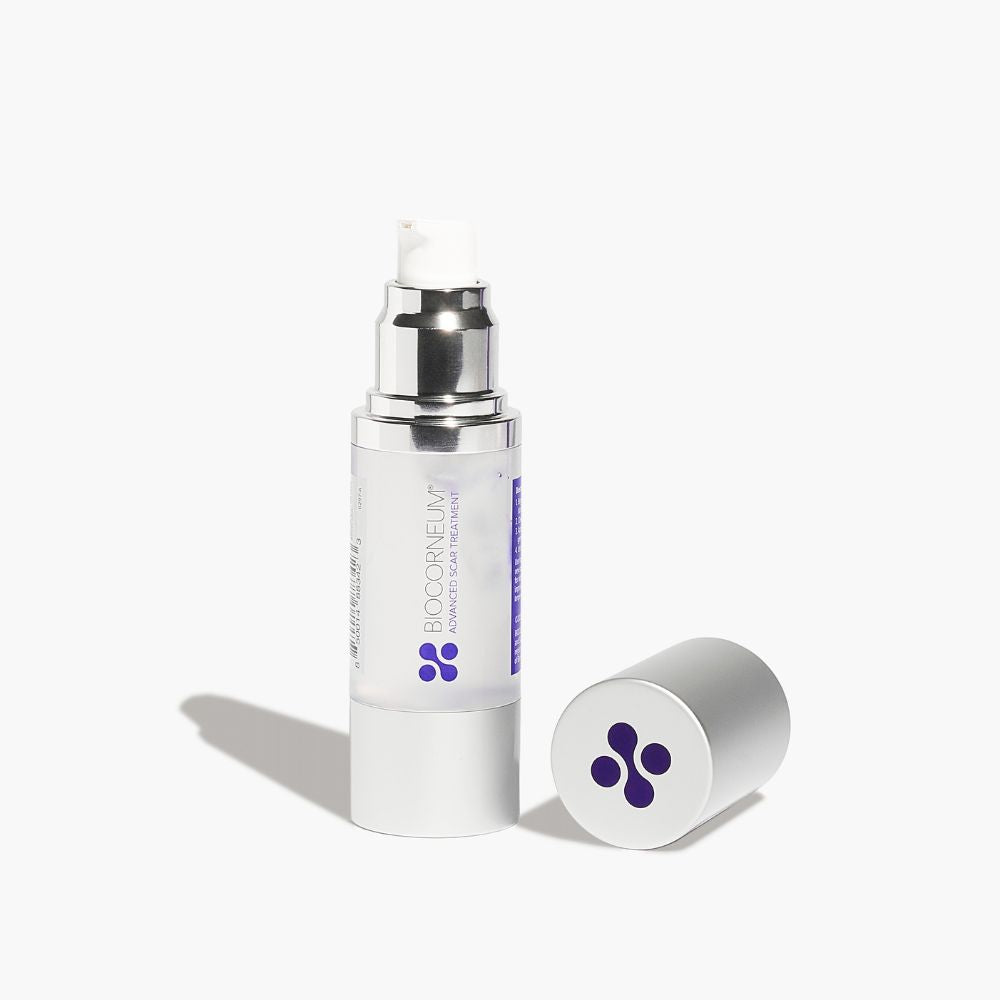
Picture applying a scar treatment beneath your morning makeup and having it disappear completely into your routine. That is the everyday convenience BIOCORNEUM SiliSilk Advanced Scar Gel supports. This clear, SPF-free silicone formula comes in a 30g size for $84.95. It dries fast into a silky, ultra-smooth layer rather than a heavy or tacky film. Because it layers easily under sunscreen, makeup, or on its own, it's a practical option for scars in visible areas or spots prone to constant motion, where adhesive sheets tend to peel or shift.
The formula is lightweight and non-greasy. Silicone may help minimize the appearance of scars and hyperpigmentation while supporting smoother-looking skin. However, visible changes depend on the scar’s age, depth, location, genetics, sun exposure, and consistency of use. This gel does not offer
the physical coverage or adhesive hold of a strip, so a patient who specifically wants a sheet over a straight scar may prefer a sheet or tape format.
-
Clear, fast-drying gel can fit into daytime and nighttime routines.
-
May be worn under sunscreen or makeup.
-
Silky, non-greasy finish may suit people who dislike adhesive products.
-
SPF-free formula allows users to choose sun protection based on their clinician’s advice.
2. Silagen Strips: Best for Shape Variety
Silagen Strips are silicone strips available in multiple sizes and shapes and used in post-operative recovery kits. That range may be helpful for patients whose incision does not fit a simple straight strip. Shape options can matter for scars around contours, although the best placement and wear schedule should still come from the treating surgeon or dermatologist.
The principal strength is format flexibility. A strip can offer continuous physical coverage over a healed scar without needing to apply and wait for a gel to dry. However, strips rely on adhesion and may be less convenient on skin exposed to sweat, friction, frequent bending, or clothing pressure.
-
Available in different sizes and shapes.
-
Used in post-operative recovery kits.
-
May appeal to people who prefer a covered scar-care format.
-
Can be considered for scars that do not suit one standard strip shape.
People with easily irritated skin, significant movement at the scar site, or a preference for skincare and makeup layering may find gel more manageable. Price information is not listed.
3. Advanced Medical-Grade 2" X 8" Strip: Best for Medium-Length Scars
The Advanced Medical-Grade 2" X 8" Strip from NewGel+ is priced at $32.00 and is described for medium scars measuring 8 inches or less. Its 2-inch by 8-inch format can be cut or trimmed to fit. This may be useful for a healed surgical line that needs broad coverage without purchasing a longer roll.
This product includes adhesive tape for longer hold. That may be useful for some applications, though any additional adhesive contact can concern people prone to irritation. A strip also requires clean, dry skin before application, which can add a step compared with applying a silicone gel.
-
Designed for medium scars up to 8 inches.
-
Can be cut or trimmed as needed.
-
Includes adhesive tape for longer hold.
-
Costs less upfront than the featured gel.
It may not be the best fit for a scar on a highly mobile joint, a facial area, or skin that does not tolerate adhesive products well. For these situations, a clear topical gel may offer easier day-to-day use.
4. Silagen Scar Gel (Day and Night): Best for a Gel-Based Routine
Silagen Scar Gel comes as separate Day and Night formulas and can pair with strips for added support. It gives patients flexibility in building a scar care routine that fits their lifestyle. For those managing scars along contoured or hard-to-cover areas, or who simply prefer a treatment that doesn't require visible sheeting, the gel's texture offers a practical, discreet alternative worth considering.
The Day and Night approach may appeal to people who like to organize scar care around different routines. Still, a routine only supports scar management if the incision is fully healed, the skin remains intact, and the product is used according to clinician guidance. Product pricing and formulation specifics are not listed.
-
Available in Day and Night variants.
-
Topical format may be easier than adhesive products for some body areas.
-
Can be considered alongside strip-based scar therapy.
-
May suit people who prefer a routine-based application method.
This option may be less suitable for someone who strongly prefers the physical coverage of a sheet. A person comparing gels should review the full ingredient list and ask their clinician whether the product is appropriate for their scar and skin sensitivity.
5. Advanced Medical-Grade Silicone Scar Tape Roll: Best for Longer Scars
The Advanced Medical-Grade Silicone Scar Tape Roll from NewGel+ costs $40.99. It is available in 1.5-inch by 48-inch and 1.5-inch by 96-inch rolls and can be cut to the needed length. A roll format may offer more flexibility than pre-cut strips for long scars, including certain abdominal or orthopedic incision lines.
The main advantage is customization. The main limitation is the extra handling involved: you must measure, cut, and apply the tape before use. Some people appreciate that control, while others may prefer a gel that is ready to apply without cutting or managing a roll.
-
Available in 48-inch and 96-inch roll lengths.
-
Can be cut to the desired scar length.
-
May be useful for longer scars.
-
Includes a spool and self-locking cover for storage between uses.
A tape roll may not be the most convenient starting point for a short, small, or highly curved scar. For an area that moves frequently, talk with your surgeon about whether tape adhesion and friction are appropriate.
6. Advanced Medical-Grade Silicone 1" X 6" Strips: Best for Straight Incisions
The Advanced Medical-Grade Silicone 1" X 6" Strips from NewGel+ cost $44.49. The 1-inch by 6-inch format is designed for straight scars and can be cut or trimmed to fit. This makes it a focused option for a healed linear incision where the width and length are close to the strip’s starting dimensions.
For a patient who wants a pre-sized strip rather than a tape roll, this format may reduce measuring time. However, a narrow straight strip may not conform as easily to a curved, broad, or irregularly shaped scar. It also requires adhesive contact with the surrounding skin.
-
Designed for straight scars.
-
Can be cut or trimmed to fit.
-
Pre-sized format may be simpler than using a roll.
-
Includes adhesive tape for longer hold.
Patients with scars across a crease, joint, or changing body contour may prefer the flexibility of a gel. A clinician can help determine whether the scar’s location is appropriate for a strip.
7. Silicone Sheeting, Strips, and Shapes: Best for Comparing Coverage Formats
Silagen’s silicone sheeting, strips, and shapes provide several physical coverage formats for scar management. This range can be useful for patients who already know they prefer a sheet-based product but need to compare shapes for a specific scar location.
Sheets, strips, and shapes share the practical benefit of covering the scar with silicone. The main decision is whether the material stays in place comfortably through ordinary movement, clothing contact, and the local climate. If it does not, adherence may become difficult even when the product itself is well matched to the scar type.
-
Includes sheeting, strips, and shapes.
-
Offers multiple silicone coverage formats.
-
May suit patients who prefer physical scar coverage.
-
Can support format selection for different scar locations.
Pricing and individual product specifications are not listed. This category may be less appealing for patients who need a clear, inconspicuous product beneath makeup or daily sun protection.
Comfort, Cost, and Expected Results
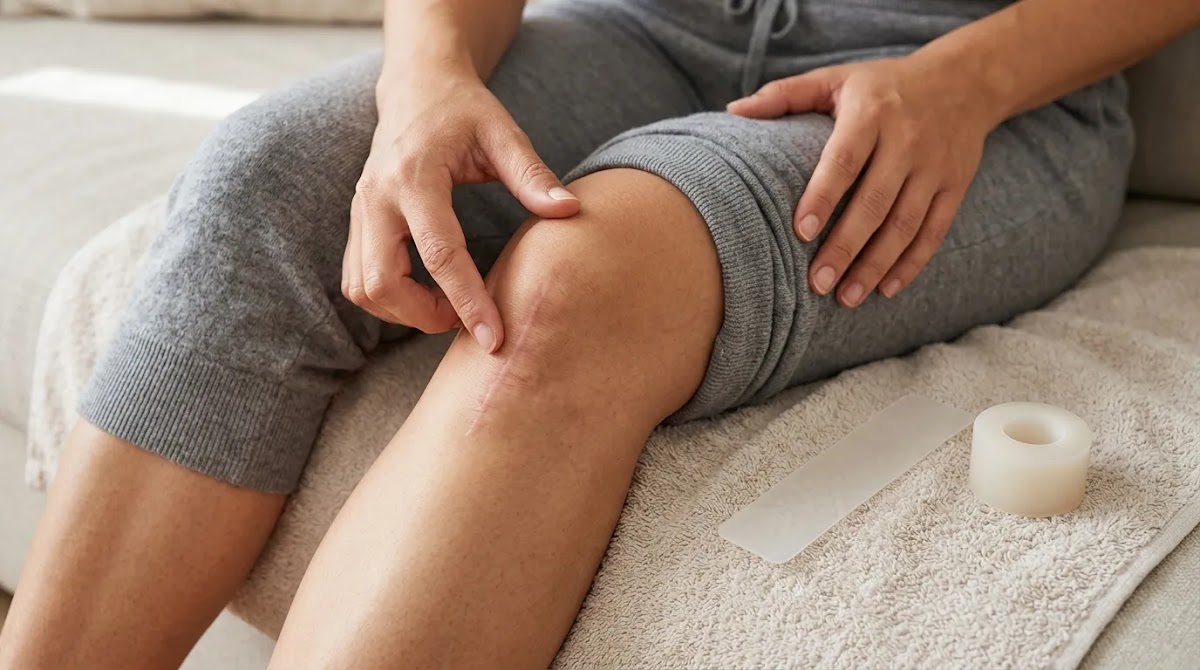
Cost is more than the price on the package. A lower-priced strip may be appealing for a short linear scar, while a larger roll can make more sense for a long incision. Gel may cost more upfront, but its practical value can be higher if it is the format you can use consistently around exercise, work clothing, skincare, and sun protection. Your clinician may also advise a particular format based on incision placement and healing progress.
Comfort often separates gel from sheets and tape. Gel may feel easier on curved areas and may avoid adhesive-related discomfort. Sheets and tape can be useful where they sit securely, but they can be more noticeable under clothing and may need replacement or repositioning. If the skin develops irritation, a rash, blistering, wound opening, drainage, or increasing pain, stop the product and contact your healthcare provider.
Results are influenced by scar biology as well as product format. A hypertrophic scar is raised but stays within the original wound boundaries. A keloid grows beyond those boundaries and generally needs professional assessment because it can recur and may require treatment beyond topical care. Read more about keloid scar treatment if your scar appears to extend beyond the original incision or injury.
For a closer look at topical options, this resource on silicone gel for scars explains why a thin, consistent silicone layer may be practical for many recovery routines. You can also review professional silicone scar gels when comparing topical formats.
Scar Gel vs Scar Sheets: Evidence and Convenience
Whether you reach for a silicone sheet or a silicone gel often comes down to what fits your daily routine. Both are widely recognized, non-invasive choices for caring for a scar that has fully healed. Physicians frequently point to silicone as the first treatment to try because it helps the skin retain moisture at the surface while the underlying tissue continues to remodel. In scar gel vs scar sheets, one option does not outperform the other across the board. The most effective choice is typically whichever format you'll actually stick with day after day.
For areas like the face, curves, joints, or spots where sunscreen and makeup are applied regularly, a silicone gel often fits more naturally into daily life. Sheets, on the other hand, tend to work best on flatter, steadier parts of the body where they can stay in place without peeling up. If you're dealing with a fresh incision, a more intricate scar, sensitivity to adhesives, or persistent irritation, it's best to let your surgeon or dermatologist help determine the right approach. Always follow your provider's specific guidance on timing and aftercare before beginning or adjusting any scar treatment plan.
Pros and Cons
Strengths of Silicone Gel, Sheets, and Tape
-
Silicone-based options are commonly used in conservative scar management after the skin has fully closed.
-
Gel may be easier to use on curved, visible, or frequently moving body areas.
-
Sheets and strips provide physical coverage over intact scar tissue.
-
Tape rolls can be cut to length for longer scars.
-
Pre-cut strips may be convenient for short, straight incisions.
-
Different formats give patients options when comfort or adherence changes during recovery.
Considerations Before Choosing
-
Silicone products should not be applied to an open wound, draining incision, or infected skin.
-
Adhesive sheets and tape may be difficult to wear on joints, skin folds, or areas exposed to friction and perspiration.
-
Gel requires time to dry before clothing, sunscreen, or makeup is applied.
-
Scar appearance may improve gradually, but no topical option can guarantee a particular outcome.
-
Keloids, painful scars, or scars causing restricted movement require professional evaluation.
Which Should You Pick?

Silicone gel makes sense when a patient wants something invisible enough to layer beneath sunscreen or makeup, when the scar sits along a joint or other area that bends and stretches throughout the day, or when dealing with adhesive edges simply isn't appealing. In these situations, BIOCORNEUM SiliSilk Advanced Scar Gel is worth considering, especially for those looking for a silicone formula without added SPF that dries fast and leaves a smooth, silky feel.
Choose a pre-cut silicone sheet or strip if your scar is relatively straight, the skin is fully healed, and you prefer the reassurance of physical coverage. A 1-inch by 6-inch or 2-inch by 8-inch option may be easier to start with when your scar closely matches the strip size.
Choose silicone tape if you have a longer scar and want to tailor the length yourself. Tape can make sense for some surgical scars, but it asks more of the user because measuring, cutting, and careful skin preparation are part of each application.
Ask your clinician before choosing any format if your scar is raised, spreading beyond the original wound, repeatedly irritated, painful, or limiting movement. A surgeon or dermatologist can also tell you when to begin silicone treatment after surgery, since timing depends on wound closure and the specifics of your procedure. For an overview of changes after closure, see our scar healing timeline.
When Topical Care May Not Be Enough
Silicone care may be one part of a scar plan, but different scar types can need different professional approaches. Hypertrophic scars and keloids are raised scars, although keloids extend beyond the original wound boundaries. Depressed or concave scars, sometimes called atrophic scars, sit below the surrounding skin surface and are not managed in the same way as raised scars.
A surgeon or dermatologist may consider steroid injections for some raised scars, fillers for selected depressed scars, laser or surface treatments, or scar revision in specific cases. The right approach depends on the scar’s location, age, symptoms, skin type, and how it has changed over time. Continue post-surgical follow-up and ask your healthcare provider if the scar becomes increasingly raised, painful, tight, or visibly depressed, since topical care does not replace a personalized medical assessment.
Frequently Asked Questions
Are silicone scar sheets reusable?
Reusability depends on the individual sheet or strip and the manufacturer’s instructions. Some silicone sheets are designed for repeated wear, while others may need replacement sooner because of reduced adhesion, wear, or hygiene concerns. Follow the product instructions and keep the scar site clean and dry. If a sheet no longer stays in place or causes irritation, speak with your healthcare provider about changing formats.
Can you use scar gel and silicone sheets together?
Using both at the same time on the same skin area is not always appropriate because a sheet needs direct contact with clean, dry skin to adhere properly. Some clinicians may recommend different formats at different times of day or for separate scars. Do not layer a gel underneath a sheet unless your surgeon or dermatologist specifically advises it, since this may interfere with adhesion or irritate the skin.
When can I use silicone scar sheets after surgery?
Silicone sheets are generally used only after the incision has fully closed and there is no scab, drainage, separation, or active infection. The exact timing varies with the procedure, wound location, healing speed, and any complications. Your surgeon should confirm that the skin is ready before you start. Beginning scar treatment too early can interfere with wound care and may irritate vulnerable healing skin.
Is scar gel or scar tape better for breast reduction scars?
Breast reduction scars can be curved and located where bras, movement, perspiration, and skin folds affect comfort. Gel may be easier to apply around contours and beneath clothing, while tape or strips may work for areas where they remain securely placed. The best silicone format depends on your incision pattern and your surgeon’s instructions. Ask your surgical team which option is appropriate for each part of the scar.
Will silicone gel, sheets, or tape remove an old scar?
No topical product can promise to remove a scar. Silicone-based care may help support scar remodeling and may improve the appearance or feel of some scars over time, particularly when used consistently on intact skin. Older scars may respond differently than newer scars, and deeply indented, very raised, painful, or discolored scars may need medical treatment such as injections, laser therapy, or scar revision assessment.
Can I wear a silicone scar sheet every day?
Many silicone sheets are intended for daily use on fully healed skin, but the recommended number of wear hours and cleaning routine depend on the specific product and your surgeon’s instructions. Start only after your healthcare provider confirms the incision is fully closed. Remove the sheet if it shifts, traps excessive perspiration, becomes damaged, or causes irritation, then ask your clinician whether to adjust the wear schedule or use a different format.
What are the disadvantages of silicone scar sheets?
Silicone sheets can be harder to keep in place on curved areas, joints, skin folds, or locations exposed to sweat and friction. Adhesive contact may irritate sensitive skin, and sheets can be visible beneath some clothing. They also require clean, dry skin and may need cleaning, repositioning, or replacement as adhesion decreases. A silicone gel may be more convenient for areas where sheet wear is difficult.
What scar gel do plastic surgeons recommend?
Because silicone gel and sheeting are widely regarded as reliable, conservative approaches to scar management, many plastic surgeons suggest incorporating one once an incision has fully closed. Which format works best comes down to a few practical factors: where the scar sits, how your skin tends to react, and what your particular procedure involved. For situations calling for something lightweight and versatile, BIOCORNEUM SiliSilk Advanced Scar Gel offers a clear, quick-drying formula without SPF, making it easy to layer under sunscreen or makeup. Before starting any regimen, check with your surgeon to confirm the right product and usage plan for your healing process.
Which is better, Mederma or ScarAway sheets?
There is no universal answer because scar type, skin tolerance, application consistency, and product ingredients all affect which option may be appropriate. Silicone sheets are a clinically recognized scar-management format, while other topical products can differ in their active ingredients and intended use. Review the product instructions and discuss your scar with a surgeon or dermatologist, especially after a recent procedure or if the scar is raised, irritated, or changing.
Key Takeaways

-
Gel, sheets, and tape all offer silicone-based approaches, but comfort and consistency differ by format.
-
Gel may suit visible, curved, or mobile areas because it dries clear and does not rely on adhesive contact.
-
Sheets and strips may fit healed, straight scars when they can stay comfortably in place.
-
Tape rolls offer flexible length for long scars but require measuring and cutting.
-
Always wait for complete wound closure and consult your surgeon or dermatologist before beginning scar treatment.
Scar Gel vs Scar Sheets: Recap
Consider a patient returning to their normal routine after a healed incision, wanting scar treatment that fits seamlessly under sunscreen or makeup without drawing attention. BIOCORNEUM SiliSilk Advanced Scar Gel is our top pick for this scenario, thanks to its clear, quick-drying finish. For straight scars, pre-cut strips may be a convenient alternative, while silicone tape rolls provide the flexibility needed to cover longer or irregularly shaped incisions.
| Rank | Product | Best For | Price |
|---|---|---|---|
| 1 | BIOCORNEUM SiliSilk Advanced Scar Gel, 30g | Clear, flexible daily wear | $84.95 |
| 2 | Silagen Strips | Different strip sizes and shapes | n/a |
| 3 | Advanced Medical-Grade Silicone Scar Tape Roll | Long scars needing cut-to-size coverage | $40.99 |
| 4 | Advanced Medical-Grade 2" X 8" Strip | Medium scars 8 inches or less | $32.00 |
| 5 | Advanced Medical-Grade Silicone 1" X 6" Strips | Straight scars | $44.49 |
| 6 | Silagen Scar Gel (Day and Night) | Gel-based scar therapy routines | n/a |
| 7 | Silicone Sheeting, Strips, and Shapes | Comparing physical coverage formats | n/a |
Conclusion
Choosing between scar gel, silicone sheets, and scar tape isn't about picking a single "best" product. Each can be genuinely effective once your wound has fully closed and your clinician gives the green light. What matters more is fit: how well a given format suits the scar's location, how your skin responds, and how realistically you'll stick with it day after day. If you're drawn to a silicone option that layers seamlessly beneath sunscreen, makeup, or your existing skincare routine, take a look at BIOCORNEUM SiliSilk Advanced Scar Gel. Whatever you choose, loop in your surgeon or dermatologist on questions of timing, changes in scar appearance, and product fit. Their guidance helps ensure your scar care works in step with your overall healing.
The information shared here is intended to educate, not to replace professional medical guidance. Before starting any scar treatment, be sure to talk with your surgeon, dermatologist, or another qualified healthcare provider to determine what's right for your unique healing journey.


