

How to Treat Chest Scars From Surgery or Breakouts
A chest scar can be difficult to ignore after surgery, an injury, or inflammatory breakouts. A practical chest scar treatment routine starts with fully healed skin, then combines sun protection, reduced friction, and clinician-approved silicone care. Raised, painful, or changing scars need professional review.
Chest scar treatment: Quick overview
-
Confirm the incision or breakout has fully closed before applying scar products.
-
Identify whether the mark is flat, raised, indented, darkened, or actively inflamed.
-
Limit sun exposure and reduce rubbing from clothing, straps, and chest movement.
-
Use a silicone-based topical treatment as directed on intact skin.
-
Ask your surgeon before beginning scar massage after chest surgery.
-
Seek dermatology or surgical advice for keloid-prone, painful, spreading, or symptomatic scars.
What you'll need for chest scar treatment
-
Your surgeon's or dermatologist's clearance to begin scar care
-
Gentle cleanser and clean towel
-
Broad-spectrum sunscreen for exposed, healed skin
-
A silicone gel or silicone sheet if appropriate for your scar and skin
-
Comfortable clothing that does not repeatedly rub the scar
-
A way to take occasional well-lit photos for personal progress tracking
Match chest scar treatment to the scar's cause and location
Chest scars do not all behave the same way. A midline sternal scar after open-heart surgery has different practical concerns from a curved breast surgery scar, a small incision from a port or implanted device, or a cluster of marks after chest acne. Location matters because pulling from the shoulders and upper arms, pressure from bras or seat belts, sweat, and ultraviolet light affect chest skin.
A surgical chest scar usually begins as a linear incision. It may remain flat, but some people develop a hypertrophic scar, meaning a thickened raised scar that stays within the original incision edges. A keloid is different: it extends beyond the original wound boundary. Keloids are more likely to require individualized treatment from a dermatologist, particularly on the upper chest, an area where they commonly occur. The American Academy of Dermatology explains keloid treatment options in more detail.
Breakout-related chest scars can include persistent dark or red marks, raised scars, or less commonly indented scars. Preventing new inflammatory breakouts is part of chest scar treatment because each new lesion can create another mark. Readers comparing local professional options may find this guide to acne scar treatment near me useful when chest acne scarring is persistent or extensive.
Step 1: Start chest scar treatment when skin is ready
Begin topical scar care after your wound fully closes and your surgeon, dermatologist, or healthcare provider clears you to start. A healing incision should not have open areas, drainage, active bleeding, or crusting that is separating. Silicone products and massage are not substitutes for wound care.
After chest surgery, your individual clearance matters more than a general calendar estimate. A sternotomy, breast procedure, thoracic surgery, or implanted-device incision can each have different restrictions related to dressings, movement, infection prevention, and follow-up.
-
Contact your care team promptly for increasing redness, warmth, swelling, drainage, fever, wound separation, or worsening pain.
-
Do not apply scar gel over an open wound, suspected infection, surgical glue, or dressing unless your clinician specifically instructs you to do so.
Step 2: Identify your chest scar pattern
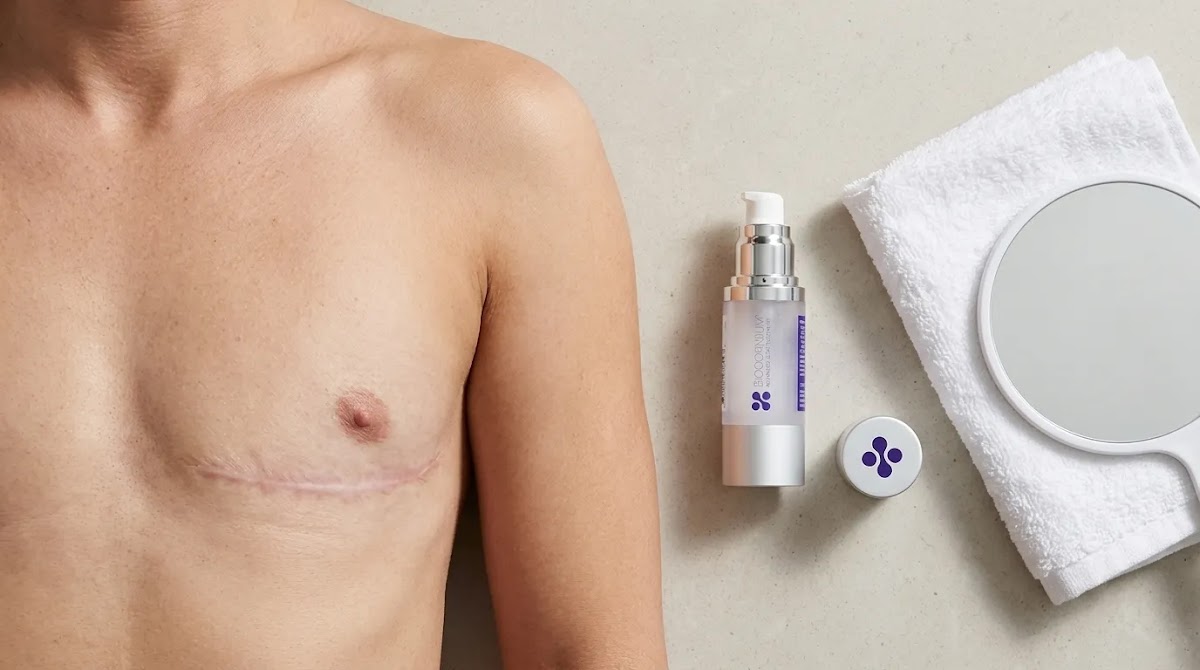
Look at the scar in natural light once it has healed. A flat scar with color changes may benefit most from time, sun protection, and consistent chest scar treatment. A thick, itchy, firm, or expanding scar deserves earlier professional attention because the chest can be prone to excessive scar formation.
For a sternal scar, pay attention to symptoms beyond surface appearance. Discuss clicking, instability, deep tenderness, shortness of breath, or pain that affects movement with the surgical team. Do not treat these as cosmetic scar concerns. Surface products do not address problems involving the breastbone or deeper tissues.
For breakout scars, distinguish an inactive mark from active acne or folliculitis. Ask a healthcare professional to assess a new tender bump, pustule, or rash as an active skin issue. Scar products may be more appropriate after inflammation has settled and the skin barrier is intact.
Chest scar treatment, maturation, and tracking
Early scars commonly remain red, firm, raised, or tight before they gradually soften and flatten as collagen remodels. Scar maturation often takes about 12 to 18 months, although raised scars and keloids may continue changing for longer. The pace can vary based on the procedure, scar location, skin tension, individual biology, and whether a scar becomes irritated.
Take clear photographs in consistent lighting every few weeks rather than judging small changes from day to day. This can make gradual progress easier to recognize and give your surgeon or dermatologist useful information at follow-up visits. Seek clinical review if a scar is enlarging, becoming increasingly painful or itchy, or limiting comfortable movement. You can also compare your progress with a scar healing timeline to understand the usual stages of change.
Step 3: Protect the chest scar from sun and friction
Sunlight is one of the biggest factors that can darken a healing scar or cause uneven pigmentation, so shielding the area matters. When possible, cover it with clothing. Once the skin fully heals, apply a broad-spectrum sunscreen if the scar remains exposed. For scars that are still new or skin that's sensitive post-surgery, check with your clinician first to confirm the right sunscreen and the appropriate time to start using it. The FDA offers sunscreen guidance for protecting exposed skin.
Reduce repetitive rubbing where possible. A soft cotton layer beneath a seat belt, a properly fitted bra after breast surgery, or adjusting a backpack strap can reduce irritation around a healing scar. Follow all surgeon-directed compression garment instructions rather than replacing them with a different garment on your own.
You cannot and should not completely avoid chest movement. The goal is to follow your approved activity plan while minimizing avoidable pulling across the incision. If a movement consistently causes sharp pain or the scar repeatedly cracks or becomes irritated, contact your healthcare provider.
Step 4: Apply silicone chest scar treatment consistently
Consider a patient several weeks past suture removal, working with a physician to keep a healed scar looking its best. Dermatologists and surgeons frequently reach for silicone first. Applied directly over intact skin, it forms a thin, flexible barrier. It helps the tissue underneath do its work more effectively and supports the extended remodeling process, during which collagen, the protein that gives scar tissue its structure, continues to reorganize and mature.
Chest scars along the collarbone, sternum, or other curved contours often resist sheet-style treatments that shift or lift with movement. This is where BIOCORNEUM SiliSilk Advanced Scar Gel, 30g, proves its worth. Formulated with medical-grade silicone, the gel conforms easily to these tricky areas. It offers a practical alternative when a narrow or mobile scar line makes sheets impractical. Before applying, confirm that the skin is clean, dry, and fully healed, and always follow both the product instructions and your clinician's guidance.
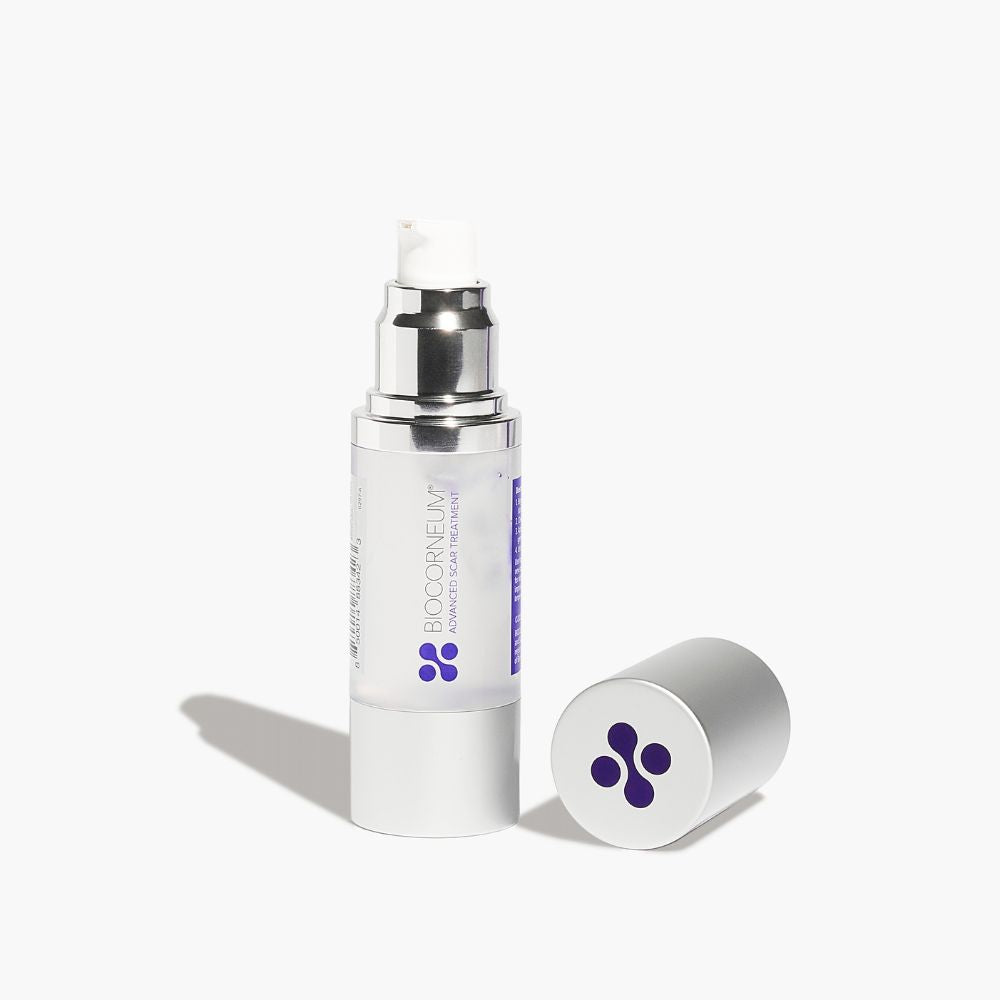
A thin, even application is generally easier to keep in place than an overly thick layer. Let the product dry before clothing contacts the area. If you develop burning, a persistent rash, or increased irritation, stop use and ask a healthcare professional for advice.
Choose chest scar silicone gel or sheets

Your healthcare provider may recommend silicone gel or silicone sheets for fully healed skin. The better format often depends on the scar's shape, location, and your daily routine. Gel can conform easily to a curved breast incision, a narrow sternal scar, or an area that moves with breathing and arm motion. It also may be more practical where sweat, bra straps, or clothing make it difficult for a sheet to remain secure. For a closer look at the formats, see scar gel vs. silicone sheets.
Silicone sheets can provide continuous coverage, but they may shift or lift on mobile areas of the chest or around bra straps. Gel needs time to dry before clothing touches the skin. Your surgeon or dermatologist can help you choose a format that fits your incision, skin sensitivity, and postoperative instructions.
| Format | May work well for | Practical consideration |
|---|---|---|
| Silicone gel | Curved breast incisions, narrow sternal scars, and areas that move with breathing and arm motion | Needs time to dry before clothing touches the skin |
| Silicone sheets | Scars where continuous coverage is practical | May shift or lift on mobile chest areas or around bra straps |
Step 5: Use chest scar massage only when approved
Your clinician may suggest chest scar massage after certain procedures, once the incision fully heals and deeper healing progresses appropriately. It can help some people become more comfortable touching a tight or sensitive scar, but it is not appropriate for every surgery or every recovery stage.
Ask your surgeon for specific instructions before starting. This is particularly important after sternotomy, breast reconstruction, chest wall surgery, radiation treatment, or any procedure involving implants, tissue flaps, or device placement. If approved, use gentle pressure with clean hands and stop if massage causes sharp pain, skin breakdown, swelling, or a new pulling sensation.
Do not use forceful rubbing in an attempt to flatten a raised chest scar. Keloids and hypertrophic scars may need clinician-directed options such as corticosteroid injections, pressure therapy, laser-based treatment, or other individualized care.
Step 6: Arrange chest scar treatment for changing scars
Schedule a professional evaluation if the scar extends beyond the original wound, becomes increasingly raised, itches intensely, hurts, restricts comfortable movement, or continues to worsen after the initial healing period. A dermatologist can determine whether the scar is hypertrophic, keloidal, acne-related, or affected by another skin condition.
For chest surgery scars, start with the operating surgeon when possible. They know the incision depth, closure method, and procedure-specific precautions. For scars after breakouts, a dermatologist can address both active acne prevention and options for the scars that remain. If you are considering local procedural care, this overview of scar removal near me can help you prepare useful questions for a consultation.
Professional chest scar treatment for keloids
A chest keloid can extend beyond the original wound and may not improve without clinician-directed care. After examining the scar and reviewing your health history, a dermatologist may recommend corticosteroid injections to help reduce thickness and symptoms, cryotherapy to freeze selected scar tissue, laser-based treatment for color or texture concerns, pressure therapy, or a combination of approaches.
Surgical scar revision is individualized. Because keloids can recur, particularly on the chest, a clinician may pair revision with other treatments to help manage that risk. Your dermatologist or surgeon can explain which options fit the size, location, symptoms, and history of your scar.
Pros and Cons

Strengths
-
Silicone gel can be convenient for narrow, curved, or mobile chest scars where a sheet may be difficult to secure.
-
A topical gel routine can fit into at-home recovery once the skin is fully healed and a clinician has approved scar care.
-
Consistent sun protection may help limit further color contrast in exposed scars.
-
Early assessment of raised chest scars can provide access to treatments beyond home care when needed.
-
Tracking the scar with occasional photographs can help you notice gradual changes and communicate clearly with your clinician.
Considerations
-
No topical product can correct an open incision, infection, deep sternal concern, or complication from surgery.
-
Chest scars may remain visible even with appropriate care, and remodeling can take many months.
-
Silicone products may irritate some people, especially if applied to compromised skin or used under occlusive clothing in heat.
-
Raised scars and keloids may require office-based treatment in addition to, or instead of, topical care.
Common mistakes to avoid
-
Starting too early: Applying gels, oils, or massage to an open or draining incision can interfere with wound-care instructions.
-
Confusing a keloid with a routine scar: A scar that grows beyond the original wound should be assessed rather than repeatedly treated with home remedies.
-
Ignoring sun exposure: A healed scar on the upper chest can darken after ultraviolet exposure, making color changes more noticeable.
-
Using harsh exfoliants on acne marks: Aggressive scrubbing can inflame the skin and contribute to further discoloration.
-
Expecting fast changes: Scar remodeling is gradual, so judge a routine over time and in consultation with your healthcare provider.
Frequently Asked Questions
What is the best cream for a chest scar?
There is no single best cream for every chest scar. The right option depends on whether the skin is fully healed, whether the scar is flat or raised, and whether it followed surgery, injury, or acne. Silicone-based products are commonly considered for intact scars. If the scar is spreading, painful, or thickening, a dermatologist or surgeon should assess it before you rely on topical care alone.
Can silicone gel help a sternal scar?
Silicone gel may be an option for a fully closed sternal scar if your cardiac surgeon or healthcare provider approves it. A gel format can be easier to apply along a midline incision and under clothing. It should not be used as treatment for deep chest pain, sternal clicking, wound drainage, or instability. Those symptoms require prompt medical assessment rather than cosmetic scar management.
How soon can I start chest scar treatment after surgery?
The appropriate time depends on your operation, incision condition, and surgeon's instructions. Scar products are generally reserved for fully healed skin after the wound has closed. Some chest procedures have specific restrictions because of dressings, drains, compression garments, or deeper tissue healing. Ask at a postoperative appointment when topical scar care, sunscreen, and massage can safely begin for your incision.
Why do chest scars become raised?
Raised scars form when the body produces and organizes collagen in a way that creates extra thickness during healing. The chest is a common location for hypertrophic scars and keloids because of local skin tension and individual biology. A hypertrophic scar remains within the original wound, while a keloid grows beyond it. Both can benefit from early clinical evaluation if they are changing or symptomatic.
Can a chest keloid go away on its own?
A chest keloid may remain raised and can continue to extend beyond the original wound without treatment. Some symptoms or visible features may change over time, but keloids often need dermatologist-directed care rather than observation alone. A dermatologist can confirm whether a raised scar is a keloid and discuss treatment options that fit your scar and medical history.
How long does it take for a raised surgical scar to flatten?
A raised surgical scar commonly changes gradually during the 12- to 18-month scar-maturation period as collagen remodels. Some hypertrophic scars may soften and flatten over time, while keloids and scars exposed to ongoing tension or irritation can take longer or need professional treatment. Ask your surgeon or dermatologist to review a scar that is enlarging, increasingly symptomatic, or limiting movement.
What treatments can a dermatologist use for a chest keloid?
A dermatologist may recommend corticosteroid injections, cryotherapy, laser-based treatment, pressure therapy, or selected combinations based on the keloid's size, symptoms, and location. Surgical revision may be considered in specific situations, often with additional treatment because keloids can recur. Your dermatologist can explain the expected benefits and limitations of each option for your scar.
Is silicone gel or a silicone sheet better for a scar on the chest?
Either format may be appropriate for a fully healed chest scar if your healthcare provider approves it. Gel may be easier to use on curved breast incisions, narrow sternal scars, or areas affected by sweat and movement. Sheets may be harder to keep in place around straps, bras, or mobile skin. Follow your surgeon's or dermatologist's advice about timing and the format that best suits your incision.
Can chest acne scars fade?
Some chest acne marks can become less noticeable over time, especially redness or discoloration left after inflammation settles. Indented scars, raised scars, and keloids may be less responsive to basic skin care alone. Preventing new breakouts is an important part of preserving progress. A dermatologist can recommend treatment based on your skin tone, acne activity, scar pattern, and sensitivity to irritation.
Should I massage a chest surgery scar?
Only massage a chest surgery scar after your surgeon or another qualified clinician approves it. The advice can differ after sternotomy, breast surgery, thoracic surgery, or device implantation. If massage is approved, use gentle pressure and stop if there is pain, swelling, skin irritation, or pulling. Massage should never be used to manage wound separation, infection symptoms, or deep chest discomfort.
What to do next
Take a clear photo of your healed scar in consistent lighting, then discuss its pattern and your recovery restrictions at your next surgical or dermatology visit. Ask whether silicone gel, silicone sheets, sunscreen, massage, or an in-office option fits your scar type. For a flat, healed scar, a simple chest scar treatment routine of protection and consistent topical care may be a reasonable place to begin. For a raised chest keloid, a changing sternal scar, or ongoing acne, professional assessment should guide the next step.
Key Takeaways
-
Chest scar care should reflect the cause, location, and stage of healing.
-
Do not begin topical scar treatment until the skin is fully closed and your healthcare provider approves.
-
Silicone gel may be practical for healed scars on curved or mobile areas of the chest.
-
Sun protection and reduced friction can support a more comfortable recovery routine.
-
Raised, spreading, painful, or symptomatic scars need professional evaluation.
Conclusion
Chest scars can represent a significant surgery, an injury, or a long period of managing breakouts, so it is understandable to want a plan that is both careful and evidence-informed. Start by protecting the healed skin, following procedure-specific instructions, and choosing treatment based on the scar's actual pattern rather than promises of a rapid transformation. Silicone-based care may be a useful at-home option for appropriate healed scars, while keloids, deep surgical concerns, and active acne need clinician-led guidance. Speak with your surgeon or dermatologist about whether BIOCORNEUM SiliSilk Advanced Scar Gel fits your recovery plan and scar-care goals.
The information provided here is intended for general educational purposes and should not be used as a substitute for professional medical guidance. Before starting any new scar care regimen, be sure to check in with your surgeon, dermatologist, or another qualified healthcare provider to ensure it's right for your unique healing needs.


