

How Do Burns Heal, and Can You Prevent Burn Scars?
Burn wound healing stages describe how burned skin stops further damage, rebuilds its protective barrier, and remodels new tissue over time. The depth of the burn is the strongest predictor of how long healing may take and whether a noticeable scar is likely.
A small kitchen burn and a deeper burn from hot liquid can look very different within days. You may be watching for blisters, wondering whether redness is normal, or worrying that a healed area will leave a lasting mark. Those concerns are understandable. Burn recovery is not only about the skin closing. It is also about protecting the wound during its early phase, recognizing when professional care is needed, and supporting scar maturation after the surface has healed.
Burn injuries can continue to change after the initial event, especially during the first several days. A qualified healthcare provider should assess any burn that is deep, large, circumferential, located on the face, hands, feet, genitals, or major joints, caused by chemicals or electricity, or accompanied by concerning symptoms.
How Burn Depth Shapes Healing
Burn depth refers to how far heat, chemicals, electricity, or friction have injured the skin. The skin has an outer barrier called the epidermis and a deeper supportive layer called the dermis. The more of the dermis that is injured, the more difficult it can be for the skin to regenerate normally.
Clinicians may describe burns as superficial, partial-thickness, or full-thickness. These terms generally align with the familiar first-, second-, and third-degree burn categories, although professional assessment is more precise because burns can have mixed depths.
- Superficial burns affect the outer skin layer. They are often red, dry, and painful without blisters.
- Partial-thickness burns extend into part of the dermis. Blisters, moisture, swelling, and significant tenderness are common.
- Full-thickness burns extend through the dermis and may look waxy, leathery, brown, white, or charred. They require urgent medical evaluation.
Depth is not always obvious at home. A burn may appear mild at first but declare itself as deeper over the next day or two. This is one reason prompt medical guidance matters for anything beyond a small, clearly superficial burn.
The Burn Repair Sequence
Although burn wound healing differs from a clean surgical incision, the body still follows a recognizable repair sequence. These stages overlap rather than occurring in a perfectly separate order. A review of burn biology explains that healing involves inflammation, new tissue formation, blood-vessel development, and collagen remodeling, all of which can be affected by burn depth and the wound environment.
Research on the biology of burn injury describes why deeper burns can place greater demands on the skin's repair systems. The goal of early care is to protect viable tissue and prevent complications that could delay closure.
Initial response and inflammation
Immediately after a burn, the body increases blood flow and sends immune cells to the area. Redness, warmth, swelling, and tenderness can occur as part of this response. For deeper burns, inflammation may be more extensive and may require clinician-directed dressings, pain management, or other treatment.
New skin formation
During the rebuilding phase, skin cells move across the wound while fibroblasts produce collagen, a structural protein that helps repair tissue. Superficial burns can often heal from surviving skin structures. Deeper partial-thickness burns have fewer healthy structures available to rebuild the surface.
Scar remodeling
Skin closure marks the beginning of a longer story, not the end of one. In the weeks that follow, patients often notice their scar staying pink, darkening, itching, feeling firm, or growing sensitive to the touch, all signs that collagen is still hard at work beneath the surface. This ongoing process, known as remodeling, is what gradually reshapes scar tissue, allowing it to flatten, soften, and fade into the skin over time.
What Healing May Look Like by Degree
First-degree burn healing
A first-degree burn usually affects only the epidermis. Mild sunburn is a familiar example. The skin may feel sore and look red, then peel as the surface recovers. These burns commonly heal without a true scar because the deeper dermis remains intact, though temporary color changes can occur.
Second-degree burn healing
A second-degree burn, also called a partial-thickness burn, may blister and weep. A superficial partial-thickness burn can sometimes close within about two to three weeks, while a deeper partial-thickness burn may take longer. The chance of burn scar healing rises when closure is delayed, the dermis is more deeply injured, or infection interferes with repair.
Third-degree burn scar concerns
A third-degree burn is a full-thickness injury. Because it destroys the full depth of the skin, it generally cannot heal by normal skin regeneration alone. Specialized burn care may include wound procedures, skin grafting, rehabilitation, and long-term scar management. Early expert care can help protect function, particularly near joints and other areas that move frequently.
Photographs labeled as burn wound healing stages pictures can be useful for general education, but they cannot determine burn depth or rule out a complication. Your clinician should assess the actual wound, especially if pain increases, redness spreads, drainage develops, fever occurs, or the wound is not progressing as expected.
How to Tell Whether a Burn Is Healing Properly
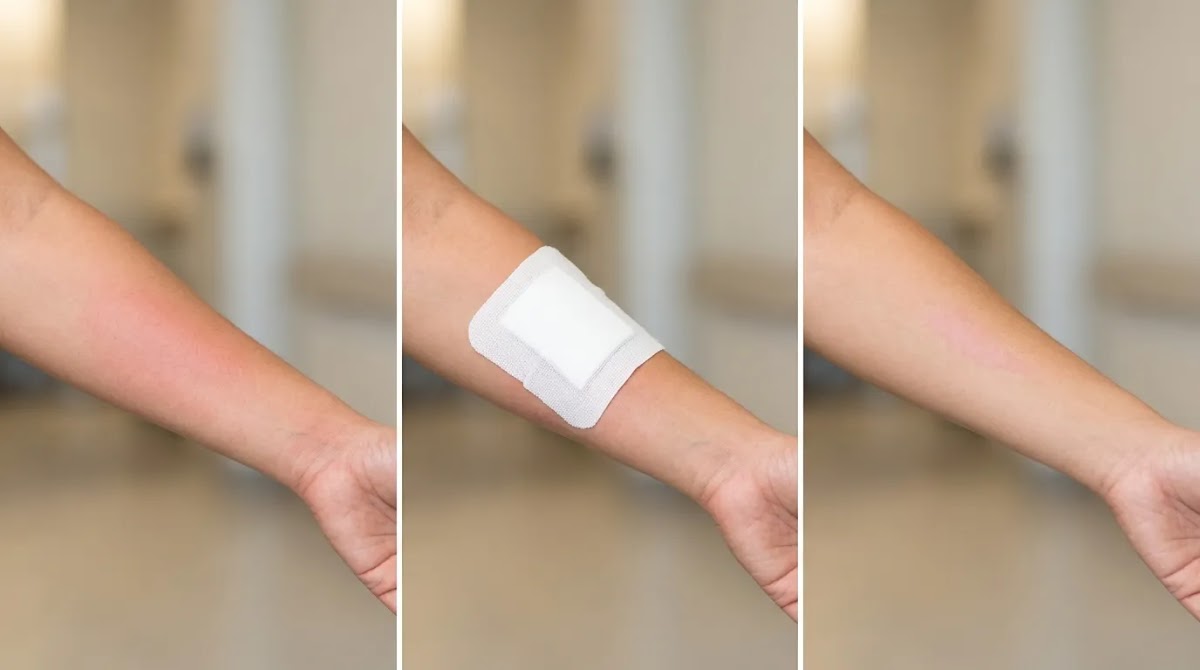
Healing often shows gradual progress rather than a dramatic change from one day to the next. Pain and swelling may decrease, the wound may become smaller or close from the edges, and healthy new skin may begin to form. For a superficial burn, redness may fade as the surface recovers. A partial-thickness burn may remain tender or moist while it is still open, but it should generally move toward closure under the care plan provided by your healthcare professional.
Recovery is not always perfectly linear. Newly healed skin may remain pink, sensitive, itchy, dry, or uneven in color as collagen remodels and the skin barrier strengthens. These changes can be part of normal healing, particularly after a deeper burn. A scar may also look more noticeable before it gradually matures.
Contact a healthcare provider promptly if redness spreads beyond the burn, pain or swelling worsens, drainage develops, fever occurs, or the wound does not appear to be making progress. These changes need clinical assessment because infection, greater burn depth, or another complication can delay healing. Follow your provider's specific instructions for dressing changes, cleansing, and follow-up.
Reducing the Chance of Burn Scars
Burn scar prevention begins before scar products enter the picture. The most meaningful early step is appropriate burn care that supports timely wound closure. Do not pop blisters, apply harsh household substances, or use adhesive products on injured skin unless a clinician has advised you to do so.
For a minor thermal burn, gently cooling the area with cool running water soon after injury may limit heat damage. Avoid ice, which can injure already stressed skin. Remove rings, watches, or tight items near a swollen area if they come off easily, but do not pull away material stuck to the burn.
Protect the healing wound
Follow the dressing and cleansing plan given by your healthcare provider. The right approach depends on the burn's depth, location, drainage, and infection risk. Some wounds need specific dressings, while others need simple protection and monitoring. Guidance about wound healing ointment can help clarify why early wound care and later scar care are separate stages.
Support movement and comfort
Burns near fingers, elbows, knees, shoulders, or the neck may tighten as they heal. A burn team, physical therapist, or occupational therapist may recommend safe movement, stretching, splinting, or compression based on your injury. Do not begin exercises that pull open a wound or cause sharp pain without professional direction.
Protect closed skin from sunlight
Newly healed burn skin is vulnerable to color changes from ultraviolet exposure. Keep the area covered with protective clothing where possible, and ask your clinician which sun-protection approach is appropriate once the skin is fully closed. This step may help the scar blend more evenly with surrounding skin over time.
Should a Burn Be Covered or Left Open?
Whether a burn should be covered depends on its depth, location, drainage, and your healthcare provider's treatment plan. A clean, appropriate dressing may protect vulnerable skin from friction and contamination while helping maintain a suitable healing environment. Deeper burns, burns with blisters, and burns in areas exposed to movement or rubbing often need more specific dressing guidance.
Some minor superficial burns may need only simple protection and monitoring, while other injuries require specialized dressings or regular wound checks. Leaving a burn open is not automatically better, and covering it with an unsuitable material can cause irritation or interfere with assessment. Your clinician can recommend the right approach based on the wound itself.
Do not use household adhesives on burned skin or try to remove fabric, gauze, or other material that is stuck to the wound. Cover the area only as directed, and ask a healthcare provider for help if a dressing adheres to the skin, becomes soaked, or causes increasing discomfort.
After the Wound Has Closed

Scar-focused treatment should begin only after the burn is fully closed, dry, and cleared by your burn specialist, surgeon, dermatologist, or other qualified provider. A closed wound has no open areas, active drainage, or scabs that are separating. Applying scar products to open or infected skin can cause irritation and may interfere with the care plan.
Consider a scar that appears raised, discolored, or thickened as it heals, this is exactly where silicone-based care is often recommended as a go-to topical approach. Once applied, silicone creates a thin, protective barrier across the skin's surface, helping the stratum corneum, its outermost layer, retain moisture. By supporting this balanced environment, silicone may help calm the biological signals that drive overproduction of collagen, a key factor in scars becoming raised or thickened.
For people who have been cleared to start scar management, silicone gel for scars may be easier to apply on uneven body areas or skin that moves often. Silicone sheets may also be appropriate for some scars. Your clinician can help you choose a format based on the scar location, sensitivity, and your ability to use it consistently.
Think of Biocorneum as the next step after the wound itself has closed, a silicone-based scar therapy meant for healed skin, used alongside guidance from your care team. It isn't designed to manage an open burn or substitute for treatment at a burn center. Should a scar start thickening, tightening, or causing pain and itching that won't quit, that's the moment to bring it up with your dermatologist or burn specialist, who can walk you through options like silicone gel, pressure garments, injections, laser therapy, or rehab support tailored to your healing.
Scar Maturation After a Burn
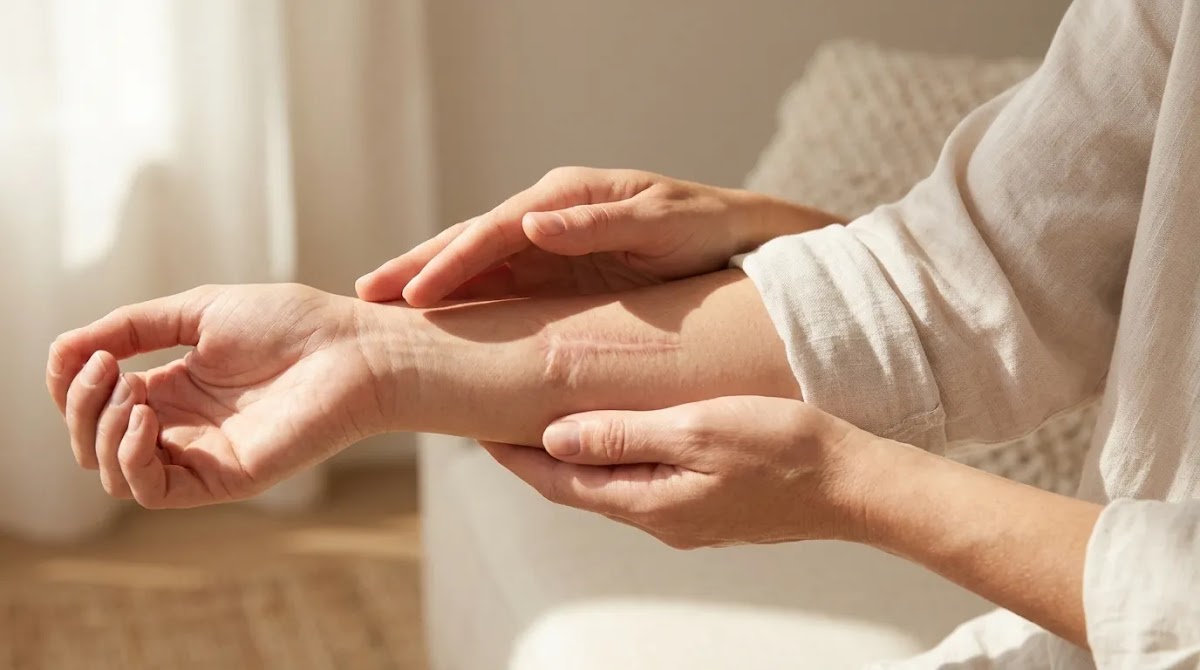
Scar remodeling commonly continues for 12 to 18 months or longer after a deeper burn, skin graft, or wound that took longer to close. During this period, collagen fibers gradually reorganize. The scar may initially appear red or darker than surrounding skin, firm, raised, itchy, or tight before changes in color and texture become more apparent.
This timeline can be emotionally difficult, especially when a scar is visible or affects movement. A scar that looks prominent early in recovery is not necessarily its final appearance. Consistent, provider-guided care may help support comfort, mobility, and scar maturation while the tissue continues to change.
Your burn specialist, dermatologist, surgeon, or rehabilitation team may recommend sun protection, silicone therapy, pressure therapy, massage, stretching, or follow-up monitoring based on the location and behavior of the scar. These strategies are selected according to the individual burn and should not replace ongoing medical care for a tight scar, a scar near a joint, or a scar that is becoming more raised or uncomfortable.
Terms You May Hear During Burn Recovery
Dermis: The deeper layer of skin that contains collagen, blood vessels, nerves, and structures that help skin regrow after a shallow injury.
Hypertrophic scar: A raised, thick scar that stays within the boundaries of the original burn wound.
Keloid: A scar that grows beyond the original wound edges. Some people have a greater personal or family tendency to form keloids.
Contracture: Tight scar tissue that restricts movement, often a concern after deeper burns near joints.
Skin graft: Healthy skin moved from one area of the body to cover a deeper wound that cannot close on its own.
These terms can sound intimidating, but they help your care team describe the specific issue being monitored. Not every burn leads to raised scars or contractures. Risk depends on depth, healing time, body location, infection, genetics, age, and whether the scar crosses a high-movement area.
Frequently Asked Questions
How long do burns take to heal?
Healing time depends mainly on burn depth. Small superficial burns may improve within several days. Superficial partial-thickness burns may close within roughly two to three weeks, while deeper partial-thickness burns can take longer and may need specialized care. Full-thickness burns require urgent professional assessment and often need procedural treatment. Location, infection, circulation, health conditions, and repeated friction can also affect recovery. If a burn is not steadily improving, remains open, or becomes more painful, contact a healthcare provider.
How do you tell if a burn is healing properly?
Signs of progress may include less pain and swelling, gradual closure of the wound, and healthy new skin forming. Healing skin can remain pink, itchy, sensitive, dry, or uneven in color while it remodels, particularly after a deeper burn. Contact a healthcare provider if redness spreads, pain worsens, drainage develops, fever occurs, or the wound does not appear to progress. Your provider can determine whether these changes require treatment.
Will a second-degree burn leave a scar?
A second-degree burn may leave color changes or a scar, but the likelihood varies with depth and healing time. More superficial partial-thickness burns that close promptly often have a lower chance of prominent scarring than burns that stay open longer or extend deeper into the dermis. Infection and repeated trauma can also affect the final result. Once the burn is fully closed, your clinician may recommend strategies such as sun protection, silicone therapy, pressure treatment, or follow-up monitoring based on your individual scar risk.
Can I put scar cream on a fresh burn?
No scar cream or silicone product should be applied to a fresh, open, blistered, draining, or infected burn unless your treating clinician specifically instructs you to use it. Fresh burns need wound-focused care, which may involve cooling, cleaning, dressings, and close monitoring. Scar management is a later step after the surface has fully healed. Using the wrong topical product too early may irritate damaged tissue or make it harder for your care team to assess the wound. Ask your provider exactly when scar treatment can begin.
How can I support burn wound healing safely?
For a minor thermal burn, cool running water soon after injury may help limit heat damage. Do not use ice, pop blisters, apply harsh household substances, or remove material stuck to the skin. Follow the cleansing, dressing, and follow-up plan from your healthcare provider, especially for burns that blister, remain open, or affect areas exposed to frequent movement. Seek medical guidance for a deep, large, chemical, electrical, or worsening burn.
What are signs that a burn needs medical care?
Seek prompt medical care for burns that are deep, larger than your palm, white, brown, charred, numb, or wrapped around a finger, limb, chest, or neck. Burns on the face, hands, feet, genitals, or major joints should also be assessed. Chemical and electrical burns require medical evaluation even if the skin injury appears small. Worsening pain, spreading redness, swelling, pus-like drainage, fever, or a burn that is not healing are also reasons to contact a healthcare professional.
Should I pop a burn blister?
Do not intentionally pop a burn blister at home. The blister roof can help protect the injured skin underneath from friction and contamination. A blister may break on its own, particularly in an area that moves or rubs against clothing. If that happens, gently protect the area and seek advice on cleaning and dressing it. Large, tense, painful, or awkwardly placed blisters may need professional management. Your clinician can decide whether leaving it intact or carefully treating it is safer for your specific burn.
Is it better to cover a burn or let it breathe?
The right approach depends on the burn's depth, location, drainage, and your provider's care plan. A clean, appropriate dressing may protect damaged skin from friction and contamination while supporting healing. Some small superficial burns may need simple protection and monitoring, while deeper or blistered burns may require specific dressings. Do not use household adhesives or pull off a dressing that is stuck to the wound. Ask a healthcare provider which dressing approach is appropriate for your burn.
Do burn wounds heal faster when covered or uncovered?
There is no single answer for every burn. An appropriate dressing may support healing by protecting the wound from rubbing and contamination, but the material and schedule should match the burn's depth, moisture level, location, and risk of infection. Some burns need specialized dressings, while others need less coverage. Follow the wound-care plan from your healthcare provider rather than choosing a covered or uncovered approach on your own.
Why does healed burned skin feel itchy or tight?
Itching and tightness can occur as nerves recover, skin dries, and collagen reorganizes during scar remodeling. A healed burn may also have fewer oil glands and sweat glands, which can make the area feel dry or sensitive. Tightness near a joint deserves particular attention because it can affect movement over time. Moisturizing, scar therapy, massage, stretching, pressure garments, or rehabilitation may be appropriate in selected cases, but your burn specialist or therapist should guide the plan for deeper burns and grafted skin.
Does silicone help burn scars?
Clinical practice commonly uses silicone gel or sheets on intact skin to manage certain scars, including scars after burn healing. Silicone may support hydration of the outer skin layer and may help improve the look and feel of a raised or discolored scar over time. It does not treat an open burn, prevent every scar, or replace treatment for contractures and severe scars. Ask your clinician whether silicone is suitable, when to start, and whether another approach is needed for your burn location and recovery stage.
Can burn scars get darker in the sun?
Yes. Newly healed burn skin and scars can develop more noticeable pigment changes after ultraviolet exposure. The affected area may darken, remain red longer, or contrast more with your surrounding skin. Protecting healed skin with clothing, shade, and clinician-approved sun protection can help reduce unnecessary exposure. Sun protection is especially relevant during the months when a scar is actively remodeling. If your burn is still open or has fragile grafted skin, ask your care team for specific instructions rather than applying products on your own.
Key Takeaways
- Burn depth strongly influences healing time, treatment needs, and scar risk.
- Superficial burns often heal without true scarring, while deeper partial-thickness and full-thickness burns need closer medical attention.
- Early burn care focuses on protecting the wound and supporting closure, not applying scar products.
- Scar treatment generally begins only after the wound is fully closed and your healthcare provider approves it.
- Sun protection, follow-up care, and provider-guided scar management may support a more comfortable recovery.
Final Thoughts
A burn can heal in stages that are visible and sometimes unsettling, from redness and blistering to new skin and gradual scar remodeling. Knowing the difference between superficial, partial-thickness, and full-thickness burns gives you a clearer sense of why recovery timelines vary so widely. It also helps you recognize why a deeper burn deserves prompt professional care rather than watchful waiting.
Start with the basics: partner closely with your burn specialist or healthcare provider and stick to their guidance for treating the wound itself. Scar prevention becomes the next conversation only after the area has completely closed, at that point, your clinician can help you weigh options based on your specific injury, skin type, and lifestyle. For those ready to explore silicone-based approaches, Biocorneum provides educational materials designed to support that discussion. Consistency matters most: a well-followed care routine can meaningfully improve a scar's color, texture, comfort, and appearance over time, though it's worth setting realistic expectations, since no treatment erases a scar entirely.
A Note on This Content: What you've read here is meant to inform, not to replace guidance from a licensed medical professional. Scar care is highly individual, so before starting any treatment plan, speak with your surgeon, dermatologist, burn specialist, or another qualified provider who knows your history. Results differ from person to person, and while Biocorneum is backed by clinical research, it's designed to support your care journey, not to stand in for the expertise of your healthcare team.
Sources
- The biology of burn injury — Experimental dermatology, 2010


