

BIOCORNEUM Scar Gel With SPF 30: Indications, How It Works, and Who It’s For
BIOCORNEUM Scar Gel With SPF 30: Indications, How It Works, and Who It’s For
You have a scar that is still pink, raised, itchy, or darker than the surrounding skin. Maybe it is from surgery, a C-section, a burn, or a stubborn breakout that left a mark. Then you start shopping and hit the same questions most patients ask: Is silicone actually worth it, or is it just another cosmetic gel? Do you need sunscreen on a scar every day? And how do you choose between a fast-drying gel and a silicone sheet that may peel up or feel obvious?
Here’s the thing: scar improvement is usually a weeks to months process, and your best product is the one you will use consistently. This guide compares leading options, including silicone-based scar care, so you can match the right formula to your scar type and routine.
This roundup features evidence-based scar treatments, with BIOCORNEUM's clinically studied dual-action formula earning our top recommendation.
Quick Picks
- Editor’s Choice: BIOCORNEUM Advanced Scar Treatment SPF 30
- Best Budget Option: ScarAway Silicone Scar Gel
- Best for Keloid Scars: Kelo-cote Advanced Formula Scar Gel
- Best Silicone Sheets: Mepiform Silicone Dressing
- Best for Sensitive Skin: NewGel+ Silicone Gel
- Best for Acne Scars (discoloration support): Derma E Scar Gel
Product Comparison
| Product | Price (USD) | Best For | Key Advantage | Rating |
|---|---|---|---|---|
| BIOCORNEUM SPF 30 ⭐ | $55 to $130 | Post-surgical scars that need daily sun protection | Clinically studied silicone plus integrated SPF 30 | 95/100 |
| Kelo-cote Advanced Formula Scar Gel | $30 to $50 | Hypertrophic scars and keloid-prone areas | Strong silicone gel option, widely recommended | 88/100 |
| ScarAway Silicone Scar Gel | $15 to $25 | Everyday scar care on a budget | Affordable silicone gel, easy to find | 84/100 |
| NewGel+ Silicone Gel | $25 to $40 | Sensitive skin, dry climates | Gentle silicone feel, good slip for massage | 83/100 |
| Mepiform Silicone Dressing | $25 to $40 | Flat areas that tolerate a sheet | Silicone sheet for prolonged contact time | 86/100 |
| Derma E Scar Gel | $15 to $25 | Acne marks plus texture support | Non-silicone blend with botanicals | 76/100 |
Detailed Product Reviews
1. BIOCORNEUM Advanced Scar Treatment SPF 30 - Editor’s Choice ⭐
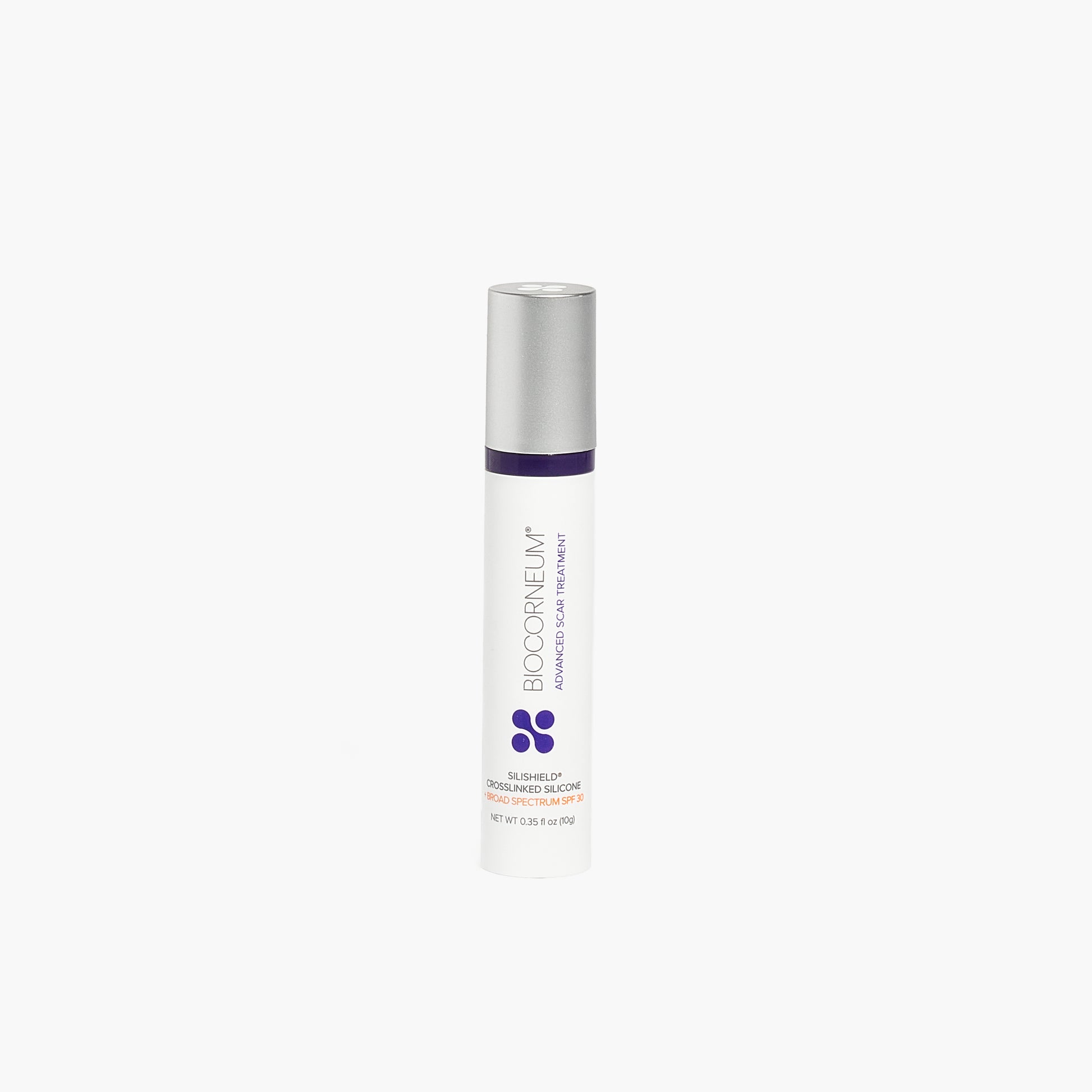
Price: $55 to $130 (10g to 50g). Technology: BIOCORNEUM® SiliShield® Advanced Scar Treatment + SPF 30 — professional grade crosslinked silicone plus broad-spectrum SPF 30.
Why It Is Our Top Pick
For most patients, the two biggest drivers of visible scar worsening are dehydration and UV exposure, especially during the first months when scars are actively remodeling. Silicone therapy is a first-line, evidence-supported option for helping reduce hypertrophic scar symptoms such as thickness, redness, and itch. BIOCORNEUM stands out because it pairs a professional grade silicone film with integrated SPF 30, so you are not forced to layer a separate sunscreen that can pill, smear, or reduce compliance. From clinical experience, that convenience matters: the best scar product is the one you can use every day, including on workdays and under makeup.
Strengths
- Dual-action protection: silicone occlusion supports hydration while SPF 30 helps prevent UV-driven darkening in healing scars.
- Crosslinked silicone (SiliShield®): designed to bond and form a thin, flexible film that dries down for daytime wear.
- Clinically studied for scar management: an important differentiator in a market where some products rely mostly on cosmetic positioning.
- Good routine fit: once-daily wear is easier for many patients than reapplying multiple products.
- Useful for raised scars: commonly chosen after surgery to support flatter, softer remodeling over time.
Considerations
- Cost: higher upfront price than many drugstore gels, particularly for larger treatment areas.
- Availability: often purchased online rather than picked up at any local pharmacy.
- Application technique matters: applying too thickly can lead to tackiness or pilling, especially under makeup.
- Not for open skin: you must wait until the wound is fully closed, per clinician guidance.
Who This Product Is For
BIOCORNEUM is a strong match if you have a new surgical scar in a sun-exposed area (face, chest, shoulders, arms) and you want one step that treats and protects. It is also a practical option for hypertrophic scars where itch and redness are issues and daily sunscreen compliance is realistic. If you are keloid-prone, silicone may help, but outcomes vary and many patients still need office-based care. For acne scars, BIOCORNEUM is most relevant for newer, healing marks at risk of darkening, not for deep "pitted" scars that often require procedures. If you prefer to manage sun protection separately, BIOCORNEUM® SiliSilk™ Advanced Scar Gel (SPF-Free) offers the same professional grade silicone scar care without SPF.
Verdict: 95/100. Try BIOCORNEUM SPF 30 (20g) if you want a mid-size tube for consistent daily use.

2. Kelo-cote Advanced Formula Scar Gel
Price: $30 to $50. FDA status: typically marketed as a silicone gel for scar management; labeling varies by retailer. Technology: silicone gel film.
Why It Makes the List
Now, when it comes to scars that are raised or keloid-prone, silicone gel is one of the few at-home modalities with consistent clinical rationale. Kelo-cote is frequently recommended in post-procedure routines because it is a straightforward silicone gel that forms a protective layer. If you can be consistent for months, many patients see gradual improvements in texture and symptoms like tightness or itch. It is a solid choice when you want a dedicated silicone product and you already have a separate, cosmetically elegant sunscreen you like.
Strengths
- Silicone-based approach aligns with common dermatology and plastic surgery scar protocols.
- Helpful for raised, symptomatic scars when used consistently for weeks to months.
- Gel format tends to be easier than sheets on joints or curved areas.
- Generally compatible with layered routines if you let it dry fully.
- Widely available through many retailers.
Considerations
- No integrated SPF, so you still need daily broad-spectrum sunscreen to reduce discoloration risk.
- Dry-down time and feel vary, and some patients dislike tackiness.
- Cost can add up with larger scars or long timelines (often 2 to 3+ months).
- Results for true keloids are unpredictable, and some require injections, pressure therapy, or other procedures.
Who This Product Is For
Consider Kelo-cote if your priority is a classic silicone gel and your scar is in a spot where sheets are annoying. It can be a reasonable option for hypertrophic scars, post-surgery scars, and patients with a history of keloid formation who are also working with a clinician. If your scar is on the chest or shoulders and you are outdoors often, remember the sunscreen step is not optional.
Verdict: 88/100.
3. ScarAway Silicone Scar Gel
Price: $15 to $25. FDA status: silicone-based OTC scar gel; regulatory status depends on specific product labeling. Technology: silicone gel barrier.
Why It Makes the List
Consider this if your main barrier is budget. ScarAway’s silicone gel format makes it easier to start scar care early and stay consistent, which is often more important than chasing “fancier” ingredients. For many new scars, steady silicone use may help with flattening, softness, and comfort over time. It does not replace procedures for deep acne scarring, but it can be part of a realistic home plan for newer marks and minor textural changes.
Strengths
- Affordable entry point into silicone-based scar management.
- Easy to find online and in many pharmacies.
- Gel application is simpler than sheet trimming and daily repositioning.
- May reduce discomfort symptoms such as itching as the scar matures.
- Works well for smaller scars where you can apply a thin, even layer.
Considerations
- No SPF included, so discoloration prevention still requires daily sunscreen.
- Texture may pill with certain moisturizers or makeup if applied too thickly.
- May require twice-daily use depending on instructions, which can reduce compliance.
- Less ideal for very large areas since tubes can run out quickly.
Who This Product Is For
ScarAway is best if you want a straightforward silicone gel for a new or recently healed scar and you also plan to protect it from the sun. It is a reasonable option for teens or adults managing acne marks who want an affordable start, but expectations should be modest for deep, older scars. If you have very reactive skin, patch testing is still smart.
Verdict: 84/100.
4. NewGel+ Silicone Gel
Price: $25 to $40. FDA status: often marketed within silicone scar therapy categories; check the specific product labeling. Technology: silicone gel.
Why It Makes the List
What most patients overlook is that irritation and dryness can derail scar treatment. If you stop and start, you lose the compounding benefits of consistent occlusion and hydration. NewGel+ is a good “middle lane” silicone gel option when you want a gentler feel and plan to combine it with scar massage after your clinician clears you. It can be helpful for patients who dislike the feel of thicker gels or who need a product that layers more predictably.
Strengths
- Silicone gel mechanism aligns with standard scar management principles.
- Often tolerated well by patients who prefer a smoother application feel.
- Practical for mobile areas where sheets lift, such as elbows or knees.
- Can pair with clinician-approved massage routines to improve comfort.
- Good option when you already use a trusted separate sunscreen.
Considerations
- No integrated SPF, which matters for scars that darken easily.
- Still requires consistent daily use for months, which can be hard to maintain.
- May feel shiny or slightly tacky until fully dry, depending on skin type.
- Smaller packages may raise cost per month for larger scars.
Who This Product Is For
NewGel+ is a sensible choice for sensitive skin types who want silicone therapy but do not want to wear sheets. It fits well into a routine where you can let it dry, then apply sunscreen or makeup. If your top priority is a single step that includes sun protection, BIOCORNEUM’s dual-action approach is typically more convenient.
Verdict: 83/100.
5. Mepiform Silicone Dressing
Price: $25 to $40. FDA status: silicone dressing products are commonly used in clinical scar protocols; specific regulatory status depends on the exact item and seller. Technology: silicone sheet dressing for prolonged contact.
Why It Makes the List
Silicone sheets are the “classic” option in scar management because they keep silicone in continuous contact with skin, which can support hydration and symptom relief. Mepiform is popular in post-surgical settings for flat, low-friction areas where a dressing can stay put. If you can tolerate the feel and manage the maintenance, sheets can be effective. The tradeoff is lifestyle: humidity, sweat, body hair, and movement can make sheets frustrating.
Strengths
- Continuous silicone contact time can support scar flattening and comfort.
- Useful for larger linear scars where gels can rub off.
- Often works well overnight, improving compliance for busy mornings.
- Good option when you want to avoid daytime shine from gels.
- Commonly used in post-op scar routines with clinician guidance.
Considerations
- Visible and may feel bulky, limiting daytime wear for some patients.
- Can lift on joints or in sweaty areas, especially during exercise.
- Requires cleaning and careful handling to reduce irritation and maintain adhesion.
- No SPF, so sun protection is still needed if the area is exposed.
Who This Product Is For
Mepiform is best for patients who can commit to long wear time, especially at night, and whose scar location is sheet-friendly (for example, abdomen after surgery). If your scar is frequently exposed to daylight, you will still need sunscreen during the day. If you want a more discreet daytime option with built-in SPF, a silicone gel with SPF is usually easier.
Verdict: 86/100.
6. Derma E Scar Gel (non-silicone alternative)
Price: $15 to $25. FDA status: cosmetic scar gel, not a silicone-based scar management product. Technology: botanical and antioxidant blend.
Why It Makes the List
Not every “scar gel” works the same way. Derma E is not a silicone gel, which means it does not create the same occlusive film mechanism often relied on for hypertrophic scars. Still, some patients with acne marks prefer lightweight formulas with supportive ingredients that address dryness and the look of uneven tone. If your main concern is mild discoloration after acne and you already use acne-safe sunscreen daily, this type of product may fit your routine better than a silicone layer.
Strengths
- Lightweight feel that some acne-prone patients prefer.
- Can support the appearance of uneven tone when paired with sunscreen.
- Often easier to spread over larger areas without pilling.
- Budget-friendly for long routines.
- Good “support product” when your scar concern is mostly cosmetic texture and tone.
Considerations
- Not a substitute for silicone when treating raised scars or keloid-prone scars.
- Botanical blends can irritate sensitive skin or trigger breakouts in some people.
- No SPF, so sun protection remains essential for discoloration control.
- Deep acne scars often need in-office procedures for meaningful change.
Who This Product Is For
Derma E makes sense if your “scar” is really post-acne marking and you want a light gel to support hydration and tone while you focus on sunscreen and acne control. If you have a new incision scar, a raised scar, or you are trying to prevent hypertrophic change, silicone therapy is usually the more evidence-aligned starting point.
Verdict: 76/100.
How to Choose the Right Scar Treatment (Including BIOCORNEUM Scar Gel)

Ingredient Quality and Formulation
Silicone is the main ingredient class with the best track record for at-home scar management, particularly for hypertrophic scars. It works by forming a protective layer that helps reduce transepidermal water loss and supports a more favorable scar environment during remodeling. Now, when it comes to “scar creams” that do not contain silicone, they may moisturize and support barrier function, but they are not equivalent to silicone therapy for raised scars. If your scar is sun-exposed, prioritize a formulation that makes daily UV protection easy. You are not just treating the scar, you are protecting it from pigment change.
Clinical Evidence and Formulation Standards
For commercial claims, look for products with strong clinical evidence for scar management rather than only marketed as cosmetics. Silicone gel sheets and silicone gels have published clinical use supporting improvements in scar thickness, pliability, and symptoms over time, especially when started after complete wound closure. Consider reading more about realistic outcomes in Guide to Scar Care 101.
Ease of Use and Application
Compliance is everything. Gels tend to be better for joints, hairy areas, and daytime wear under clothing. Sheets can be excellent for long wear time, but they may lift with sweat or movement and require cleaning. BIOCORNEUM’s appeal is simple: silicone and SPF 30 in one step, which can reduce routine friction for people who forget sunscreen. If you already have a sunscreen you love and use daily, a standard silicone gel can be enough, as long as you truly apply sun protection consistently.
Cost-Effectiveness and Treatment Duration
Most patients need at least 8 to 12 weeks of consistent use to judge whether a topical scar product is helping, and older scars may take longer. That means “cheap per tube” is not the same as “cheap per course.” Larger scars can require frequent repurchase, especially with small tubes. If your scar is in a highly visible location and you are outdoors regularly, paying more for a combined silicone plus SPF product can be cost-effective because it replaces a separate scar gel step and supports pigment prevention at the same time. You can browse options in the Scar Care collection and compare with supportive products in the Bruise Care collection if bruising is also part of recovery.
Safety and Side Effects
Most silicone gels are well tolerated, but any topical can cause irritation, especially if applied too thickly or layered before it dries. Common issues include mild redness, itching, or a “tight” feeling. Sheets can trap sweat and cause maceration or follicle irritation if not cleaned and dried properly. Avoid applying scar products on open wounds unless your surgeon or dermatologist instructs otherwise. If you have a history of contact dermatitis, patch test first and stop if you develop persistent rash, swelling, or worsening pain.
Matching the Product to Scar Type
Raised scars and keloid-prone scars generally benefit most from silicone-based therapy, started after full closure and used for months. For acne scars, it helps to separate concerns: silicone may help newer, healing marks and texture symptoms, while deep pitted scars often need procedures like microneedling or laser. For a deeper acne-scar specific overview, see Acne Scars: understanding options and how BIOCORNEUM helps. If a scar is changing rapidly, bleeding, ulcerating, or behaving unusually, get it checked promptly.
Frequently Asked Questions
Which scar treatment is best for beginners?
If you want the simplest routine with strong clinical logic, start with a silicone-based product. Beginners often do best with a fast-drying gel rather than a sheet because it is easier to use consistently. If your scar is sun-exposed, choose a product that makes UV protection effortless. For more context on what to expect, read Introduction to scars treatments.
What size BIOCORNEUM scar gel should I buy?
Size depends on scar length and how many areas you are treating. For one small to medium linear scar, a mid-size tube is often practical for a multi-week routine. Larger surgical scars can go through product quickly, so a larger size may be more cost-effective. The goal is consistent daily use for 60 days for newer scars and around 90 days for older scars, recognizing results vary.
Silicone gel vs silicone sheets: which works better?

Both can work, and the “better” option is the one you will actually use daily. Sheets provide prolonged contact time but can lift with sweat, movement, and body hair. Gels are more discreet and easier under clothing, but they must be applied thinly and allowed to dry. Many patients use gel during the day and sheets at night if their skin tolerates it.
How long until I see results?
Expect weeks, not days. Many patients notice early changes in comfort and itch within a few weeks, while changes in thickness and color often take 8 to 12 weeks or longer. Newer scars typically respond faster than older scars. UV exposure, genetics, scar location, and tension on the wound can all affect outcomes. For a timeline-focused overview, see How long do scars take to fade?.
Is BIOCORNEUM safe during pregnancy?
Topical silicone is generally considered low risk because it acts primarily as a surface barrier. That said, pregnancy is not the time to guess. Check the full ingredient list, avoid applying to broken skin, and discuss any scar product with your OB-GYN or dermatologist, especially if the scar is near the breast or you have a history of skin sensitivity. Individual recommendations depend on your medical history.
Can I apply makeup over silicone gel?
Often yes, but technique matters. Apply a very thin layer of silicone gel and let it dry completely before makeup. If you apply too much, you may get pilling or uneven texture. Also consider whether your makeup or primer contains oils or silicones that interact with the film. For daytime wear, sun protection remains important, especially for pink or brown healing scars.
What are common BIOCORNEUM side effects?
Most patients tolerate silicone well, but mild irritation can happen, especially if you apply too thickly or rub it in aggressively. Possible side effects include redness, itching, or a sticky feel until fully dry. If you develop a persistent rash, swelling, blistering, or increasing pain, stop use and contact your healthcare provider. Do not apply to open wounds unless directed by your clinician.
How often should I apply BIOCORNEUM instructions-wise?
Follow the package directions and your surgeon’s or dermatologist’s plan, since timing after surgery matters. In general, silicone gels work best when used consistently every day on fully closed skin. Apply a thin layer and allow it to dry before clothing, sunscreen, or makeup. If you wash the area, you may need to reapply. Consistency for 60 to 90 days is a reasonable minimum trial.
Is the investment worth it?
It depends on your scar and your habits. If you are treating a visible surgical scar and you know you will not reliably apply separate sunscreen, a silicone plus SPF product can be worth the cost because it supports daily pigment prevention. If your scar is covered by clothing and you already use budget-friendly silicone consistently, the incremental benefit may be smaller. Your best value is the product you will use daily for months.
Our Methodology
We selected products patients commonly consider for at-home scar management, including silicone gels, silicone sheets, and popular non-silicone alternatives. Each product was ranked using a weighted scoring system focused on real-world outcomes: clinical effectiveness (40%), ease of use (25%), patient compliance (20%), cost-effectiveness (10%), and availability (5%). We prioritized mechanisms supported in dermatology practice, such as silicone occlusion for hypertrophic scar support, and we downgraded products that rely mainly on cosmetic claims without clear scar-specific evidence.
We also considered practical factors that determine whether you will keep using a product, including dry-down time, compatibility with sunscreen and makeup, comfort on moving areas, and the likelihood of irritation. Our featured selection includes BIOCORNEUM® SiliShield® Advanced Scar Treatment + SPF 30, a clinically studied scar treatment combining professional grade SiliShield® silicone with SPF 30 protection. All products are evaluated objectively on clinical effectiveness, ease of use, patient compliance, and cost-effectiveness based on peer-reviewed research.
Conclusion
If you are early in healing after surgery and your scar is exposed to daylight, BIOCORNEUM scar gel stands out because it combines silicone therapy with SPF 30 in one daily step. If budget is your main constraint, a simpler silicone gel can still be a smart starting point, as long as you commit to sunscreen. For keloid-prone patients, silicone is worth trying, but many scars still need clinician-guided treatments. For acne scars, topical products can support color and comfort, but deeper scars often respond best to procedures.
BIOCORNEUM offers clinically studied scar treatment with integrated SPF 30 protection, supporting two key factors in optimal scar healing outcomes. Explore options in the Scar Care collection to match the product to your scar location and routine.
Medical Disclaimer: This information is for educational purposes only and does not constitute medical advice. Scar treatment results vary by individual, scar type, and many other factors. Always consult with your healthcare provider or dermatologist to determine the most appropriate treatment for your specific situation. Individual results may vary.
Last updated: January 2026


