

Scar Removal Before and After: Realistic Expectations by Type
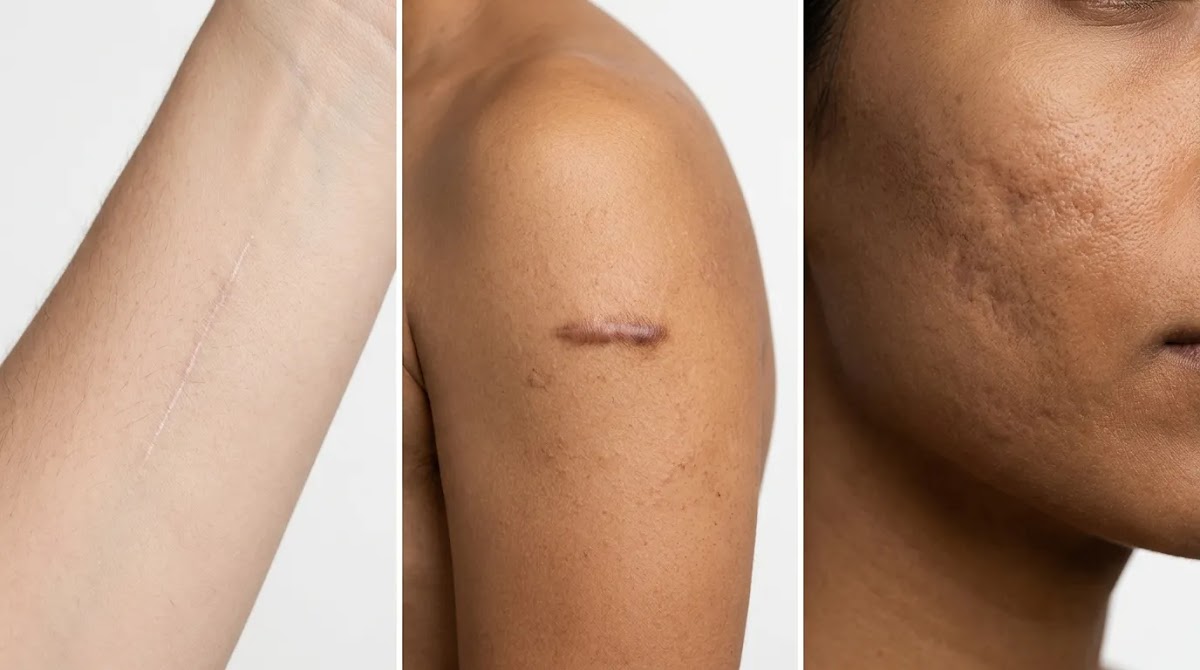
Representative outcome: A patient comparing four healed scars found that each “after” result looked different at 12 months: an acne depression remained indented but appeared less noticeable after professional treatment, a linear surgical scar became lighter and flatter with consistent scar care, a raised scar required clinician-guided treatment, and a darkened injury scar improved mainly in color rather than texture. That is the central lesson behind scar removal before and after images. They can be useful, but they should show a realistic treatment goal, not promise that skin will return to its pre-injury appearance. Scar type, location, skin tone, tension on the healing area, and the treatment chosen all shape the result. For scar-specific context, see this acne scar treatment overview.
How to Read Before-and-After Scar Results
Before-and-after photos reduce a long healing process to two moments. A useful comparison should show the same lighting, camera distance, body position, and timing after injury or surgery. Without those details, a scar may look lighter simply because of different lighting, makeup, swelling changes, or sun exposure.
Look beyond color alone. A realistic “after” result may involve less redness, a flatter raised area, reduced itching or tightness, a softer texture, or a scar line that blends more easily into nearby skin. An indented scar may still be visible after treatment, while a raised scar may flatten without becoming the same color as surrounding skin.
Timing matters because scars mature gradually. During remodeling, the later phase of wound healing, when collagen reorganizes, scars can continue changing for many months. A photo taken very early after a procedure cannot reliably show the final outcome.
The Scar Healing Timeline
Scar appearance changes in stages, which is why an early photo can look very different from a photo taken months later. In the first days and weeks, the body closes the wound and builds new tissue. The area may look red or pink, feel firm, and seem more noticeable before it begins to settle. Your surgeon’s wound care instructions take priority during this period, particularly during the first two weeks after surgery.
Picture a scar forming across the knee versus one along the forearm, the joint-based scar will likely take longer to settle simply because of the constant movement and tension in that area. This variability is part of a larger remodeling process: as collagen fibers rebuild and gradually realign themselves, the scar's appearance often improves, becoming softer, flatter, and less noticeable over time. This transformation typically unfolds across 12 to 18 months, though no two healing journeys look exactly alike. Factors such as how deep the original wound was, where it's located on the body, individual skin traits, and each patient's unique healing response all play a role in shaping the final outcome.
Wait until your incision has closed completely and you've received the go-ahead from your surgeon, dermatologist, or healthcare provider before starting any topical scar treatment. If the wound still shows drainage, scabbing, or open areas, hold off on applying scar products unless your provider gives you clear direction to proceed.
A Representative Four-Scar Review at 12 Months
This representative review follows a patient who wanted to understand whether scar treatment results photos could help set expectations. The patient had four different scars: a depressed acne scar on the cheek, a linear abdominal surgical scar, a raised chest scar, and a darker mark left after a minor leg injury.
Background
The patient’s initial goal was broad: “remove” every scar. After a dermatology consultation, that goal shifted toward more specific outcomes. The acne scar needed texture-focused care. The surgical scar needed support during maturation. The raised chest scar needed medical assessment because the chest can be prone to prolonged redness and thickening. The darker injury mark needed time and sun protection rather than aggressive treatment.
The challenge
The hardest part was recognizing that one treatment was not appropriate for every scar. The patient had previously tried a general cosmetic cream across all four areas. It felt moisturizing but did not address the structural indentation of the acne scar, the elevated texture of the chest scar, or the changing color of the surgical scar.
What the 12-month comparison showed
- Depressed acne scar: The indentation remained visible, though its edges appeared softer after clinician-directed texture treatment.
- Linear surgical scar: The scar remained a line, but it appeared less red and less firm than it had during the early healing period.
- Raised chest scar: It required professional review rather than relying on at-home products alone. The scar became less symptomatic, but remained more noticeable than the other scars.
- Dark injury mark: The color difference faded gradually, while the skin texture was already close to normal.
The outcome was not one dramatic transformation. It was four distinct improvements measured against the original concern for each scar type.
Expected Results by Treatment Type

Silicone gel for closed, healing scars
Silicone-based topical care is commonly used for scars that are fully closed and no longer have drainage, open areas, or scabbing. It is most relevant to linear surgical scars, healed injuries, and some burn scars. The realistic aim is to support a scar as it matures, particularly where redness, firmness, dryness, or elevation are concerns.
In before-and-after comparisons, the changes people may notice are usually gradual: a scar can look less inflamed, feel more flexible, or become less prominent against nearby skin. Silicone gel does not fill a deep acne indentation, remove a scar surgically, or replace care for a wound that has not healed.
Professional procedures for indented acne scars
Atrophic scars are depressed scars caused by lost or altered collagen after inflammation, often from acne. Their before-and-after results tend to focus on texture. Dermatologists may consider procedures that address scar depth or tethering beneath the skin. These approaches can improve how light reflects from the skin surface, but an “after” image may still show shallow depressions.
The best photo comparisons usually show improvement under several lighting angles, not only one flattering close-up. Acne scars often require a treatment plan tailored to scar shape, skin type, and active acne control.
Laser and energy-based treatment for color or texture concerns
Laser scar removal before and after images can be compelling, but the term “removal” can be misleading. Laser treatment may be used by qualified clinicians to address redness, pigment changes, texture, or scar thickness, depending on the device and the scar. It does not suit every scar, every skin tone, or every stage of healing.
A realistic result is often a more even appearance rather than invisible skin. Temporary redness, sensitivity, and the need for multiple appointments may also be part of the treatment process. Your dermatologist should explain the expected benefit, recovery requirements, and pigment-related risks for your skin.
Scar revision for a wide, irregular, or restrictive scar
Scar revision is a medical or surgical approach intended to improve a scar’s position, width, direction, or function. It may be considered when a scar is wide, pulls on nearby tissue, causes discomfort, or healed in a way that makes it difficult to manage conservatively. The result is still another healing incision, not an absence of scarring.
For areas under movement and tension, expectations should be especially careful. A knee scar treatment plan may need to account for bending, friction, and rehabilitation. A chest scar may also need individualized review because movement and skin tension can influence healing. Read more about chest scar treatment considerations if that area applies to you.
Color-focused care for dark marks after injury
Some marks people call scars are primarily pigment changes after inflammation. These may be brown, gray, red, or purple, depending on skin tone and the stage of recovery. If the surface is flat and the main concern is color, the “after” result may be gradual fading rather than a change in scar thickness.
Consistent sun protection and gentle skin care can be important parts of managing visible color contrast. A dermatologist can determine whether the area is a true scar, post-inflammatory pigment change, or a combination of both.
Sun Protection for Healing Scars
Consider a scar that's still in the early stages of recovery: even as the skin beneath it repairs and smooths out, unprotected sun exposure can undo that progress visually. Because new scar tissue lacks the same UV defenses as the skin around it, ultraviolet rays can trigger noticeable pigment shifts, either prolonged redness or a lingering darkened patch known as post-inflammatory hyperpigmentation. The result varies by individual skin tone and healing stage, but the outcome is often the same: a scar that looks more prominent, even if it's actually healing well beneath the surface.
Cover the area with clothing or a bandage when appropriate, and use broad-spectrum sunscreen on fully healed skin according to your surgeon’s or dermatologist’s instructions. A healing incision may have different protection needs than intact skin, so follow your healthcare provider’s guidance about when sunscreen is appropriate.
Sun exposure also affects how before-and-after photos should be interpreted. A scar photographed after a summer outdoors may appear darker or redder than a scar photographed with consistent protection, making color changes look more dramatic than the treatment effect alone.
Silicone Gel for Healing Surgical Scars

Picture a patient who's just received the go-ahead from their surgeon to start treating a healed, closed incision. BIOCORNEUM SiliSilk Advanced Scar Gel, 30g, meets that need with a professional-grade silicone formula that dries clear and fast, without leaving behind any greasy residue. It layers easily into an existing skincare routine and can be applied underneath sunscreen or makeup without issue. Backed by clinical evidence, silicone has been shown to reduce the visible appearance of scars and areas of hyperpigmentation over time. Patients should understand this is a tool for supporting the scar as it matures, not a way to erase it instantly. As always, following both the product instructions and the clinician's guidance on timing, particularly after a surgical procedure or burn, is essential to getting the intended results.
Pros and Cons
Strengths
- Before-and-after comparisons can help you distinguish color, texture, thickness, and comfort goals.
- Matching treatment to scar type prevents unrealistic expectations, such as expecting a gel to correct a deep indentation.
- Silicone gel may be easier to use on curved, moving, or visible body areas than a sheet.
- Professional treatments may address concerns that topical care cannot, including deep tethering, severe texture changes, or restrictive scars.
- Photo tracking under consistent conditions can help you and your clinician notice gradual changes over time.
Considerations
- A photo cannot show symptoms such as itching, tenderness, tightness, or skin sensitivity.
- Scar results vary by scar age, location, depth, skin characteristics, wound healing, and treatment consistency.
- In-office procedures may require recovery time, repeat sessions, and clinician assessment of pigment-related risks.
- Topical scar products should not be used on open wounds unless a healthcare professional specifically directs otherwise.
How to Choose a Treatment Path
Start by identifying the scar’s main feature. A flat but dark mark calls for a different conversation than a thick, itchy scar or a deep facial depression. If you are unsure, a dermatologist or surgeon can assess whether the concern is scar tissue, pigment change, active inflammation, or another skin condition.
Ask what outcome is realistic
Use specific language at your appointment. Ask whether treatment is intended to reduce redness, flatten thickness, improve flexibility, soften texture, or reduce a scar’s width. A clear goal makes treatment photos easier to interpret and helps you judge whether an option fits your priorities.
Confirm that the skin is ready
Scar treatment timing should follow wound healing, not calendar pressure. A wound with drainage, increasing pain, spreading redness, separation, or other concerning changes needs medical evaluation. Your surgeon should confirm when an incision is ready for topical scar care, massage, sun exposure, or procedures.
Compare convenience with consistency
A treatment only helps if it fits your daily recovery routine. Consider where the scar is located, whether clothing creates friction, how much movement the area gets, and whether you can follow the recommended schedule. For example, a product that works well on a flat area may be less convenient near a joint or under a bra strap.
Use professional care for complex scars
Raised scars, scars that extend beyond the original wound, scars that restrict movement, and scars with persistent symptoms deserve professional assessment. A keloid is a raised scar that grows beyond the original wound boundary, while a hypertrophic scar remains within that boundary. The distinction affects treatment planning and should not be made from photos alone.
When Topical Care Is Not Enough
Topical care may be one part of a scar management plan, but it cannot correct every concern. A clinician may consider steroid injections for raised scar tissue, fillers for selected depressed scars, resurfacing procedures for texture or color concerns, or scar revision for scars that are wide, restrictive, or poorly positioned. These options are selected for the scar’s specific features rather than for the word “removal.”
Professional treatment plans may combine approaches. The right choice depends on scar type, location, skin tone, symptoms such as tightness or itching, and your recovery goals. A raised scar may need a different approach from an atrophic acne scar, and a treatment suitable for one skin tone may require additional planning for another because pigment changes can occur after procedures.
Ask about appointment requirements, recovery time, the possibility of repeat treatments, and the expected change in color, texture, or function before committing to a procedure. A surgeon or dermatologist can provide a personalized assessment and explain whether an in-office treatment, continued topical care, or a combination of approaches is appropriate for you.
Frequently Asked Questions

Does scar removal work?
Scar treatment may improve a scar’s color, thickness, texture, flexibility, or visibility, but “removal” is rarely the most medically accurate expectation. A scar represents healed tissue, and treatments generally aim to make it less noticeable or more comfortable. The most appropriate option depends on whether the scar is raised, indented, wide, tight, discolored, or still actively changing.
How long should I wait before judging scar treatment results?
Healing scars can change over many months, so very early before-and-after comparisons may be misleading. Your timeline depends on the original wound, scar location, your health history, and the treatment used. A surgeon or dermatologist can tell you when to assess progress and when a lack of change may justify adjusting the plan.
Are scar removal photos reliable?
They are most useful when the photos show the same angle, lighting, distance, and stage of healing. Look for information about the treatment type, how long the person used it, and whether procedures were involved. Photos should be considered educational examples, not predictions of your personal outcome, because scars respond differently across individuals.
Can scar gel improve acne scars?
Scar gel may be more relevant for closed, healing scars that are raised, firm, or newly forming than for old depressed acne scars. Many acne scars are atrophic, meaning they sit below the skin surface. Those scars often need a dermatologist’s assessment because topical care may not address the structural change beneath the skin.
Can I use silicone gel after surgery?
Timing matters when it comes to scar gel: wait until your surgeon or dermatologist gives the go-ahead, confirming the incision has closed completely before introducing any topical treatment. At that point, silicone gel is often the recommended next step. Avoid applying it to skin that's still open, draining, scabbed, or showing signs of infection, unless your healthcare provider specifically advises otherwise. When in doubt, always defer to your surgeon's guidance over general scar care recommendations.
What should I do if a scar becomes raised or itchy?
Mild itching can occur during healing, but a scar that becomes increasingly raised, painful, tight, or extends beyond the original wound should be reviewed by a surgeon or dermatologist. These changes may affect the treatment approach. Early professional guidance can help clarify whether the scar is following a typical healing pattern or needs targeted care.
How much does scar removal cost?
Costs vary widely because scar treatment plans differ by procedure, scar size and location, the number of sessions needed, geographic area, and clinician fees. Topical care, injections, laser treatments, fillers, and surgical revision have different costs, and cosmetic treatments may not be covered by insurance. Ask your dermatologist or surgeon for a written estimate that includes the procedure, follow-up visits, and any expected repeat treatments.
How long does scar revision or laser scar treatment take to heal?
Recovery depends on the procedure and treatment intensity. Laser treatment may involve temporary redness and sensitivity, while surgical scar revision involves healing a new incision and may require a longer recovery period. Your clinician can explain activity restrictions, wound care, sun protection, and when you can expect the treated area to settle based on your scar and procedure.
What is the most effective scar treatment procedure?
There is no single procedure that is most effective for every scar. Silicone-based care may be appropriate for a fully closed healing surgical scar, while raised scars may benefit from clinician-guided treatment and selected depressed scars may need procedures that address lost volume or tethering. A dermatologist or surgeon can recommend an approach based on scar type, location, skin tone, symptoms, and the improvement you hope to achieve.
Key Takeaways
- Before-and-after scar results should be judged by scar type and treatment goal, not by a promise of complete removal.
- Indented acne scars, raised scars, linear surgical scars, and pigment changes usually require different approaches.
- Silicone gel may be a suitable at-home option for fully closed healing scars when approved by your surgeon or dermatologist.
- Consistent photos can be useful when they use the same lighting, angle, distance, and timing.
- Raised, restrictive, painful, or rapidly changing scars should be assessed by a qualified healthcare professional.
Conclusion
Realistic scar treatment results are often quieter than the most dramatic online photos suggest. A successful outcome may be a flatter surgical line, less visible color contrast, improved flexibility, or a texture change that makes a scar easier to live with. Start by identifying what type of scar you have and what improvement would make a meaningful difference for you. If your incision is healed and your clinician approves silicone-based care, explore BIOCORNEUM SiliSilk Advanced Scar Gel as one at-home option for supporting scar maturation. For complex, indented, raised, or symptomatic scars, a dermatology or surgical consultation provides the clearest path to informed expectations.
The information shared here is intended for general educational purposes and should never replace professional medical guidance. Before starting a new scar treatment, it's essential to speak with your surgeon, dermatologist, or another qualified healthcare provider who understands your unique healing needs.


